
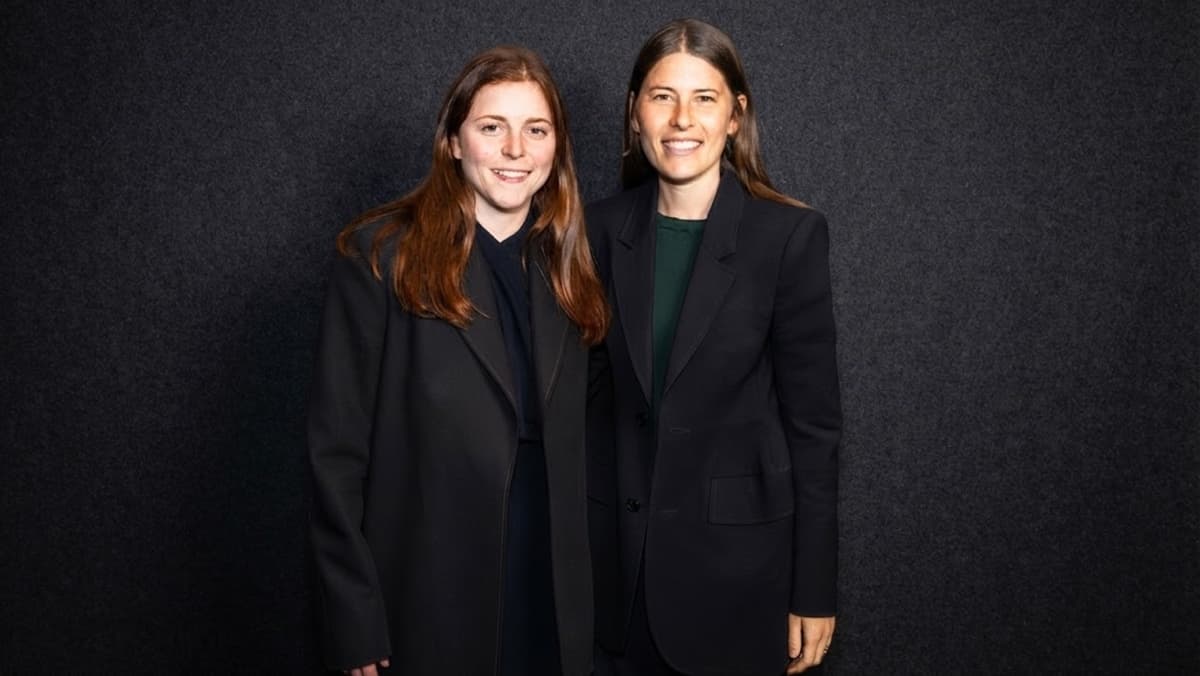
The biggest piece of advice we’d give is to start with a problem that genuinely needs solving. It’s easy to become attached to an idea, but the question we kept coming back to with Blossom was: does this actually make people’s lives better? — Ali Rosenberg, co-founder of Blossom
In early 2021, Ali Rosenberg and her younger sister Gaby were living back under their parents’ roof in Sydney, the way a lot of people in their twenties found themselves during COVID. They were watching institutional money and wealthy investors move into fixed income as a flight to safety. The sisters, raised in a family where their father, uncles, cousins and grandparents all worked in finance, understood what that meant. They wanted in.
What they found instead was a wall. “When we started looking into it, we found it was difficult for everyday investors to access,” Ali says. “There were high minimums, fees and long lock-ups, and it felt like an asset class that was largely designed for institutions and wealthier investors.” Fixed income, in plain terms, is lending money to companies or governments through bonds in exchange for interest, less volatile than shares and typically earning more than a bank savings account. The product existed. The door to it, for someone without institutional money behind them, largely didn’t.
That gap has been documented for over a decade. Australian retail investors have historically carried a high weighting to equities and a low one to bonds, and regulators and market commentators have pointed to the same cause repeatedly: high-quality fixed income products were structured for wholesale and institutional buyers, not individuals. ASIC has run multiple consultations over the years aimed at widening retail access to the corporate bond market, and industry bodies were still raising the shortfall last year.
Ali and Gaby’s response was the kind of idea that only looks obvious in hindsight. “If we were finding it difficult to access this asset class, there were probably a lot of other Australians in the same position,” Ali says. They thought about what platforms like Stake and Coinbase had already done for shares and crypto, stripping away the friction that once made those asset classes feel exclusive, and asked why fixed income hadn’t had the same treatment. “We wanted to take something that felt complex and make it simple, approachable and engaging.”
Building a regulated business, not just an app
Gaby went full-time on the idea; Ali built it on nights and weekends around her existing job. Less than a year later, in June 2021, Blossom launched. The name carries its own weight: it was the nickname given to the sisters’ late grandfather Bert by his mother, a detail they folded into the business. “He’d be proud of what we’ve created,” Ali says.
The early traction was fast. Blossom crossed $10 million in funds under management within three months of launch. Ali credits the company’s growth less to speed than to restraint. “One of the biggest decisions we made early on was to focus on building a genuinely useful product rather than trying to grow as quickly as possible,” she says. “Financial services is an industry where trust matters enormously, so we knew we had to earn that trust.”
That shaped the product directly. Blossom shows customers their earnings posted in the app daily, rather than making them wait months to see what’s happening with their money. “We wanted people to be able to see their money working for them,” Ali says. “For someone who may have felt intimidated by investing in the past, seeing those earnings build over time can make the experience feel much more tangible and rewarding.” It’s a small design choice doing a large job, turning an asset class most Australians have never engaged with into something they check the way they’d check a savings account.
What’s easy to miss from the outside is that Blossom was never just a product build. It was, from day one, a regulated financial services business: licensing, fund management obligations, legal and compliance requirements, running in parallel with building the app and backend. “There was a huge amount to learn,” Ali says. On top of that sat a more personal obstacle: credibility. “In 2021, we were two women in our twenties launching a financial services business without an established track record, in an industry where trust is everything. There were definitely moments where we had to prove ourselves before people were willing to take us seriously.”
Then there was the market itself. Most Australians simply don’t know what fixed income is. “Fixed income isn’t something most Australians grow up talking about,” Ali says. “People tend to understand shares and property, but there is much less familiarity with bonds and fixed-income investing.” Part of Blossom’s job, ongoing, has been translation: teaching the market what the product even is.
What sisterhood taught them about partnership
Blossom has grown well beyond its original single product. What started as one way to invest has expanded into Blossom Save, Blossom Plus and Blossom Grow, covering individual and joint accounts, kids’ accounts, businesses, SMSFs and charities, with an expansion into New Zealand in 2025. The company now holds approximately $179 million in funds under management across more than 34,000 users, and is targeting $200 million by the end of the year.
Ali frames the company’s edge as more than technology. “Shares and crypto have become very accessible, but fixed income hasn’t had the same level of consumer engagement,” she says. “We wanted to bring that same simplicity and accessibility to fixed income, so people could diversify their investments without needing to be a financial expert.” Not every customer can afford a financial adviser, she points out, which is part of why Blossom keeps expanding its product range. “We’re constantly listening to our customers and looking at where there are gaps in the market.”
Ali returns most often to one lesson: not needing all the answers upfront. “One of the biggest lessons for us has been that you don’t need to know everything before you start. You need to be comfortable recognising what you don’t know, and then finding the right people to help you solve it.” Trust, she says, worked the same way, slowly and without shortcuts. “You can’t shortcut it with good marketing. You have to consistently deliver a good product, communicate clearly, do what you say you’re going to do and let customers build confidence in you over time. A great-looking brand is one thing, but ultimately people need to trust what sits behind it.”
The sibling dynamic underneath all of it gets its own honest reckoning. “Being sisters is both a huge advantage and a challenge,” Ali says. “We know each other incredibly well, which means we can be very direct with each other. But we’ve also had to learn how to separate being sisters from being business partners, disagree constructively and recognise that we don’t always need to agree to move forward.”
Her advice to anyone thinking about starting something of their own skips the usual confidence talk. “Don’t wait until you feel completely ready. We certainly didn’t.” What she asks instead is simpler: does the problem actually need solving. “You don’t need to have unwavering confidence every day but you do need enough conviction in the problem you’re solving to keep going, learn from what’s not working and take the next step.” Or, as she puts it: “Just start, the compounding effect over years and years truly pays off.”