
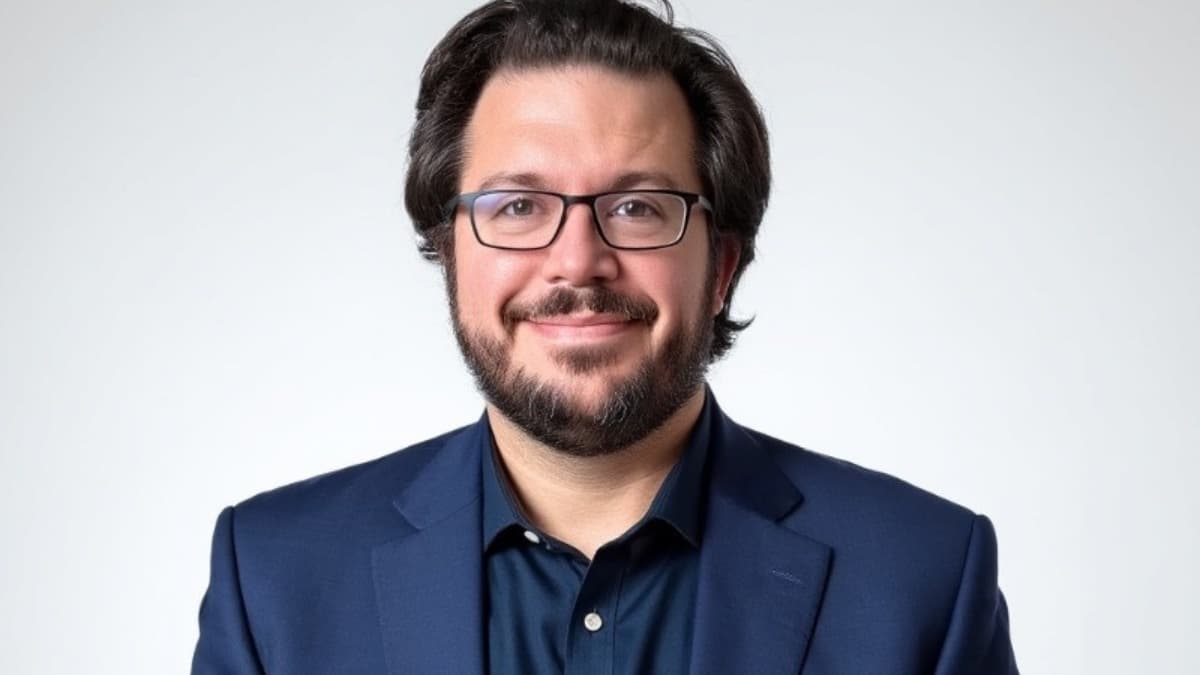
Ryan Day, Field CISO at AI platform Glean, has made six predictions for cyber security in 2027, and they all point to a similar issue: risks that fly under the radar until it's too late. According to Day, the common thread among his predictions is blind spots - the gaps between what a business can see and what's really going on.
The first blind spot sits inside the tools meant to catch the others. Day expects "AI fighting AI" will run into a people problem before it runs into a technology one, because a security agent that isn't maintained quietly stops being useful.
"Treating security agents as build-once-and-done ignores the work of maintaining them, because a tool that isn't iterated on is worthless in a year. More security funding will go (back) toward the people who can drive these tools. One standout practitioner can now do 4x the work of a very good security professional, and that will force thorny conversations about how talent is valued."
The blind spot here is assuming a tool works simply because it worked on day one. A business doesn't need a dedicated security function to be exposed to this version of the problem, any AI tool left running unattended, a chatbot, a scheduling system, an automated invoice check, degrades the same way. Nothing announces that decline. It just quietly gets worse.
Day's second prediction points to a related gap: not knowing how much effort is actually going toward looking for problems versus just reacting to them. He expects boards will start asking what share of security time is spent proactively.
"As CVE volume climbs, teams get pulled into reactive fixes and stop looking ahead for avenues of exploit, whether that's a misconfiguration or a broken process. Time spent proactively hunting for problems will become a core measure of a security team's effectiveness."
Most businesses can't answer that question for their own setup, because nobody's tracking it. That's the blind spot: not a known risk left unaddressed, but a measure that was never being taken in the first place.
The blind spot before the warning
The third prediction is the one Day frames most directly as a blind spot, and it's the clearest for any business without a security team. A flaw doesn't start existing the day it's announced. It exists from the moment someone finds it, and that gap can run for a while before anyone outside is told.
"A CVE announcement is only the green flag to fix a problem. Organisations were exposed the whole time the flaw sat undisclosed, and the person who found it may not be the only one who knows. As powerful AI tools reach more hands, more people will find the same flaws faster. Security teams will have to assume they're vulnerable before any CVE exists and plan around that, rather than wait for a disclosure to start the clock."
Waiting for an official notice feels like the responsible move. It's also exactly backwards, the notice was never the start of the exposure. For a small business, the practical version is keeping software and plugins updated as a matter of routine rather than only after a specific warning arrives, since the warning always comes after the fact.
The fourth prediction is the most enterprise-specific of the six, and it's a blind spot that opens as businesses hand more control to automated systems. Day expects agentic workloads inside CI/CD pipelines, the systems that automatically build and deploy software, will be one of the hardest balancing acts of the year.
"The more power teams hand to agents, the more they get done, but it also opens the door to non-human mistakes that can be really dumb."
This applies most directly to businesses building or deploying their own software. The underlying blind spot still generalises: the more autonomy handed to an AI tool over any process, the fewer human checks remain to catch the mistake before it does damage.
The fifth prediction turns the same idea toward people rather than tools. Day expects employers will start weighting judgement over tool-specific experience, as the AI tools themselves change faster than anyone can master a particular one.
"As AI tools turn over faster than anyone can master them, listing specific tools on a résumé will matter less. Strong hires will be the ones who can cut through the noise to see what the deliverable really is and finding the critical path. Hiring will come down to how a person thinks, knowing tools can be taught."
The blind spot in hiring is assuming today's tool skills are a reliable predictor of tomorrow's performance. For any small business hiring right now, security role or not, a candidate fluent in this month's specific AI tool is a weaker long-term bet than one who can work out what a task actually needs.
The blind spot in the rules
The sixth prediction concerns AI regulation, and it's the blind spot every business using AI tools will eventually run into, whether they notice it coming or not. Day expects the current pattern of broad, blunt AI rules to give way to more targeted regulation aimed at the intent behind the rule.
"The EU is setting firm rules on where and how AI can be deployed. Other regions will follow, as California did after GDPR. Companies currently complying with blunt restrictions will learn to meet the intent of those rules while giving users more power."
For Australian businesses, local AI regulation is still forming, so there's nothing to act on yet. The blind spot worth noting now is the assumption that today's light-touch environment will stay that way. Day's prediction suggests it won't, and the businesses caught out will likely be the ones who weren't watching for it.
Taken together, none of Day's six predictions describe a problem a business can see coming in the usual sense, a breach notice, a bad review, a system outage. Each one is about the gap just before that: the tool nobody's maintaining, the measure nobody's taking, the flaw nobody's told about yet, the hire judged on the wrong thing, the rule that hasn't landed yet. That's what makes them blind spots rather than just risks, and it's also why they're worth reading even by a business with no security team at all.