
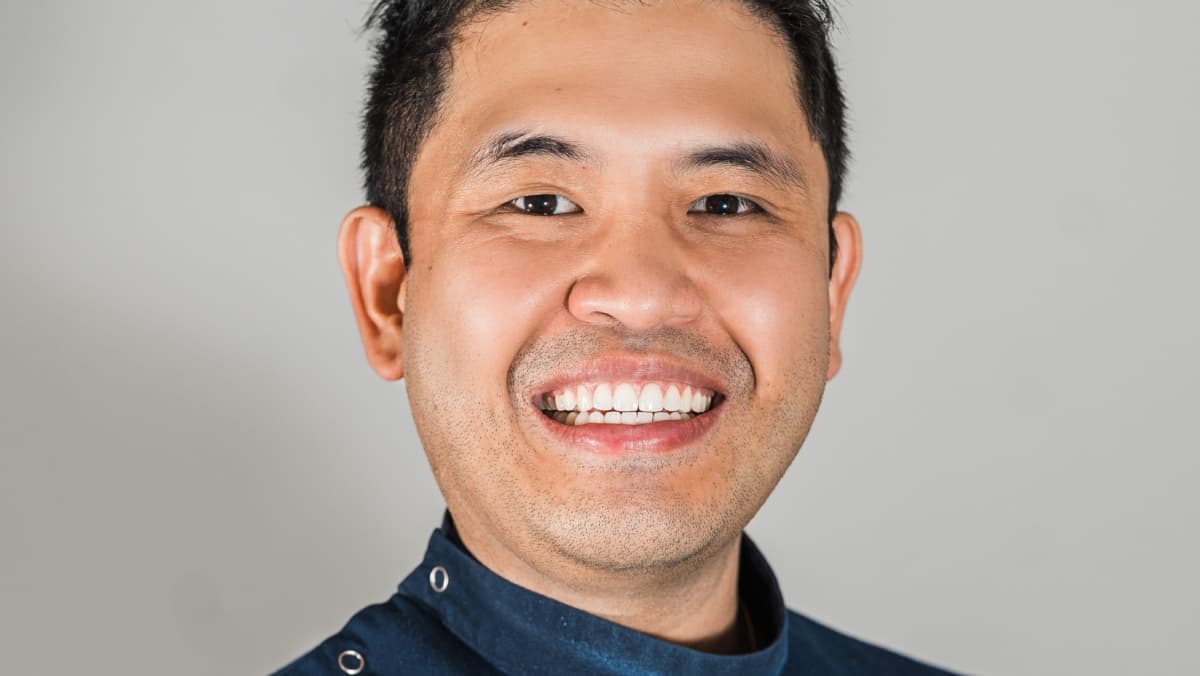
Dental is a tough sector to retain talent in, and Tasmania makes it tougher still. Competing with the “bright lights of the mainland” for good dentists has meant Innova Dental founder Dr Bing Lee had to be intentional about what makes people want to stay. His answer wasn’t a softer culture. It was a harder one.
“The idea of a work culture feeling like ‘family’ doesn’t work for us, because that implies you will tolerate someone’s faults simply because they’re family,” Bing says. “We empower our staff to perform to a high standard every day, and that in turn lifts the standard overall.”
Team, not family
Bing draws the comparison to a sporting club rather than a household. Members have a specific role to play, and the team’s results depend on everyone doing their part. “It is deliberate and intentional, and ensures each employee is accountable and responsible for bringing their best every day, for the betterment of the team,” he says.
The framework underpinning it is the FISH! Philosophy, developed out of Seattle’s Pike Place Fish Market, built around four pillars: be there, play, make their day, and choose your attitude. “At the heart of the FISH! culture is creating a high-energy atmosphere where staff feel valued and appreciated but can also achieve professional and personal growth,” Bing says. Innova Dental works with an accredited FISH! practitioner on an ongoing basis, running regular team-building and training sessions to keep the culture consistent across its four locations.
Paying for culture on purpose
None of this happens by accident, and Bing is upfront that it costs money. The leadership team goes away two to three times a year, staff get ongoing training and upskilling, and once a month all four practices close for three hours so the whole team can come together.
“Our investment in our internal culture is a non-negotiable, it’s not a ‘nice-to-have’, it’s an essential part of running our business and we budget for it as such,” Bing says. “All of these measures are a cost to the business, but I would argue the cost of not doing it, and having unhappy staff and high turnover, is greater.”
He points to a handful of principles guiding the approach day to day: treating the team as a team rather than a family, aiming to be “1% better” every day rather than getting distracted by competitors, hiring for team fit as much as technical skill, and consistently creating opportunities for staff to grow.
Does it actually work
Bing says the proof is in retention. Several staff have been at Innova Dental for more than five years, and some who left have chosen to come back. “That really is testament to the culture we have created,” he says.
Senior Surgical Dental Assistant Zoe Bate, one of those five-plus-year staff, puts her own longevity down to the constant push to grow. “The team culture is such that there is a constant push to better everyone and improve their skills, rather than staying in the one position,” she says. “There’s also a deliberate focus on structure and process which maintains a high workplace standard and ensures patients receive the highest level of care. I’ve worked in an environment without that structure, and it makes a difference.”
Lead Dentist Dr Ha Nguyen says the same deliberateness shows up in how the clinical team works together. “Egos are taken out of the equation and dentists collaborate with each other, feeding into each other’s strengths and areas of expertise,” she says. “There is a shared understanding that we are responsible not just for our direct patients, but for every person walking through our door. That’s something I really value.”
For Bing, the team-not-family distinction isn’t just semantics. It’s the difference between a workplace that quietly tolerates mediocrity and one that holds itself, and everyone in it, to a standard worth staying for.