
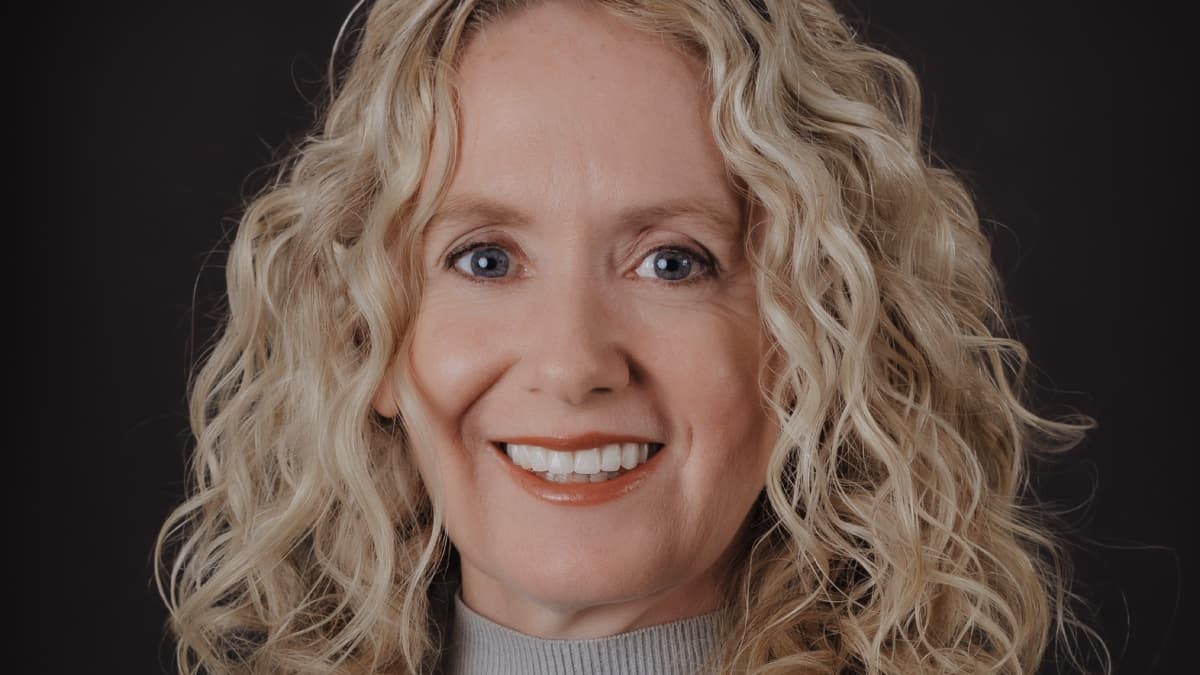
This week on Founder Friday, we caught up with Ellen Brown, the founder of Euka Future Learning, Australia's largest homeschool organisation. We chatted with Ellen about how a program she created for her own son unexpectedly evolved into a full-fledged school that's now educating thousands of students across the country.
I wasn’t initially trying to build a large business; I was trying to build the education I believed children deserved.
Brown’s two eldest sons were gifted but never quite engaged at school, and both left early before returning to study at university as adults. As a teacher herself, working in juvenile justice, she couldn’t shake the feeling that it often wasn’t a child’s fault or inability to learn, but that they simply couldn’t see the relevance between what they were being taught and the world they were living in.
So she set out to build something different for her younger son, something that kept the Australian Curriculum as a base but let it serve as a launching pad rather than a ceiling.
“I wasn’t initially trying to build a large business; I was trying to build the education I believed children deserved. I didn’t want the curriculum to be the ceiling, I wanted it to be the launching pad,” Brown says.
Within six months, other parents were asking to use her program. Within a year, more than 100 families had signed on.
“That’s when I realised the challenges I had experienced with my own children weren’t unique to our family,” she says. “There were many parents looking for another way, an education that maintained academic rigour while giving children the freedom to become curious, engaged and excited about learning again. And that became Euka.”
Structure and freedom aren’t opposites
Brown believes one of the reasons Euka grew so quickly is that she refused to treat structure and freedom as opposing ideas. Parents wanted their children’s learning organised into subjects, terms and individual days, so she built that in, but deliberately kept it from becoming prescriptive.
“Standardising what children learn doesn’t mean we should standardise how they learn,” she says. “A child who loves reading might choose written material. Another might understand something far better through hands on activity. Others learn best by listening, watching, discussing or working through an activity sheet.”
That philosophy, she says, comes down to starting with a problem you care about solving rather than starting with the money.
You scale by knowing what you’re not good at
Euka doesn’t just hand families resources. Brown’s aim is a complete educational pathway from a child’s first year of learning through to Year 12 and beyond, including building university pathways that haven’t traditionally existed for homeschoolers.
“Under current arrangements, homeschoolers generally don’t have access to the same ATAR pathway available through mainstream students,” she says. “Rather than accept that this limits their career aspirations, we decided to work on creating another way. We have spent years working directly with universities and colleges to demonstrate the academic equivalence of Euka’s senior program and to build pathways specifically for homeschool students. These are options that simply didn’t exist for many homeschoolers five years ago.”
As Euka grew, Brown’s steepest learning curve was recognising what she personally wasn’t good at, and bringing in people who were stronger in administration, finance, technology, customer support and operations. Eventually she hired a full-time CEO, Brett Campbell, which freed her to focus on educational leadership, innovation and the philosophy driving the business.
“You don’t scale by becoming good at everything,” she says. “You scale by understanding what you uniquely bring to the business, surrounding yourself with people who are exceptional at the things you aren’t, and protecting the reason you started in the first place.”
Find the people who’ve actually done it
Brown is wary of the business advice flooding social media: use AI, start dropshipping, build something that requires almost no work. Her suspicion is that the person making the real money is usually the one selling the course. Instead, she looks for guidance from people who have genuinely built something themselves.
“You need a cause and you need to be personally invested in the outcome,” she says. “And I think that’s the enormous difference between finding a way to make money and building a business with longevity. Euka grew because the problems we were solving were very real to me. My own children needed a better education program, so I built one.”
She’s also made peace with critics.
“You will encounter people who don’t understand what you’re trying to do, but I always endeavour to at least listen to them carefully because sometimes they will see something you’ve missed,” she says. “You have to change when change is warranted.”