
There's been a huge surge in founders showcasing themselves on LinkedIn - a whopping 143% increase since 2022. Interestingly, a big chunk of that growth - 35% to be exact - happened in just the last year. These stats come from LinkedIn's report, "How Small Businesses Can Win in 2027", which was based on a survey of 1,000 Australian founders and small business owners, conducted in November 2026.
Worth being precise about what the number measures. It isn't a count of new business registrations, it's how often LinkedIn members started adding a founder title to their profile, comparing January to September 2026 against the same months in 2022.
Gen Z is driving most of it. Founder profiles among Gen Z Australians are up 220 percent since 2022, well ahead of Millennials (194 percent), Gen X (144 percent) and Baby Boomers (120 percent). Nearly half of all Australians surveyed, 44 percent, say they'd like to start a business at some point. For Gen Z that figure jumps to 64 percent, and almost half plan to actually do it, whether as a full business or a side hustle, within the next three years.
The rise of the AI-preneur
More than a third of founders surveyed, 35 percent, say emerging AI technology directly motivated them to start their business. And 86 percent say entrepreneurship is simply more achievable today than it used to be.
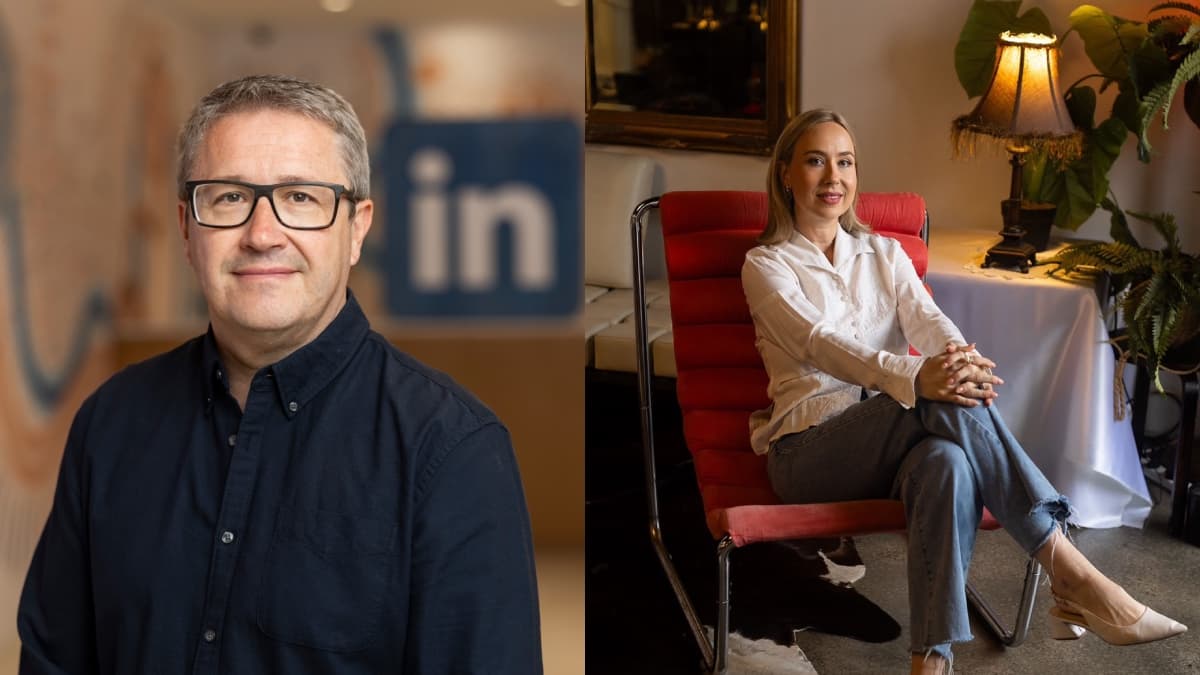
Adam Gregory, Country Manager at LinkedIn Australia and New Zealand, puts it down to a genuine shift in how people think about work. "Our data shows a real shift in how Australians think about their careers, with more people choosing to work for themselves as AI makes it cheaper and faster to get started," he said. "Gen Z are leading that shift, and with AI they can test an idea, put together a business plan and launch a website and social channels with far less money and time than they'd have needed a few years ago."
LinkedIn calls it botstrapping: using AI instead of the money or people a founder might once have needed. Almost all small business owners surveyed, 98 percent, now use AI in their business, and 97 percent say it's important to running it.
Among founders who credit AI with helping them start or run their business, 31 percent say it let them launch with less capital, 32 percent say it removed the need for a technical co-founder, and 29 percent say it got them to launch faster, or launch at all. The most common uses aren't glamorous: data analysis and reporting (31 percent), brainstorming (28 percent) and customer service (28 percent).
Milly Bannister, founder of Gen Z-led mental health charity ALLKND, sees that trade-off play out daily. "We're a tiny team, so AI handles a lot of the number-crunching and desktop research behind our programs, and that frees us up to actually be in the room with young people," she said. "I also see that same mindset in so many young founders. They'll teach themselves a new skill over a weekend and use AI to run the operational side of the business, from admin to reporting, so they can put their energy into the people they're building it for."
Founders are also building their own AI skills fast. Prompt writing is currently the fastest-growing skill listed by Australian founders, ahead of large language model skills, AI agents and AI strategy. Globally, founders are 12 times more likely than the average LinkedIn member to list an AI skill at all.
Ann-Mary Rajanayagam, Founder and CEO of AI and technology advisory Alderon, says the hard part has simply moved. "When I started my own business after almost 30 years in technology leadership, AI meant a small team could take on work that once needed a much bigger operation behind it, and that's a big reason so many Australians now see starting a business as a realistic career move," she said. "Growing that business is where owners get stretched, because the people and the skills are both hard to find. Owners who build AI skills now, in themselves and in the people they hire, will be in a far stronger position over the next few years."
As AI content floods every feed, a lot of these founders are betting on the opposite: being visibly, obviously human. Eighty-five percent of Australian founders surveyed describe themselves as "creator-founders," using personal branding to win clients and attract talent, up from 65 percent just six months earlier. And 81 percent say they run multiple income streams rather than one business, a shift LinkedIn ties to founders building "portfolio careers" instead of betting everything on a single venture.
It's not all confidence, though. Ninety-four percent of small business owners say they hold back from at least one form of self-promotion, largely because of how it's perceived in Australia. A third avoid sharing their expertise or opinions online altogether.
A dose of reality
None of this means every small business is suddenly thriving. The 2025 Small Business Perspectives Report from COSBOA and CommBank, a separate survey of more than 800 Australian owners, found that only 46 percent of businesses using AI said it had actually improved their business. The same report found 72 percent of owners cited rising operating costs as their biggest barrier to growth, 64 percent reported lower profits than the year before, and 60 percent couldn't pay themselves regularly, with a quarter relying on personal savings just to get by.
That gap is worth sitting with. LinkedIn's numbers capture how many people are stepping into the founder role and why. COSBOA's numbers are a reminder that capital, compliance and cash flow pressure haven't gone anywhere just because the starting line moved closer. AI is lowering some of the practical barriers to launching, research, content, basic admin and specialist tasks among them, but it hasn't touched the things that decide whether a business survives its first few years.
For anyone weighing up whether now's the time to go out on their own, that's probably the more useful takeaway than the growth figures: AI can get you started with less. Running the business afterwards still comes down to the fundamentals.