Dynamic Business Logo

What separates growth-stage businesses that scale well from others

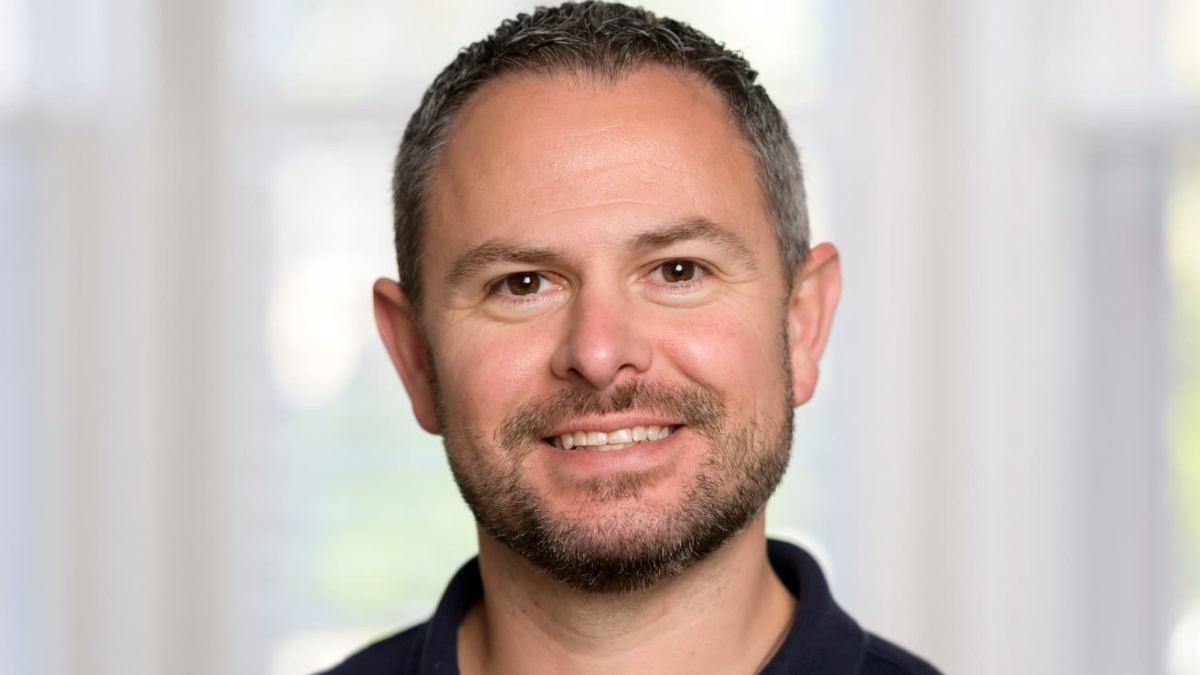
Jason Georgatos, President of Partners for Growth, discusses the strategic, operational, and financial factors that separate growth-stage businesses that scale from those that stall.

Growth-stage businesses rarely stall because opportunity disappears. More often, they stall because they reach the next phase of growth with more ambition than discipline.

One of the biggest misconceptions in business is that capital is the primary constraint on growth. In reality, growth tends to amplify whatever already exists inside a business. Strong businesses become stronger. Weaknesses become harder to ignore.

Having worked with growth-stage businesses including Employment Hero, Koala and Bridgit, I’ve seen this pattern repeatedly. The companies that scale successfully are rarely the ones with the most capital. They are the ones that understand what the next phase of growth requires and prepare for it before they get there.

This is where growth and scale diverge.

By the time a business reaches the growth stage, product-market fit is usually established, revenue is increasing and market demand is clear. What changes is complexity. Teams grow, customer expectations rise, decision-making becomes more difficult and mistakes become more expensive.

The businesses that navigate this transition successfully tend to share four characteristics.

They Think Carefully About Capital Structure

The strongest growth-stage businesses don’t simply focus on raising capital. They focus on raising the right capital.

As funding markets have matured, founders have become far more sophisticated about understanding the trade-offs that come with different forms of funding. They’re asking tougher questions about ownership, equity preservation, control and future flexibility.

The best operators recognise that capital should support strategy, not dictate it.

This is particularly important because the wrong capital can be expensive in ways founders often only understand later. It can create pressure to pursue growth targets that don’t align with the business, limit strategic flexibility or result in levels of dilution that materially alter long-term outcomes.

The businesses that scale well think carefully about what kind of capital suits the stage they are in and what they are trying to achieve. They understand that a funding decision made today can influence the trajectory of the business years into the future.

They Match Capital To Business Readiness

One of the most common mistakes I see is the assumption that more capital will solve growth challenges.

Growth rarely works that way. More often, growth exposes weaknesses that may have been manageable at a smaller scale but become costly as the business expands.

Weak reporting. Unclear accountability. Inconsistent customer acquisition economics. Leadership gaps.

These issues don’t disappear when growth accelerates. They become more visible.

The strongest businesses invest in readiness before they invest in acceleration. They build financial discipline, operational capability and leadership capacity before growth places additional pressure on the organisation.

Capital can fuel expansion, but it cannot create operational excellence where it does not already exist.

They Are Disciplined About How They Grow

There is often a tendency to celebrate speed.

Some of the strongest businesses I’ve worked with have been surprisingly disciplined about growth.

Rather than chasing every opportunity, they focus on sequence, timing and what the organisation can realistically absorb.

That discipline often means making decisions that feel counterintuitive in the short term. Delaying expansion. Prioritising one growth initiative over five. Hiring more selectively. Staying focused on core markets longer than competitors.

These decisions rarely attract attention, but they are often what create sustainable momentum.

The businesses that scale most effectively understand that growth is not simply about increasing revenue. It is about increasing revenue while maintaining operational efficiency, customer outcomes and organisational capability.

In today’s market, investors are increasingly rewarding this type of discipline. Sustainable growth supported by strong fundamentals is proving far more valuable than growth achieved at any cost.

They Preserve Optionality

One of the most underrated characteristics of successful growth-stage businesses is their ability to preserve optionality.

Strong businesses avoid making decisions that unnecessarily restrict future flexibility. They maintain balance sheet strength, diversify risk where possible and keep multiple pathways available for future growth.

In uncertain markets, optionality becomes a competitive advantage. It allows businesses to continue investing, adapting and pursuing opportunities while others become constrained by earlier decisions.

Ambition Matters. Discipline Matters More.

When people look at successful growth-stage businesses, they often focus on visible outcomes such as revenue growth, funding rounds or valuations.

Those outcomes are important, but they are rarely the reason a business succeeds.

More often, they are the result of strong decisions made long before the headlines appear. Decisions around capital structure. Business readiness. Leadership. Timing. Strategic focus.

The businesses that scale most successfully are not always the ones with the most capital. They are the ones that combine ambition with discipline, understand the realities of the next phase of growth and make decisions that strengthen the business rather than simply accelerate it.

Growth is relatively easy to pursue. Building a business that can absorb that growth well is much harder.

That is ultimately what separates companies that continue to scale from those that stall.

Keep up to date with our stories on LinkedInTwitterFacebook and Instagram.

Jason Georgatos

Jason Georgatos

Jason Georgatos is President of Partners for Growth (PFG), a global specialist growth debt firm that has supported more than 250 companies over 20+ years across the US, Australia, Latin America, the Middle East and Asia-Pacific.

View all posts