
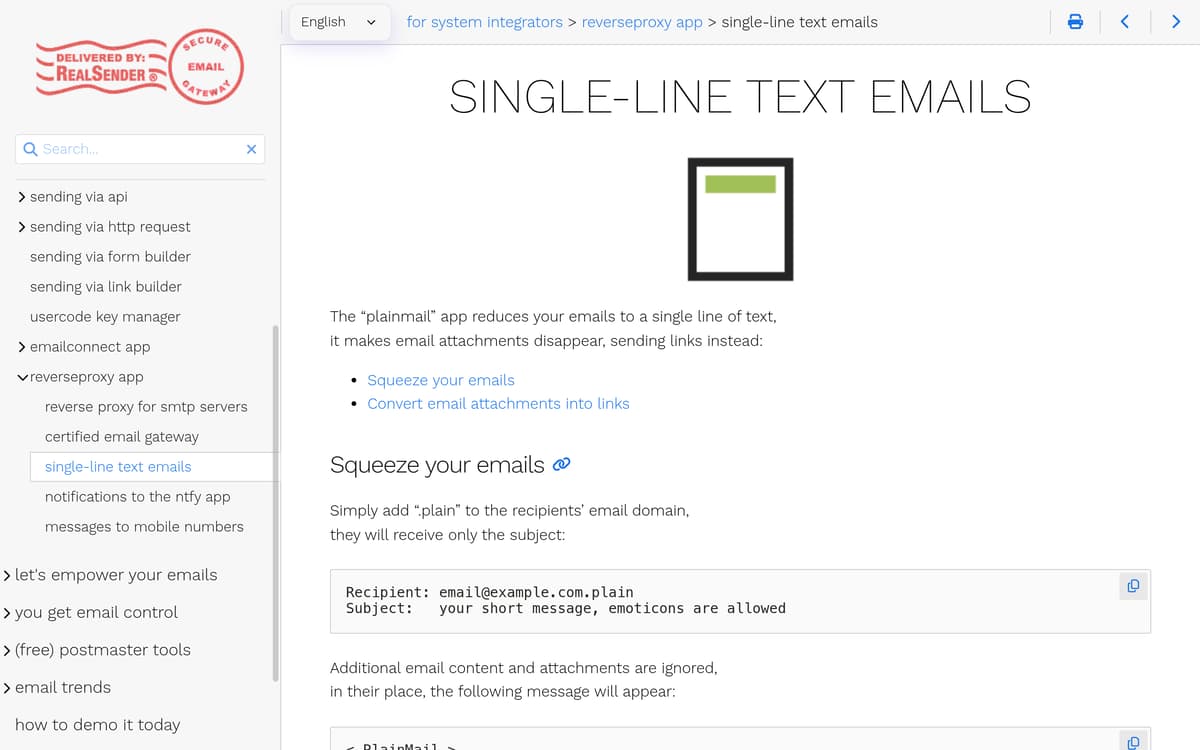
Plainmail is an email hosting service designed to give professionals a real, fully featured inbox on each domain they own without per-domain fees or the need to juggle multiple accounts. It provides standard email protocols, out-sending through Amazon SES with proper domain authentication (SPF, DKIM, DMARC), and integration via an MCP server and REST API. It is not built for bulk email campaigns, but rather for authentic, direct communication.
Key Features
Real IMAP/SMTP Mailboxes: Plainmail supports adding any domain (up to 50), with multiple mailboxes (up to 100). Messages are accessed via familiar email clients like Apple Mail, Outlook, Thunderbird, or even mobile apps, using IMAP/SMTP. There is no proprietary webmail interface.
DNS Automation with Domain Providers: For domains managed via Cloudflare, Vercel, or Porkbun, Plainmail can automatically write necessary DNS records (MX, SPF, DKIM, DMARC). For other DNS hosts, users are provided record values and status checks to complete setup manually.
Outgoing Mail via Amazon SES: Sending is handled via Amazon SES, ensuring proper delivery infrastructure with automatically handled SPF, DKIM, and DMARC verification. Delivery metrics—including bounces and complaint rates—are tracked through the dashboard.
Sending Limits and Usage Policy: Each mailbox can send up to 200 messages per day under normal use. New accounts start with lower limits (around 50 messages/day) during initial usage to protect the shared reputation. Use cases like newsletters, cold outreach, or bulk marketing are explicitly prohibited.
Developer Tools & MCP Integration: Users can issue certain operations (add domains, manage mailboxes and aliases, send, read, reply) via REST API or through the Plainmail MCP server. Integration with AI agents (for example Claude) is supported under granted permissions.
Migration and Ownership Controls: Since mailboxes are standard IMAP/SMTP, you can move your email to other providers later. Domains and DNS records remain under your control. Permissions for domain and mailbox access are configurable and revocable.
Pricing
Plainmail offers a single flat-rate plan for all users:
Cost: $5 per month
Domains supported: Up to 50
Mailboxes supported: Up to 100
Storage allocation: 25 GB
Outgoing limit: Up to 200 messages per mailbox per day (new accounts start with lower limits initially)
No free tier or trial indicated
The lack of multiple pricing tiers simplifies decision-making but also means features beyond the base limit (domains, mailboxes or outstanding usage) require checking whether policies or fair-use limits apply.
Who is it for?
Plainmail is best suited to:
Professionals, developers, or freelancers managing multiple side projects or domains who need real inboxes for each without paying per domain.
People who want full control over their email identities with custom domains and proper authentication.
Users who prefer managing email through familiar clients rather than having to adopt a new platform or interface.
Use cases like responding to customers, vendors, partners, or using domain-based addresses for project-level contact, support, or professional branding.
It is not a fit for:
Businesses or teams aiming to run newsletters, marketing campaigns, or cold-outreach. These are not permitted under the acceptable use policy.
Organizations that depend on a proprietary webmail UX or integrated collaboration tools built around email, such as calendars, collaborative inboxes, or shared public email interfaces.
Users needing heavy sending volumes or onboarding new accounts with large volume right away—Plainmail intentionally limits new accounts to maintain shared reputation.
Final thoughts
Plainmail offers a compelling, low-cost model for managing real mailboxes across multiple domains without escalating domain or mailbox fees. Its approach to DNS automation, domain authentication through Amazon SES, and openness to API and MCP integrations make it particularly attractive for developers or small entities focused on professional email identity. However, limitations on bulk email, the absence of built-in webmail, and usage caps during early use must be considered. For straightforward, domain-based communication with clean deliverability and minimal overhead, Plainmail could be a strong match.
Visit the official website for more.
Keep up to date with our stories on LinkedIn, Twitter, Facebook and Instagram.