Note: The following market intelligence is drawn from Austrade’s recent Landing Pad programs across Singapore, Vietnam and Thailand, run in April and May 2026.
Southeast Asia is having a moment for Australian tech. The region is mid-transformation across multiple sectors simultaneously, digital banking, maritime infrastructure, payments, cybersecurity, and the governments driving that transformation are actively creating pathways for foreign technology to plug in.
For Australian founders who have been watching from the sidelines, the window is open. The question is how to walk through it without wasting time and money on markets that are not ready for what you are selling.
The answer starts with understanding that Southeast Asia is not a single market. Singapore, Vietnam, and Thailand are at different stages of digital maturity, have different regulatory environments, and are looking for different things. Here is what the ground looks like right now in each.
Singapore: a mature market that buys on proof
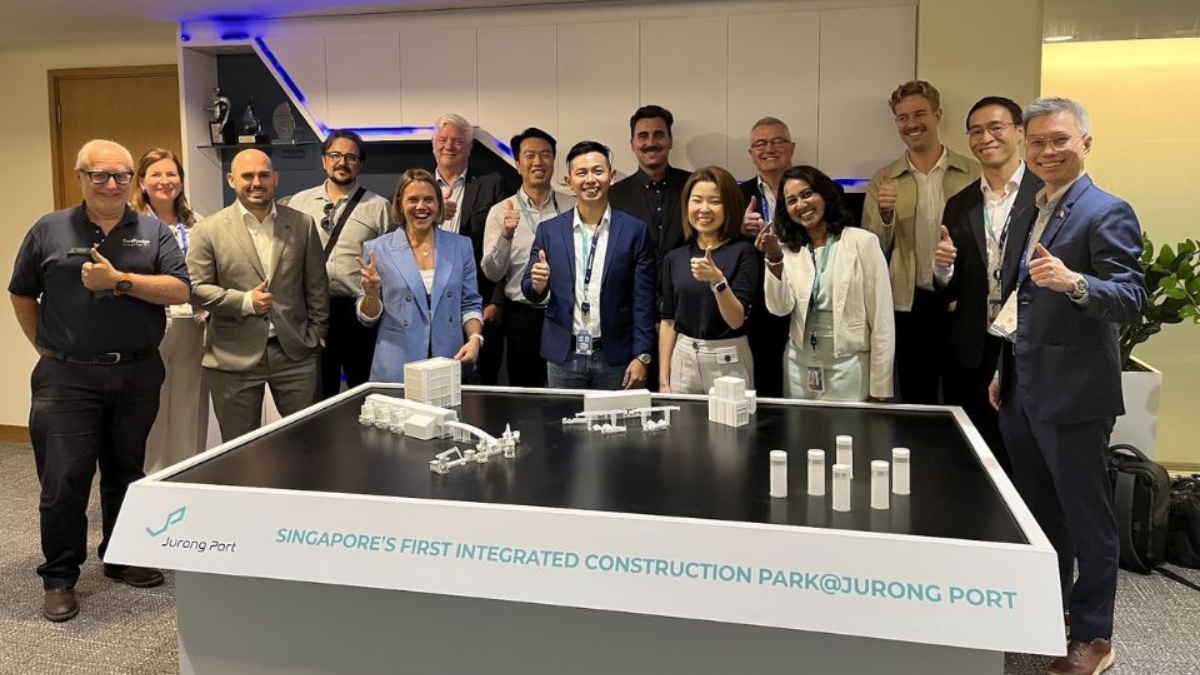
Singapore is the most sophisticated technology market in Southeast Asia and the hardest to crack without genuine proof of concept. The maritime sector is one of the most active buying environments for Australian tech right now. Singapore handles around a fifth of the world’s container transhipment and its maritime ecosystem, spanning port operators, shipping companies, vessel owners, and financiers, is actively investing in technology to cut costs, reduce emissions, and improve efficiency.
The solutions finding traction are specific and outcomes-focused. Underwater vessel-cleaning robots that reduce hull drag and fuel consumption. Software that optimises shipping routes to cut fuel costs in real time. Buyers in this market are sophisticated and procurement cycles are long, but the relationships that lead to contracts are built through direct engagement with organisations like PSA Ventures, AET Tankers, Seatrium, and Jurong Port, alongside the Maritime and Port Authority of Singapore.
For tech firms, Singapore also functions as a regional hub. Establishing a presence there provides a credible base for expansion into other Southeast Asian markets, and several Australian firms have taken that path after securing their first Singapore contract.
Vietnam: a banking sector actively looking for outside solutions
Vietnam’s financial sector is undergoing one of the most significant transformation periods in its history, and it is doing so with a deliberate openness to foreign technology that is rare in the region. The government has established two International Financial Centres and introduced regulatory sandboxes covering credit scoring, open API data sharing, peer-to-peer lending, and digital assets. These are not theoretical frameworks. They are active programs designed to bring in capability that local firms do not yet have.
The specific gaps Vietnamese banks and financial institutions are trying to fill are well defined: cybersecurity, anti-money laundering compliance, identity fraud detection, risk management, payment infrastructure, and digital assets. Australian firms with proven solutions in any of these areas are entering a market where the buyer is already motivated and the regulatory pathway has been deliberately cleared.
The key relationships to build are with the banks themselves, Vikki Digital Bank, Vietnam Military Bank, and Galaxy Holdings are among the most active, alongside the regulatory bodies setting the frameworks. The 2025 Memorandum of Understanding between Austrade Vietnam and the Vietnam Banks Association has also created a formal channel for Australian fintech firms to engage with the sector, which reduces the cold-start problem that makes many international expansion attempts stall before they begin.
Digital payments growth in Vietnam is strong, mobile financial services adoption is accelerating, and AI and data-driven banking are high on every major institution’s agenda. For Australian fintech and regtech founders, the combination of motivated buyers, clear regulatory frameworks, and active government support makes Vietnam one of the most accessible entry points in the region right now.
Thailand: a payments market mid-transition
Thailand’s payments landscape is at an interesting inflection point. The market has a strong mix of alternative payment models already operating alongside traditional card infrastructure, a growing focus on digital currencies, and continued momentum in credit cards. Banks are actively looking to modernise their payment infrastructure to support this evolution, and the decision-makers authorising that investment are accessible at events like Money20/20 Asia in Bangkok.
Cary Horenfelt, Business Development Director at Stanchion Payments, who attended this year’s Bangkok programs, described the opportunity directly. “Thailand is in an interesting transition period for payments, with a strong mix of alternative payment models, a growing focus on digital currencies and continued momentum in credit cards. We see tremendous opportunity here, particularly as banks look to modernise their payment infrastructure to support this evolution.”
For businesses, Thailand works best as part of a broader Southeast Asian strategy rather than a standalone market. The relationships built at major regional events translate into introductions across Thailand, Indonesia, Malaysia, and the Philippines, making Bangkok a useful hub for regional relationship building even when the immediate commercial opportunity is Thailand-specific.
What to get right before you go
The founders finding traction in Southeast Asia share a few consistent characteristics. They arrive with a clear and specific value proposition rather than a general pitch about their platform’s capabilities. They have done enough market research to understand which problem they are solving and for whom. And they invest in relationships before they push for transactions, because in every Southeast Asian market, trust precedes commercial agreement.
The practical starting point for any Australian tech founder considering the region is to identify which single market has the clearest fit for what you already do, not what you could adapt to do. Vietnam’s banking transformation is a specific opportunity for specific capabilities. Singapore’s maritime sector is buying specific solutions. Thailand’s payments transition is relevant to a specific category of firm. Spreading across all three simultaneously without a strong home base in one of them is how expansion budgets get consumed without deals to show for it.
Southeast Asia is open. The founders who treat it as one market will find it frustrating. The ones who pick their entry point carefully and build from there are the ones closing deals.
Australian tech scaleups interested in Southeast Asian expansion can access Austrade’s Landing Pads program across five hubs including Ho Chi Minh City, Jakarta, London, San Francisco and Singapore. Learn more about the Landing Pads program.
ALSO READ: Singapore: A mature and sophisticated market for Aussie exporters
Keep up to date with our stories on LinkedIn, Twitter, Facebook and Instagram.