




Business conditions eased to long-run average levels in January whilst inflation pressures persist, according to CreditorWatch Chief Economist Ivan Colhoun’s analysis of the latest NAB survey.
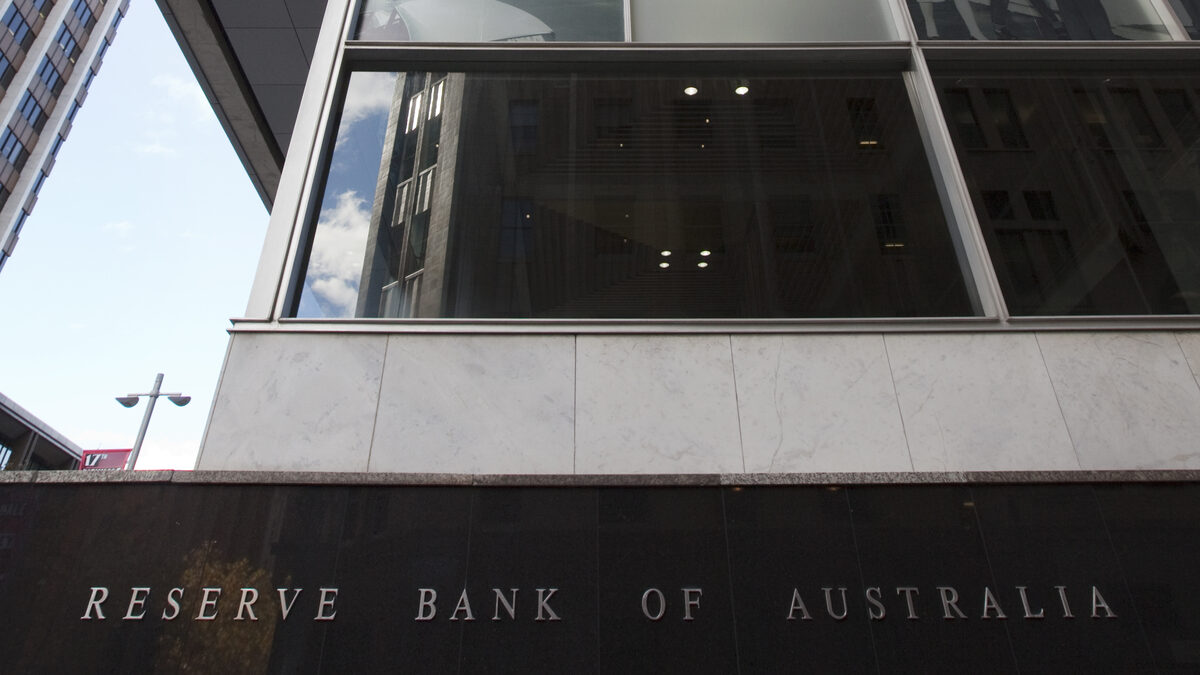
What’s happening: Business conditions eased to plus seven in January from plus nine, whilst consumer sentiment fell 2.6 per cent to 90.5 in February following the Reserve Bank of Australia’s 25 basis point interest rate hike.
Why this matters: Australian businesses face ongoing inflation pressures despite easing capacity utilisation, suggesting the economy isn’t overheating. Employment intentions remain healthy at plus five, but consumer sentiment sits in pessimistic territory.
Australian businesses are sending mixed signals about the economy’s direction, with the latest surveys revealing what CreditorWatch Chief Economist Ivan Colhoun describes as “a lot more noise than signal” in January’s results.
Business conditions eased modestly to plus seven from plus nine in January, according to the NAB Business Survey released today, returning to the long-run average level. However, Colhoun says this reading is consistent with an economy broadly growing around trend, not rolling over.
“Business conditions, along with job advertisements, my favourite indicator of the Australian economy, edged two points lower to the plus seven long-term average level in January,” says Colhoun in his economic brief analysing the survey. “This is consistent with an economy broadly growing around trend.”
Inflation pressures persist
The inflation picture remains troubling for the Reserve Bank of Australia, with retail prices falling to their lowest rate since the pandemic whilst input costs continue running at elevated levels.


“Perhaps the most pleasing aspects of the Survey were the unchanged plus five reading for employment intentions and the fall in the retail prices reading to the lowest rate since the pandemic,” Colhoun notes. “The latter, if sustained, would be consistent with 2 to 3 per cent inflation, though the input cost component continues to run at a rate well above that consistent with 2 to 3 per cent inflation.”
According to Colhour, the elevated input costs suggest the retail price reading may not be sustained and might reflect somewhat changed retail pricing seasonality. “Less positively, input costs continue to run at an elevated rate, unlikely to be consistent with at-target inflation if sustained,” he says.
The survey’s inflation indicators have consistently shown stubborn cost pressures throughout recent months, with businesses reporting rising input costs even as the central bank delivered three rate cuts during 2025.
Capacity utilisation easing
With the RBA using a capacity-constrained economy narrative to justify higher than expected inflation outcomes, there is extra focus on the NAB Survey’s measure of capacity utilisation. Whilst in levels terms capacity utilisation remains elevated, it declined for a second successive month.
“What many economists don’t realise about the NAB Survey measure of capacity utilisation is that it refers to the utilisation rate of both capital and the labour force,” Colhoun explains. “My suspicion is the current elevated level to a large extent reflects the very low level of unemployment that developed during the pandemic period when the borders were closed.”
He adds that this is similar but not as extreme to the unemployment situation during the mining boom, whereas broader activity and non-labour capacity use currently do not seem comparable to those times.


The capacity constraints are starting to loosen at the margin, according to Colhoun’s analysis. “Capacity utilisation declined for a second month, undermining the case that inflation is being driven by an overheated economy, though utilisation levels remain historically high due to tight labour markets,” he says.
All industries reported a deterioration in business conditions in January, with the exception of Transport and Utilities and Finance, Property and Business Services, which both rose. Of the industries reporting weaker conditions, Retail and Manufacturing are back in negative territory, where they have been for much of the post-COVID period.
“The drop in Mining is surprising given recently very elevated prices for a range of commodities,” Colhoun notes. “Mining has been very volatile in the NAB survey of late, and I am inclined to see this move as more noise than signal.”
There were some significant drops in business conditions reported in the traditionally very volatile states of Tasmania and South Australia, but falls were recorded in New South Wales and Western Australia also. “WA has been very volatile and I am also inclined to treat this more as noise than signal,” Colhoun says. “The drop in NSW is worth monitoring as previously this has been an important underpinning of overall conditions.”
Consumer confidence drops
Consumer sentiment fell 2.6 per cent to 90.5 in February from 92.9 in January, according to the Westpac Melbourne Institute Consumer Sentiment Index, following the RBA’s decision to raise the cash rate by 25 basis points to 3.85 per cent on 3 February.
“February’s interest rate rise dented consumer sentiment, but a little less than might have been expected, suggesting the interest rate rise was largely expected,” Colhoun says in his analysis of the consumer sentiment data.
The Reserve Bank raised interest rates in early February, partially reversing one of the shortest and shallowest easing cycles last year. The 25 basis point increase came after inflation picked up materially in the second half of 2025, with the Board judging that some of the increase in inflation reflects greater capacity pressures.
“The decline was concentrated in two components of the survey: buyer sentiment and family finances,” Colhoun notes. “This left consumer confidence in slightly deeper net pessimistic territory, a situation that the cost of living and inflation has brought about more or less persistently since 2022.”
The rise in the price level over the past four and a half years is very noticeable, according to Colhoun, and the RBA’s latest forecasts push back further the timing of a return to more manageable rates of inflation. “The higher rates of inflation in the interim, of course, cumulate on top of those previous cost of living rises,” he says.
However, low unemployment has been an important offset to these cost of living pressures. “Without which, the implications for consumer spending, businesses, the credit cycle and the broader economy would likely have been considerably more serious,” Colhoun explains.
Unemployment expectations deteriorated 0.3 per cent in January but are relatively unchanged over the past six months, which is usually consistent with no significant change in unemployment. “Importantly, despite deteriorating slightly in the month, unemployment expectations remain very low and mostly broadly stable,” he says.
Rate hike likely
The survey results are slightly positive for interest rate markets, though Colhoun believes inflation is still unlikely to return to the target without at least one further interest rate increase.
“The survey is marginally supportive for interest rate expectations, yet inflation dynamics remain inconsistent with target, leaving at least one further RBA rate hike likely,” he says in his bottom line assessment. “I expect to be delivered in May.”
This represents a significant shift from earlier in 2025, when major banks predicted multiple rate cuts. The RBA’s February statement indicated that whilst inflation has fallen substantially since its peak in 2022, it picked up materially in the second half of 2025, with the Board judging that some of the increase reflects greater capacity pressures.
“It’s also worth noting that this survey was conducted entirely before the RBA raised interest rates in February, though there of course may have been some impact as more businesses came to the conclusion that interest rates were indeed likely to rise,” Colhoun says.
Despite the challenges, Colhoun continues to assess that Western Australia and Mining are beginning to have some positive spillover benefits to the broader economy, though this wasn’t in evidence in today’s survey.
For businesses navigating the current environment, the key takeaway is that whilst the economy is tracking around trend rather than rolling over, inflation pressures remain elevated enough to warrant further monetary policy tightening. The mixed signals across sectors and states suggest businesses should prepare for continued volatility in economic conditions through the first half of 2026.
Ivan Colhoun is Chief Economist at CreditorWatch, where he leads economic analysis and forecasting for the Australian business credit market.
Keep up to date with our stories on LinkedIn, Twitter, Facebook and Instagram.
