Dynamic Business Logo
Home Button
Bookmark Button

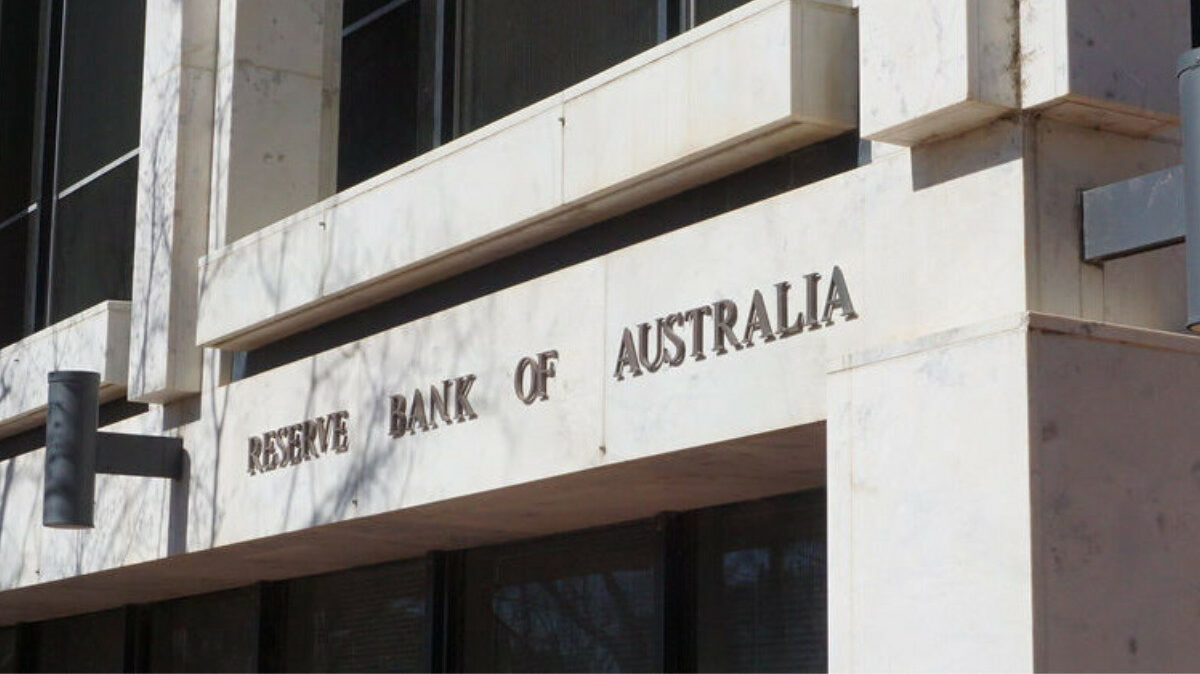
Source: Spelio on Flickr

RBA may need to rethink rate cuts as business conditions tighten, says economist

Ivan Colhoun from CreditorWatch says inflation hasn’t truly returned to target yet, and businesses reporting high input costs could force the RBA to reconsider rate rises.

What’s happening: Australian business conditions pulled back to +7 in November from +9 the previous month, according to the latest NAB Business Survey analysed by CreditorWatch Chief Economist Ivan Colhoun.

Why this matters: Overall, the survey continues to tell us that businesses are capacity constrained and that if economic growth accelerates further from the current starting point, we may quickly see additional pressure on prices,” says NAB Chief Economist Sally Auld.

Australian businesses emerged from the Trump tariff shock of mid-2025 in relatively good health, but fresh challenges are mounting as capacity constraints and stubborn inflation threaten the economic recovery.

The November NAB Business Survey, released today, shows business conditions eased to +7 from +9 in October, marking a modest pullback from what had been a steady improvement since the tariff-driven confidence collapse earlier in the year. CreditorWatch Chief Economist Ivan Colhoun says the drop was evident across most sectors and states, with Western Australia and Queensland experiencing particularly notable declines.

“Business conditions are improving compared with six months ago, when the Trump tariff shock hit confidence, but they slipped slightly this month to a still-healthy level of +7,” Colhoun notes in his analysis of the survey results.

The more concerning development lies beneath the headline figures. Capacity utilisation ticked up to 83.6%, the highest reading in 18 months, whilst business sales dropped 6 points to +12 and profitability fell 5 points to +4.

“Overall, the survey continues to tell us that businesses are capacity constrained and that if economic growth accelerates further from the current starting point, we may quickly see additional pressure on prices,” says NAB Chief Economist Sally Auld.

Mining and retail lead the pullback

Sectors that might have been expected to benefit from higher commodity prices showed unexpected weakness. Mining, retail and wholesale trade all recorded softer conditions in November, casting doubt on whether commodity price strength has genuinely driven Australia’s recent improved economic data.

“This softens the idea that higher commodity prices are driving Australia’s recent stronger data, though volatility means it’s too soon to rule it out,” Colhoun observes.

Victoria continues to record the weakest conditions nationally, although the state has shown improvement from the lows recorded in the first half of 2025. Only the wholesale sector bucked the broader trend, maintaining steady conditions.

Employment indicators edged up 1 point to +4, suggesting a relatively stable labour market, consistent with recent job advertisement data. However, this stability comes against a backdrop of elevated capacity constraints that limit businesses’ ability to respond to increased demand.

Inflation pressures remain uncomfortably high

The survey’s inflation indicators paint a troubling picture for the Reserve Bank of Australia. Price indicators were mostly higher in November, with purchase costs running at a quarterly rate of 1.3% and retail prices at 0.8%.

“Inflation pressures remain uncomfortably high. Businesses are reporting rising input costs and high capacity utilisation, both inconsistent with inflation returning sustainably to the RBA’s target,” Colhoun warns.

His analysis suggests input costs have never fallen to levels broadly consistent with the RBA’s 2 to 3% inflation target, even as the central bank cut rates three times during 2025.

“To me, it’s important that rather than inflation reaccelerating, it seems more that inflation had not sustainably returned to target when the RBA eased during 2025,” Colhoun says.

Rate rise scenario back on the table

The implications for monetary policy are stark. Colhoun believes no near-term interest rate cuts can be considered whilst the RBA will soon need to canvas scenarios where interest rates may need to rise earlier than expected.

“That could be if the Q4 trimmed mean inflation reading was 0.9% quarter-on-quarter or above,” he explains.

This represents a significant shift in outlook. Earlier in 2025, major banks predicted multiple rate cuts, with some forecasting the cash rate falling to 3.6% by year’s end. The RBA has delivered three cuts this year, taking the rate from 4.35% to its current 3.60%, but progress has stalled as inflation proves more persistent than anticipated.

The central bank held rates at its December meeting, with fresh data expected Thursday at 11.30am providing crucial insights into the labour market’s health and inflation trajectory.

What businesses should watch

For business owners, the message is clear: prepare for an extended period of tight operating conditions. With capacity utilisation at 18-month highs, companies have limited room to expand output without significant investment or price increases.

Those planning expansion should factor in potentially higher borrowing costs if the RBA reverses course, whilst businesses struggling with input cost pressures may find it increasingly difficult to maintain margins without passing costs through to customers.

The survey underscores that whilst Australia avoided the worst outcomes from global trade tensions, the domestic economy faces its own set of challenges. Capacity constraints, stubborn inflation and uncertain monetary policy create a complex environment for business planning as 2025 draws to a close.

Keep up to date with our stories on LinkedInTwitterFacebook and Instagram.

What do you think?

    Be the first to comment

Add a new comment

Yajush Gupta

Yajush Gupta

Yajush writes for Dynamic Business and previously covered business news at Reuters.

View all posts