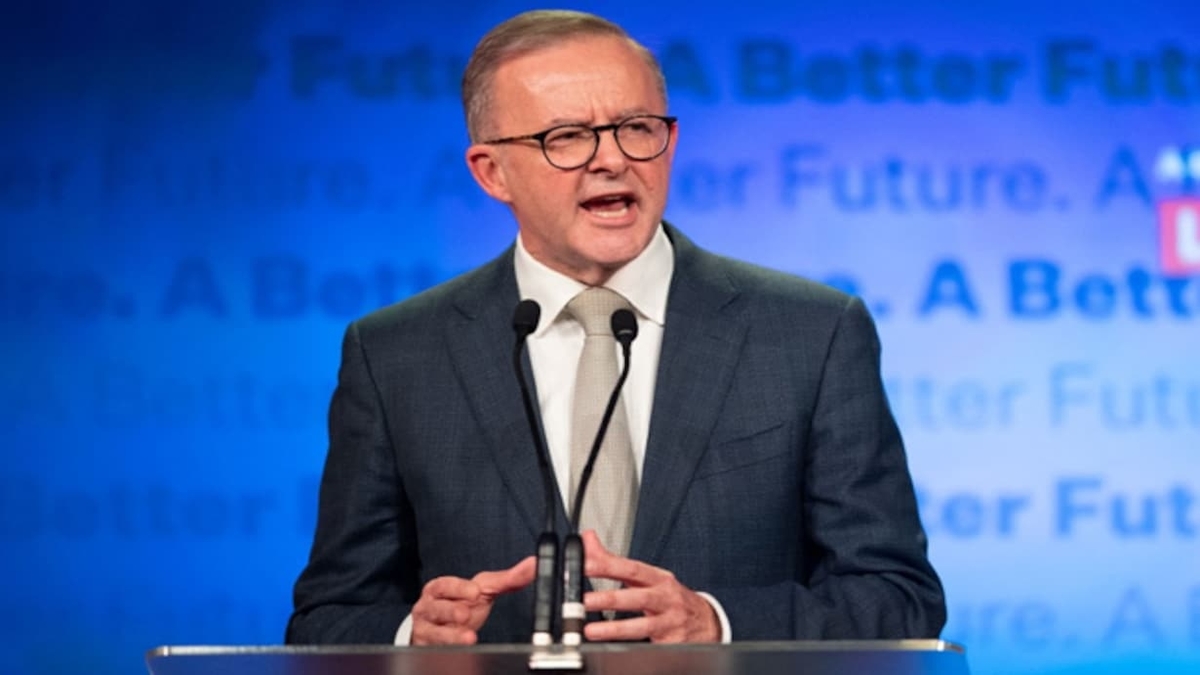
The Albanese Government has announced a new Office of AI and Australian Standards for AI, promising protection for creatives and clear datacentre rules.
The Albanese Labor Government will introduce a world-leading artificial intelligence framework to ensure Australia can capture the opportunity, share the benefits and keep Australians safe.
The government said its approach would be delivered the Australian way, without undercutting conditions, dividing communities or damaging the environment.
Office of AI established
Effective immediately, the Office of AI has been established within the Department of Prime Minister and Cabinet to accelerate implementation of the Australian Standards on a national level.
The government’s approach will be considered by National Cabinet in August, with standards expected to be legislated early next year. The implementation of these standards is intended to deliver a simple, consistent regulatory framework for large datacentres and AI training, and is expected to be the first such framework legislated by a government worldwide.
Datacentre standards outlined
The government will introduce a set of Australian Standards for AI, building on the Data Centre Expectations, using Australian values as the benchmark to ensure AI works in the country’s interests.
The new standards will set out clear rules for large datacentres, including a legal obligation to underwrite their own new power supply, pay their full share of connection costs so energy bills are not impacted, reduce power when needed to strengthen the grid, and be as water efficient as possible.
The Federal Government will also work with states and territories to ensure large datacentres are built in the most appropriate locations, with input from local communities.
According to the government, the AI Standards will deliver greater clarity, speed up approvals and streamline the process for verifying compliance with energy, water, safety and other requirements.
Creative protections promised
The government said it will also ensure the strongest possible protection for Australian artists and media. The approach will ensure Australian writers, artists and journalists retain ownership over their work, meaning no company should use Australian creative works to train AI without the artist’s control.
The government will outline its whole-of-government AI consumer safety priorities in coming weeks, building on the recent establishment of the AI Safety Institute.
Ministers outline the approach
Prime Minister Anthony Albanese described the framework as a deliberate choice about Australia’s technological future.
“This world-leading framework is about Australia choosing to shape the future rather than letting the future of AI shape us,” Albanese said.
“This framework is about protecting our national interests and ensuring certainty for growth, jobs and investment. If we set our national standards high, then we can make AI stand for Australia’s interests.”
Senator Tim Ayres, Minister for Industry, Innovation and Science, connected the framework to broader industrial policy.
“A Future Made in Australia is all about shaping Australia’s industrial and technological future in the national interest and in the interest of every Australian,” Ayres said.
“That means securing critical AI investments here so Australians shape the future. Australian Standards for AI strengthen Australia’s framework to make sure AI investments are on Australia’s terms and strengthen our resilience, security and economy.”
Andrew Charlton, Assistant Minister for Science, Technology and the Digital Economy, emphasised the social dimension of the reforms.
“Australia has an opportunity to ensure that new technology delivers inclusive, safe and sustainable growth, with shared benefits for our workers, and the community,” Charlton said.
“Establishing a clear and enforceable social licence for AI is fundamental towards achieving this objective.”
Tax settings raise concerns
In an exclusive comment to Dynamic Business, Laina Chan, practising barrister and founder and CEO of MiAI Law, a legal AI research and risk management platform, welcomed elements of the announcement whilst raising concerns about competing policy settings.
“There is much to welcome in the Prime Minister’s announcement. A national Office of AI, coordinated standards and a whole-of-government approach should reduce regulatory fragmentation and provide greater certainty for investors and Australian businesses,” Chan said.
“The Prime Minister is also right to identify Australia’s stable democracy, legal system and financial institutions as important competitive advantages.”
However, Chan warned that institutional stability represents only one factor in investment decisions.
“Institutional stability is only one part of an investment decision. Foreign investors also consider their after-tax returns, the tax consequences of exiting an investment and the cost and complexity of compliance. The Government’s expansion of the foreign-resident capital gains tax regime, together with the increased withholding rate and removal of the transaction threshold, creates a significant countervailing disincentive.”
Investment competitiveness questioned
Chan argued that regulatory certainty alone cannot offset tax policy that makes Australian investment less attractive.
“Australia cannot rely on legal stability to attract globally mobile AI investment while making the acquisition, ownership and disposal of Australian assets materially less attractive. National standards and streamlined approvals are positive measures, but they need to form part of a coherent investment policy that also recognises the importance of internationally competitive tax settings.”
The government has expressed confidence in Australia’s position to capture this moment of technological advancement. According to the joint media release, the approach will help further grow Australia’s economy, strengthen sovereignty, secure benefits consistent with national interests, and lift living standards.
With National Cabinet set to consider the framework in August and legislation expected early next year, the coming months will determine how the balance between regulatory certainty, creative protections and investment competitiveness plays out in practice. As Chan’s commentary highlights, the success of Australia’s AI ambitions may depend as much on the details of tax policy as on the AI Standards themselves
Keep up to date with our stories on LinkedIn, Twitter, Facebook and Instagram.