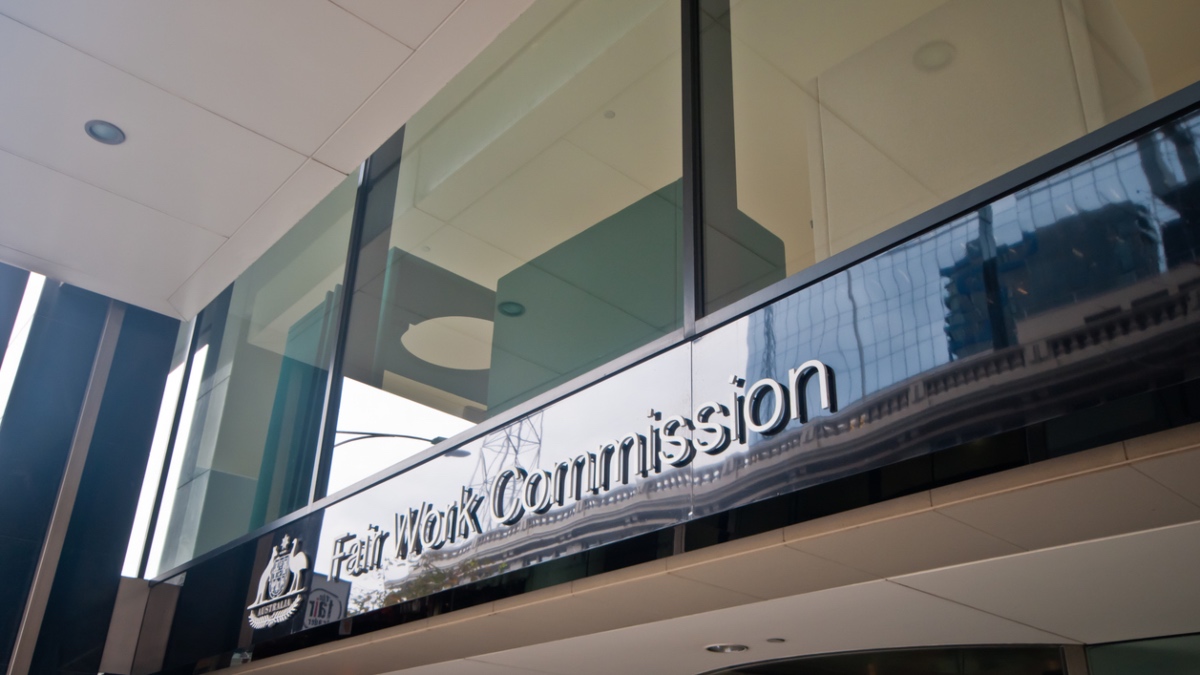
The Fair Work Commission has handed down its annual wage decision, lifting minimum award rates by 4.75% from 1 July.
Australia’s minimum wage will rise to $26.44 per hour from 1 July 2026, after the Fair Work Commission handed down its annual wage review decision. Modern award minimum wages will increase by 4.75% across the board, while the national minimum wage moves from $24.95 to $26.44 per hour, or $1,004.90 per week based on a 38-hour week.
The national minimum wage itself covers only a small fraction of the workforce. The more significant change is the increase to modern award rates, which cover approximately 21.1% of all employees in Australia, amounting to close to 2.8 million people, according to the Commission’s decision.
Who it hits hardest
The award-reliant workforce is heavily concentrated in a handful of sectors. The Commission noted that accommodation and food services, health care and social assistance, retail trade, and administrative and support services together account for more than two thirds of all modern award-reliant employees. For businesses in those industries, the July increase will have a more immediate and direct impact on wage costs than it will for businesses in other parts of the economy.
The profile of award-reliant workers is also distinct from the broader workforce. Over 60% are female, more than 70% work part-time, and more than half are casual employees, according to the Commission. More than a third are classified as low paid.
The Commission described reaching this year’s decision as particularly challenging. Economic conditions had been broadly sound through 2025, with healthy growth, rising employment, and moderate wages growth. But inflation rose sharply in the second half of the year, moving well above the Reserve Bank’s target band, prompting a tightening of monetary policy that the Commission said would slow the economy in the year ahead.
Adding to that complexity, the Middle East conflict that broke out on 28 February 2026 has disrupted oil supplies and pushed up fuel and goods prices in Australia, creating further uncertainty about the economic outlook. The Commission noted that Reserve Bank and Budget forecasts still project headline inflation to return to the target band by the end of the 2026/27 financial year, but acknowledged the added difficulty in setting wages against that backdrop.
The lowest paid
Beyond the across-the-board increase, the Commission made a structural adjustment to the very lowest wage classifications in the modern award system. The C13 rate, currently the lowest rate for ongoing employment, will be increased by an additional amount as the first stage of a plan to phase it out entirely over three stages. The C14 entry-level rate will rise by the same percentage to maintain its relativity.
The Commission estimated around 100,000 of the lowest-paid workers will be affected by this additional adjustment. The result is that the lowest ongoing employment rate in the modern award system will be $26.44 per hour, while the entry-level rate for employment of up to six months will sit at $25.74 per hour.
Keep up to date with our stories on LinkedIn, Twitter, Facebook and Instagram.