Dynamic Business Logo

LogiWork 2026: How can our work tools do more for us? 

Australia ranks among the most mistrusting nations on AI adoption according to KPMG. Industry experts on why that gap is a problem Australian businesses need to fix

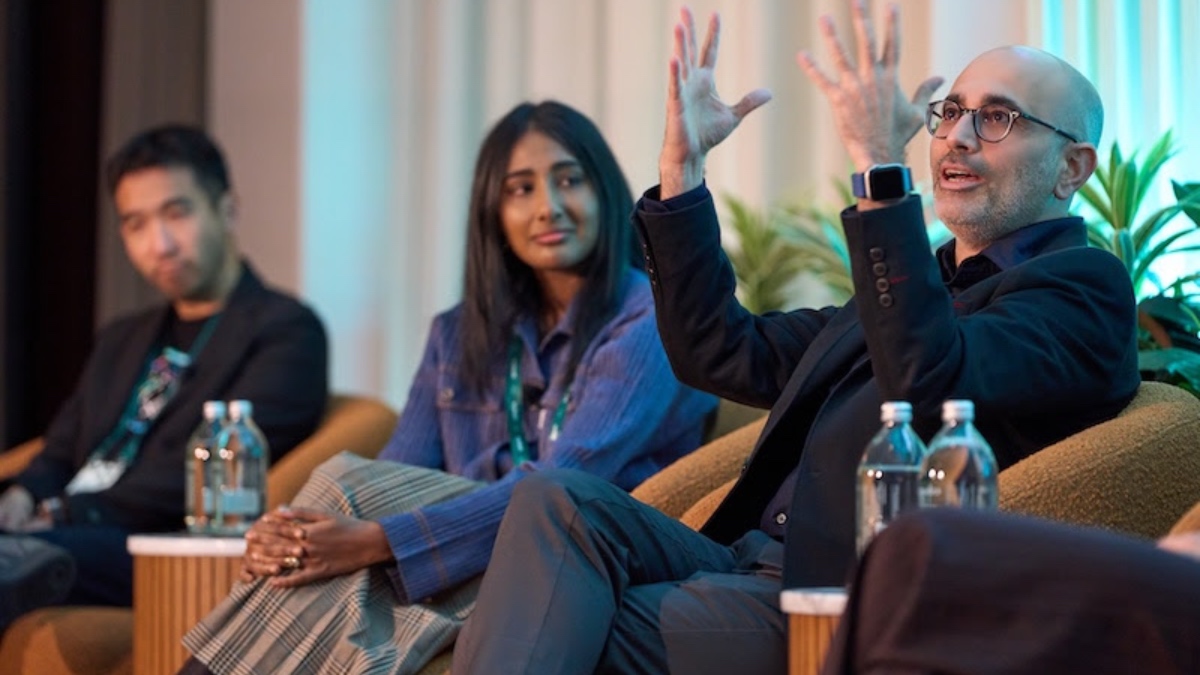
Ninety-five percent of enterprise AI pilots fail. That figure, drawn from research by the Massachusetts Institute of Technology, was one of the more arresting data points to emerge from a panel of industry leaders at LogiWork, a future of work event hosted by Logitech in Sydney on 10 June.

The discussion that followed it was equally direct: most organisations are approaching AI adoption in a way that almost guarantees those outcomes.

The panel brought together voices from across technology, media, finance, and neuroscience to examine what working smarter actually looks like in 2026 and what Australian businesses are getting wrong in the race to adopt new tools. The conversations that followed covered trust, the brain, HR, and what leaders should actually do in the next twelve months.

The trust problem

Australia has a specific challenge with AI that other markets do not face to the same degree. A 2026 KPMG study ranked Australia among the most mistrusting nations when it comes to AI adoption. Soon-Ee Cheah, EGM for AI Products at Xero, offered a cultural explanation for that finding at the LogiWork panel.

In financial technology, Cheah said, users trust tools based on predictability rather than complexity. They need to know that an AI is using the same source data as a human would if given the same task. But beyond the technical dimension, Cheah pointed to something distinctly Australian. He theorised that the country’s concept of mateship, the expectation of loyalty, reliability, and being on your side, means technology companies must explicitly prove AI is on the user’s team if it is to be successfully adopted by Australian businesses.

That framing has practical implications for SME owners introducing AI tools to their teams. The way a tool is introduced, the transparency around what it does and does not do, and whether staff feel it is working with them rather than replacing or surveilling them, may matter more in the Australian context than in comparable markets.

Dr. Ben Hamer, panel moderator and globally awarded futurist, put forward one of the session’s sharpest observations. AI represents the largest workforce transformation in generations. Yet it is almost universally being led by IT departments, with human resources largely absent from the process.

According to research from the SHRM Executive Network, only three to five percent of HR leaders are currently leading the workplace rollout of AI tools. Dr. Hamer argued that the use of such a narrow range of expertise is a key reason why so many AI pilots fail. Without HR’s perspective on how change affects people, how teams operate, and what friction looks like before it becomes a problem, the rollout of AI tools creates operational issues and interpersonal friction that technology alone cannot resolve.

For small businesses where HR is often the owner or a single generalist, the implication is the same. Introducing AI tools as a technology decision rather than a people decision is where most implementations begin to break down. The question of how your team will experience the change matters as much as whether the tool works.

The cognitive cost of change

Rochelle Tognetti, Adobe Asia Pacific’s AI Evangelist, brought a neuroscience lens to the panel discussion that reframed how business leaders should think about staff reluctance to adopt new tools.

Her central argument was direct: change, in whatever form, is cognitively expensive. The brain does not resist change because people are uncooperative. It resists change because adaptation requires significant cognitive resources, and that cost is real and measurable. For employers introducing new workplace technologies and processes, Tognetti argued that potential reluctance should not be interpreted as obstructiveness but as a natural side effect of the brain being under strain during a period of change.

She also raised a point that cuts against the dominant efficiency narrative around AI adoption. Repetitive tasks, often the first to be automated, can be vital to gaining experience in a specific craft. Employers should consider the possibility that streamlining those tasks too early removes the learning opportunities that build genuine capability over time. Working smarter, in Tognetti’s framing, means creating the conditions that unlock human potential rather than simply automating around it.

Nikki Chowdhury, Director of Audience at Vogue Australia, echoed that framing from a practical standpoint. Working smarter, she said, means using tools as scaffolding to adapt the world to the person, simplifying the things people find difficult so they can spend more time on the work they do well.

What to do in the next 12 months

As the panel closed, each participant was asked what Australian business leaders should do to thrive over the next twelve months.

Shay Hamama, Chief Technology and Operations Officer at Luxury Escapes, made the case for courage. With the technology transition moving as quickly as it is, leaders need to avoid hesitation, be bold, and not wait for perfect certainty before adopting new solutions. Chowdhury reinforced that point with a specific observation about the Australian market: local business leaders tend to wait for things to happen overseas before acting, and that risk aversion is costing them time and competitive ground.

Cheah’s closing point was the most practical. Decision-makers should take the time and energy to properly experiment with AI in their own business context. Not to follow what others are doing or to absorb the prevailing narrative around AI, but to test what the technology actually does in the specific environment of their own operations, with their own teams, serving their own customers.

For small business owners, that is the most actionable takeaway from the day. The data on failed pilots, distrust, and cognitive strain describes what happens when AI adoption is approached as a deployment problem. The businesses that will get this right are the ones that treat it as a people problem first.

Yajush Gupta

Yajush Gupta

Yajush writes for Dynamic Business and previously covered business news at Reuters.

View all posts