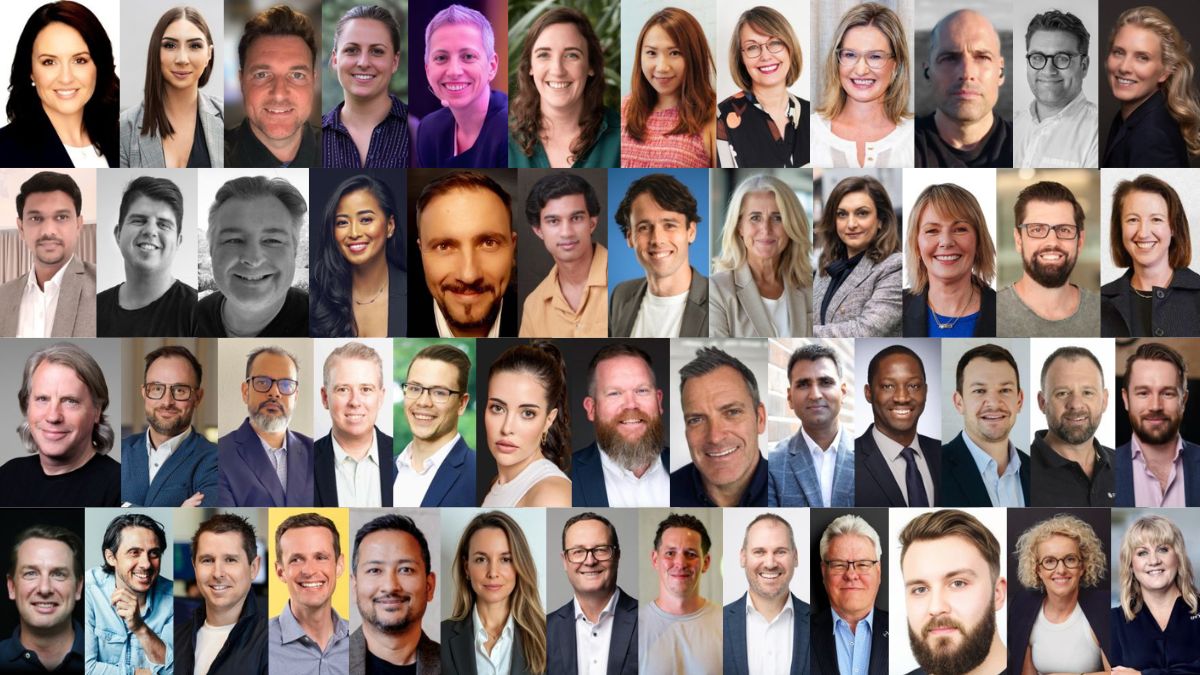
This week’s Let’s Talk our experts separate the AI hype from the developments that will genuinely affect how small and medium businesses operate, hire and compete over the next year.
Artificial intelligence is no longer a future consideration for small businesses. It is already reshaping how businesses find customers, manage operations, handle administration and compete for talent. The challenge for most SME owners is not whether AI is relevant. It is knowing which developments are worth paying attention to now and which can wait.
The pace of change is making that harder. NVIDIA’s GTC conference this week alone produced dozens of announcements spanning local AI agents, physical robotics and new open models. Globally, tech layoffs linked to AI restructuring are accelerating. Consumer behaviour is shifting. And the tools available to small businesses are expanding faster than most owners have time to evaluate. This week’s Let’s Talk our experts cut through the noise and identify the early AI trends that will actually matter for SMEs in the next 12 months.
Let’s Talk!
Jo-Anne Ruhl, Vice President and Managing Director, Workday ANZ
“One of the biggest AI shifts businesses will see over the next 12 months is the move from experimenting with standalone tools to embedding AI directly into everyday work. We are also seeing a growing focus on improving the quality of AI outputs and helping employees build the skills to use AI effectively.
Right now, many organisations are using AI to move faster, but not always more effectively. A recent Workday report, “Beyond Productivity: Measuring the Real Value of AI,” shows employees are saving several hours each week using AI, but many are then spending additional time correcting or clarifying AI-generated outputs. That highlights the next phase of AI adoption: improving the quality of the output, not just the speed.
For businesses, the biggest gains will come from AI that sits directly inside the systems and processes people already use every day to get work done. When AI is embedded into core business processes such as finance, HR and planning, it can help automate routine tasks, surface insights and reduce manual work across the organisation, whilst also delivering greater accuracy due to clean data and clear context.
But technology alone isn’t the answer. The organisations who will see the most value are also investing in skills and redesigning how work gets done, so employees can focus more on judgement, decision-making and high-value activities which move the organisation forward. That’s how businesses move beyond AI experimentation and start turning time savings into real business impact.”
Adam Beavis, Vice President and Country Manager, ANZ, Databricks
“The next wave of AI impact for SMEs will come from moving beyond experimentation to embedding AI into everyday business processes. The biggest shift will be toward domain-specific agents grounded in an organisation’s own data, not just generic tools. Whether the task is assisting with customer inquiries, supporting supply chain decisions, or reconciling invoices, AI will move from sitting alongside core workflows to operating inside them.
We’ll also see more SMEs adopting coordinated AI systems where multiple agents work together to handle different tasks. This mirrors how human teams operate and, when built on unified, governed data, makes AI more reliable and easier to manage.
SMEs that incorporate AI most successfully will treat it as an ongoing capability, not a one-off deployment. With models and business conditions constantly changing, if performance isn’t continuously evaluated and improved, value erodes quickly. Those that combine strong data foundations with clear ownership will unlock real productivity gains in the year ahead, while others risk stalled pilots that don’t scale.”
Brigid Archibald, Vice President Japan & APAC at Miro
“Over the next 12 months, SMEs will become less focused on implementing new AI tools and increasingly focused on how to use the ones they have. Many of them have spent the past two years experimenting with pilots or testing AI and they will now move from experimentation to integration.
AI delivers the greatest value when it’s embedded into everyday workflows and shared across functions, rather than used as an individual productivity shortcut. We’ll see the most successful SMEs introduce AI into how their team collaborates—from strategy and planning through to execution—enabling faster decision-making and more inclusive idea generation.
We’ll also see a shift from SMEs using AI just as an efficiency tool to instead using it as a collaboration partner. When businesses can collectively build, refine, and test ideas with AI in shared environments, it reduces silos and ensures knowledge doesn’t sit with just one person.
With smaller teams and fewer layers, SMEs are uniquely positioned to integrate AI quickly, align teams around shared goals, and turn experimentation into real business impact.”
Craig Nielsen, Vice President, Asia Pacific & Japan, GitLab
“Holistic AI agent visibility will become a business imperative.
Over the next year, businesses will realise they need visibility into the agents running across their entire network, as teams spin up AI systems from development tools, cloud platforms, and countless other sources without centralised oversight. Agent platforms that can discover and catalog these distributed AI systems will become increasingly important.
This shift will be driven by a practical business imperative: as agents increase system usage and computing costs, businesses will demand clear ROI tracking and qualification for their AI investments. Companies will stop treating agent deployments as an untracked experiment and start requiring the same financial accountability they expect from any other technology. The most successful businesses will implement agent discovery platforms that provide visibility into what agents are running, what resources they’re consuming, and whether they’re delivering measurable business value.”
Lukas Carruthers, Head of CX Sales and GTM – APAC, Zoom
“For SMBs, the next wave of AI isn’t flashy, it’s practical. Automation is helping small customer service teams save time, reduce stress, and deliver better service to customers. While there’s plenty of hype, the real benefit comes from tools that make work easier for staff and faster for customers.
When simple questions are handled automatically, staff have time and energy to give customers better, more personal support, and it shows. This means looking at both sides of the equation: making life easier for staff while improving how customers experience your business. By giving your team the right tools, you can stand out through faster, more personal service, while staff feel empowered and less overwhelmed.
At Zoom, we’ve experienced a significant boost in customer satisfaction using our own AI chatbot. Since introducing Zoom Virtual Agent (ZVA) to customers, our customer satisfaction score has jumped from 55% to 80%, while staff felt more empowered and less stressed. AI helped shift the business from reacting to issues to anticipating them, improving the experience for everyone.
In the next year, SMBs don’t need flashy AI experiments. They need practical tools that reduce workload, speed up service, and help small teams stand out with great customer experiences. That’s where AI can make a real difference.”
Tracy Moore, General Manager, Data and AI, MYOB
“AI has moved from boardroom buzzword to everyday business tool faster than almost anyone predicted. MYOB’s November Business Monitor tells the story: 30% of Australian SMEs are already using AI, with 82% reporting a positive impact. The experiment is over. The question now is what comes next.
Three trends will define how SMEs experience AI in the next 12 months:
- First, AI will integrate seamlessly into the software they already use. Not as a chatbot bolted on the side but quietly forecasting cashflow, flagging unusual transactions and surfacing compliance risks before they become problems.
- Second, business data will start working harder. Patterns in expenses, margin movements, customer profitability and so on will be identified and used to help inform decision-making.
- Third, AI will close the gap between small teams and big competitors. Faster responses, smarter outreach, better follow-through. Replying in minutes, personalising every touchpoint and never letting a lead go cold will no longer be advantages available to big businesses alone.
The real question for owners isn’t whether to use AI. It’s how to start small, stay safe, and build confidence without betting the business on it.
That’s exactly the challenge we’re building for.”
Mark Graham, Senior Manager of Business Personal Systems, Australia & New Zealand at HP
“One of the biggest AI trends for SMEs over the next 12 months will be the rise of AI- enabled PCs, bringing AI processing directly onto the device.
Unlike large enterprises, SME employees often wear multiple hats. AI is increasingly acting as a productivity co-pilot, helping people automate routine tasks, summarise information and move faster between different responsibilities. HP research shows 58% of SMBs are already using AI tools, with many reporting time savings and improved productivity.
At the same time, as adoption grows, security and governance are becoming more important. Many businesses are still relying on free large language models for work that may involve sensitive information, and less than half of SMBs using AI have adopted enterprise versions of these tools, which can offer stronger privacy and security protections.
We’re seeing the emergence of AI-enabled PCs, where AI processing happens directly on the device rather than solely in the cloud. This can mean faster performance, improved security and the ability to run intelligent applications locally. Yet four in five SMBs still do not fully understand AI PCs, which shows there is still a major need for education and awareness.
Overall, the opportunity for SMEs, is to stay focused on practical outcomes, giving teams the right tools to remove friction, strengthen day-to-day productivity and make work feel less like work.”
Kumar Mitra, Executive Director, CAP & ANZ, Lenovo Infrastructure Solutions Group
“Two early AI trends are likely to have the most immediate impact on SMEs over the next 12 months – the rise of an AI-augmented workforce and the emergence of agentic AI.
First, SMEs are seeing the rapid rise of an AI-augmented workforce, with employees embracing AI tools to support tasks such as data analysis, reporting and operational workflows. Adoption is particularly strong in finance and business units where data analysis and operational efficiency are critical. In fact, 72% of business leaders believe AI adoption will improve productivity. However, this shift requires more than simply deploying tools. Organisations must build a culture that supports learning and adaptation, helping employees understand how AI can enhance their roles and allow for smarter decision making. For SMEs, this means investing in AI upskilling and building a culture that supports experimentation and learning.
Second, the emergence of agentic AI is expected to accelerate and move beyond early adopters into broader, practical workplace use. Many organisations are already exploring or piloting agentic systems, particularly in areas such as cybersecurity, customer service and quality control. For SMEs, the opportunity lies in adopting targeted use cases where AI agents can automate repetitive tasks, streamline processes, and improve responsiveness.
Over the next year, SMEs that take a structured approach, ensuring collaboration between IT and business teams, investing in workforce readiness and focusing on practical use cases – will be best positioned to translate early AI trends into measurable productivity gains and positive customer outcomes.”
Elise Balsillie, Head of Thryv Australia and New Zealand
“Over the next 12 months, I believe the AI trends that will genuinely matter for SMEs will be the ones that improve execution, not hype. According to the Thryv 2025 Business Index and Consumer Report, 59 per cent of Australian SMBs are already using AI, including AI-enabled software and 66 per cent say they are comfortable using AI to support operations. Yet full automation remains rare, with 12 per cent saying their back-office and customer management processes are completely automated. That tells me the biggest opportunity lies in practical AI that saves time, reduces admin and helps businesses follow through more consistently.
The next shift will come from AI improving customer experience. The survey also shows a clear gap between how businesses rate their digital presence and how consumers experience it. While 72 per cent of SMBs believe they have strong online visibility, only 49 per cent of consumers agree.
Finally, AI will have real impact in communication and reputation management. The report shows 71 per cent of consumers check reviews before purchasing and 57 per cent prefer email communication. SMEs that use AI to personalise communication, prompt reviews and respond faster will be better placed to earn trust and repeat business.”
Heather Marano, Director, AwardGenie
“The most significant trend for SMEs in the next year will be the disappearance of the prompt. For the past couple of years, business owners have spent countless hours prompting AI tools – essentially acting as the engine for the machine.
In the next 12 months, that burden will vanish as we see a shift toward specialised platforms that bake the expertise directly into the workflow.
For instance, at AwardGenie, we’ve seen that removing the need for a user to prompt or train the AI on their business when drafting an award entry is what actually moves the needle for a time-poor founder.
By running complex, multi-stage prompts in the background, these tools allow an SME owner to simply receive a polished, professional output without the time or effort. This ‘Agentic’ approach removes the friction of AI adoption. It’s no longer about learning a new language to talk to a machine, it’s about the machine finally understanding the language of your business.”
Sonia Eland, Executive Vice President and Country Manager, Australia and New Zealand, HCLTech
“You don’t need to be a coder to start using AI effectively – just be clear on what you want it to do. Over the next 12 months, a few early AI trends will have a real impact on SMEs.
Intelligent automation can handle repetitive tasks like summarising documents, drafting emails, or organising information. AI-powered customer insights let SMEs deliver personalised experiences that were once only possible for large enterprises. Predictive analytics helps anticipate demand, optimise inventory, and make smarter decisions in real time. And AI embedded in everyday tools means you can start experimenting without adding new software.
Even small investments in AI literacy pay off quickly. At HCLTech, we’ve seen that when teams gain adaptable, future-ready skills, they trust themselves to use AI effectively. Treat it like a colleague: give clear instructions, review results, and start small. This approach frees teams to focus on strategy, creativity, and problem-solving – where SMEs can really shine.”
Inbal Rodnay, AI Expert and Keynote Speaker on AI, Inbal Rodnay
“AI is becoming infrastructure rather than a separate product part of the platforms SMEs use every day. Microsoft 365, Google Workspace, CRMs, accounting platforms and practice management systems are all building it in.
People assume AI only matters if it automates a whole process or replaces a task end to end. For most SMEs, the value is in helping people get started faster, sort messy thinking, pressure test ideas, prepare for meetings, structure content and make sense of information. SMEs will see many productivity gain, especially in small teams where everyone is already doing three jobs.
In Microsoft 365, Copilot now sits inside Word, Excel, Outlook and Teams. That means instead of staring at a blank page, you can ask it to draft a first version of a client email, summarise a long report, or turn thoughts into something structured. In Excel it can analyse data, highlight trends and help build formulas without people needing advanced spreadsheet skills. In Teams it can summarise meetings, pull out action points and capture decisions automatically. None of this requires a new system or a complicated rollout.
Google Workspace’s Gmail and Docs, AI helps draft responses, summarise threads and organise ideas. In Sheets it can analyse data and suggest insights that would normally require someone hours of digging through rows of numbers.
CRMs and practice management systems are doing the same thing. Platforms used by accounting, legal and advisory firms are starting to embed AI to summarise client interactions, draft follow-up notes, analyse case files or flag risks in documents. It’s helping SMEs process information faster so they can focus on judgement and advice.
Look at the latest Samsung phones. AI is built into the operating system and can summarise notes, translate conversations, rewrite text and organise information directly on the device.
This dramatically lowers the barrier to entry. Instead of experimenting with ten different standalone AI tools, businesses can start by using the capabilities already sitting inside their existing platforms, saving hours.
The businesses that will benefit from AI over the next 12 months won’t be the ones rushing to try every new tool the minute it lands. That approach gets a lot of attention, but trying to be first leads to random experiments, scattered subscriptions, confused teams and a lot of energy spent on things that don’t work and cost a lot of money. The smarter position is what I call the confident majority. These are the businesses paying attention, but not panicking. They’re watching what’s maturing, looking at where the real use cases are emerging and then adopting tools when they’re stable enough to be useful in their business.”
Damien Brennan, Strategic AI and Emerging Tech Partnership Manager, APAC, Sinch
“For SMEs, the most impactful AI trend over the next 12 months is the rapid shift toward AI-powered customer communications. Businesses are moving beyond workflows and static chatbots to intelligent conversational experiences that can solve customer enquiries across messaging, chat, and voice. Our predictions show AI agents will increasingly become a core customer communications channel.
However, a significant trust gap remains. Our research found that 66% of Australians don’t fully trust AI, which means businesses must ensure every automated interaction delivers actual results for a customer. The focus should be on practical applications, ie. using AI as a sophisticated conversational partner that can support customers across communication channels while maintaining transparency and relevance.
The next shift in customer communications will be bringing this intelligence to voice. Historically, connecting text-based AI to live phone conversations has been complex for businesses to manage. As these capabilities mature, organisations will be able to extend conversational AI into voice channels, enabling automated interactions that are responsive and reliable.
For SMEs, this evolution in communications opens the door to automating routine calls, reducing wait times, and resolving customer enquiries. Done well, AI will not replace human relationships; it will strengthen them by enabling more responsive, always-on conversations.”
Luke Ireland, Account Director – Technology, Sefiani, part of Clarity Global
“AI is in some ways already levelling the playing field for SMEs. I’m seeing many businesses using it to develop content with speed and scale to increase their visibility. But what’s perhaps not considered is how AI is becoming the ‘front door’ to brand discovery. Namely, SMEs are producing a high quantity of content, but it may be low quality ‘AI slop’, or not appearing in the most influential channels, leading to them not being positioned appropriately when it comes to AI visibility.
65% of B2B buyers now use LLMs like ChatGPT to understand categories, products, and build shortlists for vendor selection. When AI compresses the buyer journey, brand awareness is no longer only shaped by search rankings and reach. It’s shaped by what AI answers say when someone asks, “who should I consider?” That’s the shift SMEs need to act on.
AI visibility tools provide insight into how brands appear across LLM responses, what sources (media, social, etc.) influence these responses, and where they stack up against competitors. This is an entirely new world, but those who restructure their marketing and communications approach with LLMs included as a key stakeholder to influence will gain outpaced advantages in AI analytics and search in the long run.”
Marcus Marchant, VP APAC & Strategy at VistaPrint
“One of the biggest AI trends likely to shape SMEs over the next 12 months is the rise of hybrid workflows, where businesses combine AI efficiency with human creativity rather than replacing it.
Our research shows nearly half (49%) of Australian small businesses already use AI in some form, especially for creative and marketing tasks. But the shift is not toward full automation. Instead, many are using AI as a starting point; 32% generate drafts with AI, then rely on human designers or their own input to refine and personalise the result.
Small businesses are not choosing between human and AI creativity; they are blending both. AI delivers speed and accessibility, while human creativity keeps brands personal and authentic. That balance matters because trust is on the line: 68% of small businesses worry AI-generated content could undermine customer trust if it lacks human oversight.”
Stephanie Eltz, Founder, Doctify
“AI is finally starting to solve a problem small and medium-sized businesses have faced for years: removing the busywork.
The biggest impact over the next 12 months will not come from flashy AI tools, but from the quiet automation of repetitive tasks that drain small teams. Drafting emails, summarising meetings, responding to enquiries and analysing customer feedback are all areas where AI can immediately reduce manual effort.
For businesses operating with limited resources, that shift can be transformative. It frees people to focus on the things technology cannot replace: building relationships, thinking creatively and making better decisions.
The key is using it thoughtfully. When AI acts as a co-pilot rather than a replacement, small teams suddenly gain capabilities that once belonged only to much larger organisations. If we keep humans in the loop and remain transparent about how AI is used, the technology will not replace people. It will give them more time to focus on what humans do best.”
Kate Massey, General Manager, APAC, Athos Commerce
“SMEs are currently sifting through the AI noise to understand where the value really lies, not as a future roadmap plan, but as a tool to move the profitability needle right now. The most practical opportunity in front of these businesses is AI-optimised product discovery.
How consumers discover products is changing. The Navigators Australian study of generative AI tool adoption and behaviour, the AI Brandscape 2026 report, reveals that 38% of Australians already use AI tools to complement or replace search. The study also shows that 39% of Australians use AI to make buying decisions, 31% act on AI recommendations, and 27% are open to buying directly via an AI tool.
“For SMEs, the value isn’t in building AI tools. It lies in making products discoverable, extending beyond websites and into search engines, marketplaces, social platforms, and generative AI engines.”
SMEs who optimise their product data and feeds, as well as product discovery, can gain greater visibility, right now, where shoppers are already looking. Over the next 12 months, as AI-assisted product discovery becomes mainstream, businesses that treat product discovery as a strategic growth lever will be well positioned to convert that visibility into revenue.”
Rafie Faruq, CEO and Co-Founder, GenieAI
“Over the next 12 months, the AI trend that will genuinely impact SMEs isn’t bigger models but practical automation of everyday business workflows. And specifically in the places where time quietly disappears: contracts, compliance, and routine business paperwork.
In most small companies, these tasks bounce between founders, ops teams and external lawyers. They’re necessary, but they slow everything down. What’s changing now is that AI can actually autonomously execute parts of this work, not just assist with it.
A good example is contracting. Many agreements follow familiar patterns, but teams still spend hours drafting, reviewing and negotiating them. AI can now generate documents based on previous agreements, highlight unusual clauses and apply a company’s preferred terms automatically.
For an SME with a lean team, that shift is meaningful. Deals will move faster, legal costs will drop, and people will spend less time stuck in administrative loops.
The next year will be less about experimentation and more about adoption. The companies quietly building AI into everyday workflows will feel the impact first.”
Peter Cardassis, Technical Services Director, Logicalis Australia
“The AI trends that will matter most over the next 12 months are unlikely to be the ones making headlines. Quiet integration of AI into everyday tools, a shift from experimentation to operational discipline, and a growing focus on data readiness will shape how SMEs experience AI in practice.
For most, AI won’t arrive through large transformation programs or bespoke models. It will be integrated at an accelerated pace into the platforms SMEs already use. From productivity tools to IT management and cybersecurity, AI is steadily automating routine work and surfacing insights faster. As this change comes through existing software and managed services, adoption will feel incremental; however, its operational impact will build quickly.
As SMEs begin deploying AI in real operational environments, leaders are recognising that sustainable value comes from discipline: clearly defined use cases, strong governance, and the ability to manage AI systems securely at scale.
Improving data quality, visibility, and governance is becoming the most important step in turning AI ambition into real business value. AI depends on structured, reliable information, and when data is fragmented or poorly governed, outputs quickly become unreliable. In the year ahead, data readiness will become one of the defining factors in how successfully SMEs are able to adopt, leverage, and scale AI.”
Mark Khabe, Co-Founder, PRIME BPM
“For decades, small and medium-sized businesses have operated at a structural disadvantage. Large enterprises could scale operations by hiring specialized teams, while SMEs often had to rely on small teams juggling multiple responsibilities.
Over the next 12 months, I believe this dynamic will begin to change rapidly as Agentic AI and virtual AI teams become more mainstream.
Unlike traditional software that simply responds to commands, AI agents can function as digital co-workers, working alongside human teams and taking on manual, repetitive and coordination-heavy tasks that previously consumed significant time and effort.
Consider operational excellence initiatives. For many SMEs, business process management efforts such as documenting processes, conducting analysis, and identifying improvement opportunities have historically been slow and resource-intensive. Virtual AI agents can now take on much of this operational heavy lifting, freeing employees to focus on decision-making, innovation, implementation, and customer value. This allows organizations to achieve operational excellence in weeks rather than years.
By expanding operational capacity without expanding headcount, Agentic AI has the potential to create a far more level playing field, allowing SMEs to compete with the operational discipline and agility once reserved for large enterprises.”
Tom Varsavsky, CTO, SiteMinder
“AI will increasingly offer transformative opportunities for SMEs to boost productivity, accelerate upskilling, and drive greater operational efficiency. The best AI-centric tools already make it possible for SME owners to experiment and find tangible value without needing to become overnight experts.
Task and workflow automation is one example. For repetitive or administrative tasks, automation with AI can free up staff’s time to deliver more value elsewhere in the business. With AI acting as a business coach in their pocket, that value goes further still. Simple services they would have previously needed a specialist for can now be progressed quickly, from building basic business strategies to answering accounting queries and addressing everyday business challenges.
Over the next 12 months, we’ll also see a growing number of platforms offer SMEs data analytics capabilities. The most valuable services will deliver insights that actually drive the business forward, answering critical questions including “What business opportunities am I missing, and how can I capture them?”, “Who are my customers likely to be in the next 30, 60, or 90 days, and what should I do now to prepare?”, and “How are my customers comparing me with other businesses, and what would make me their top choice?”
Muthukumar T, Partner, Befree
“Over the next 12 months, the AI trends most likely to impact Australian SMEs won’t be dramatic breakthroughs, but the steady integration of AI into the tools businesses already use every day.
Accounting platforms, payroll systems, and CRM tools are increasingly embedding AI capabilities that automate routine work. For SMEs, this means faster invoice processing, smarter expense categorisation, improved cash flow forecasting, and quicker access to performance insights. These practical improvements reduce administrative workload and allow business owners to spend more time focusing on strategy and growth.
Another trend gaining momentum is AI-assisted decision-making. Rather than replacing human judgement, AI helps SME leaders analyse financial and operational data more quickly, identify patterns in revenue or cost trends, and flag potential risks earlier.
For SMEs looking to benefit from these developments, a practical starting point is ensuring their financial data and processes are well organised. AI tools are only as effective as the information they rely on, so disciplined bookkeeping, consistent reporting, and integrated systems are essential. Many businesses are also leaning on external finance and accounting support to help structure their data and processes so these technologies can deliver meaningful insights.
In the near term, AI will quietly become a productivity multiplier for SMEs, helping smaller teams operate with greater efficiency, visibility, and confidence in their decisions.”
Sara Faatz, Senior Director, Strategic Awareness, Progress Software
“The biggest impact to SMEs is also the biggest opportunity. While AI has made content creation faster and easier, most of what is being created is just AI slop—a re-wording or regurgitation of ideas and concepts that already exist. We know that unique thought, originality and creativity rank higher in the algorithms. This is where SMEs really shine.
Showing up in the AI output is emerging as the next competitive differentiator. Brands no longer compete to rank on page one, but to be recommended by Large Language Models. Organisations must deliver content that AI can accurately understand and surface. Generative CMS platforms help enable this shift by supporting answer-first, intent driven digital experiences.
Another AI trend SMEs should watch is the renewed role of the website as the single source of truth. While LLMs are reshaping how people discover information, they cannot replace the website as the authoritative, governed system of record. Trustworthy AI experiences depend on accurate, approved content. And that content must live somewhere reliable. SMEs should adopt a new generation of generative CMS platforms, paired with agentic, retrieval-augmented approaches, to power conversational AI from their website, ensuring AI outputs remain accurate, on brand and accountable.”
Janice Chan, VP of Platform and Client Services APAC at Nexxen
“Expect AI assistants to not only transform advertising workflows for businesses in 2026, but also empower marketers with real-time visibility into performance and outcomes. As an example, Last year. Nexxen unveiled nexAI, a comprehensive suite of artificial intelligence- powered assistants and features vertically integrated across its unified advertising technology platform.
AI-driven capabilities like those offered by nexAI are driving accessibility and efficiency. They simplify the process of translating complex data into actionable insights and campaign strategies, which can then be directly activated within the platform. What once required platform and optimisation specialists is now becoming more intuitive and seamless for marketers.
AI-driven campaign optimisation will also reach new levels of sophistication and automation. For instance, nexAI monitors and optimises campaigns in real time, leveraging machine learning to maximise performance and ROI; this includes advanced algorithms that evolve and adapt with predictive modelling of audiences, bidding, pacing & budget allocation, exponentially improving over time through iterative learning.
Expect AI automation to enable marketing teams to focus on higher-value initiatives. By automating repetitive tasks such as data collection and campaign optimisation, solutions like nexAI enable teams to shift focus toward strategic priorities — from uncovering growth opportunities to deepening client relationships. This shift also compels leaders to accelerate plans and initiatives aimed at upskilling teams and evolving organisational capabilities to keep pace with AI-driven transformation.”
Dan McLean, Country Manager, ANZ, Barracuda Networks
“AI is driving noticeable benefits for SMEs, but there are two important areas to think about. These are the potential risks introduced through AI, and how cyber attackers are themselves using AI to boost the scale, speed and effectively of their attacks.
For example, attackers are using generative AI to enhance email-based attacks such as phishing, making them more convincing and targeted, and better able to bypass traditional security measures. AI-powered chatbots can be vulnerable and manipulated into sharing confidential information. Our threat monitoring found incidents where malicious prompts designed to influence the behaviour of the chatbots were hidden inside benign looking emails – so that when the chatbot did a sweep of internal communications in response to a query, it became infected with the malicious payload.
Looking ahead, agentic AI tools and systems will help SME’s boost automation and efficiency, but they will further extend the attack surface and bring additional risks, such as through their ability to act without human involvement. These risks need to be understood and addressed.
For Australian SMEs, these challenges are amplified by tight budgets and a reliance on small internal IT teams. Business leaders need to start thinking about their workplace like it’s a live system. Nothing should be trusted automatically anymore. With AI in the mix, you have to keep checking and validating what’s happening. IT teams can turn to external security providers to model and prepare for the kind of threats AI could introduce and the practical steps to take.
And it’s not just about the tech. Employees need ongoing training so they can spot AI-powered phishing attempts and stay alert to new types of scams.”
Isobel Clark, Director of Client Services and Marketing at Flying Colours Group
“From what we’re seeing at Flying Colours Group, and during recent UK visits to businesses like Ricoh, Konica Minolta, and Precision Proco, the AI trends that will really matter for SMEs aren’t flashy or futuristic. They’re practical, quiet, and incredibly useful.
The biggest impact will come from AI that takes pressure off people rather than replacing them. We’re already seeing wins from automating repetitive admin, speeding up quoting, smoothing job onboarding, reducing double-handling, and catching prepress issues earlier. For SMEs, that means fewer bottlenecks, faster turnaround, and less dependence on ‘the one person who knows how everything works’.
One of the most exciting under-the-radar shifts is AI-assisted workflow and scheduling. What stood out at Precision Proco wasn’t just the machinery, but how intelligently work moved through the business. Even light-touch AI can help predict job times, balance workloads, reduce overtime, and unlock extra capacity.
AI will also support design, content, and sales conversations, not replace them. It speeds up the boring bits so humans can focus on creativity, judgement, and relationships.
Across the Visual Media Association and The Inkers program, one theme keeps popping up: AI will make trust and authenticity more valuable, not less. The SMEs that win will use AI with intention, pair it with strong culture, and focus on workflow before chasing the wow-factor.”
Morgan Wilson, Founder & Director, creditte accountants & advisors
“For most small and medium businesses, the AI conversation has been big on hype and light on practical impact.
But that’s starting to change.
The first trend we’re seeing is AI embedded inside everyday software. Accounting platforms, CRMs, and workflow tools are quietly building AI features that automate admin, summarise reports, and flag issues earlier. SMEs won’t adopt “AI projects” — they’ll simply use smarter versions of the tools they already rely on.
The second shift is decision support. AI can now analyse financial and operational data quickly and surface patterns that business owners often miss. The real value isn’t replacing people — it’s helping leaders make better decisions faster.
And finally, automation of low-value tasks will accelerate. Think inbox triage, document summaries, meeting notes, and basic forecasting.
The takeaway is simple: SMEs don’t need to chase AI trends.
They just need to start using tools that help them build better decisions on better numbers.”
Mark West, RVP, ANZ, Kong
“The mantra for SMEs has been to adopt technology or fall behind. As we move through 2026, many businesses are discovering that they didn’t just adopt AI – they accidentally built a digital labyrinth.
What’s emerging is a new kind of productivity drain called the “fragmentation tax”. Many SMEs are investing heavily in AI tools that sit in silos, unable to connect with their CRM, financial systems or customer data. Instead of unlocking productivity, this IT sprawl creates risk and inefficiency.
As agentic AI rises, we’re entering the age of AI connectivity. If your business infrastructure is fragmented, your agents are blind. To unlock the projected 22% productivity growth promised to the ANZ SME sector by 2030, businesses must stop adding new tools and start focusing on how they connect.
This is where an AI Gateway becomes a strategic asset for SMEs. By placing a unified control layer between people and technology, businesses gain visibility into spend, governance over data, and the speed to swap AI models in and out without rebuilding workflows.
The consequences of fragmentation are showing. Employees turn to unsanctioned tools because official systems are too clunky, creating governance risks. AI systems lack the data context needed to deliver meaningful insights. Businesses also end up paying for duplicate infrastructure and unnecessary API costs.
Tokens are becoming the new currency where API traffic and AI intelligence intersect. As API traffic gains context, memory and reasoning, the internet’s next layer will be powered by models, agents, voice assistants and copilots exchanging intelligence through tokens. The question for SMEs is whether they have visibility into who is driving token usage – and the controls in place to manage costs, protect margins and potentially create new revenue streams.”
Matthew Owens, Director, Annexa
“One of the most interesting shifts we’re seeing is AI starting to show up inside the core systems that run a business. As these capabilities get embedded into ERP and operational platforms, intelligence can support work as it’s happening rather than sitting off to the side as a separate tool people have to go and use.
An AI trend that is set to impact SMEs in the next 12 months is the emergence of AI agents that can handle defined steps inside everyday processes. That might be an agent keeping track of overdue invoices and suggesting who to follow up, pulling together a quick explanation of why margins shifted this month, or flagging a supplier payment that looks out of pattern before it goes through. Advances in large language models and much better access to operational data across connected systems are making this possible.
We’ve been working on some innovations internally in this space as well, and what’s exciting is how practical the use cases are becoming. As AI continues to support work inside the systems that run finance and operations, it will open up a lot of opportunities for SMEs.”
Jonathan Englert, Founder, AndironGroup
“One of the trends that will most likely impact SMEs the hardest is a lack of preparation for LLMs being there most important referral channel. This will be matched by a lack of knowledge as to what to “feed” the LLMs and how. With earned media and external information validation being increasingly important this feeding will go well beyond keeping your own content and content architecture in good order. It will likely require creating a living and adaptable multi-channel information machine to continually establish and fine-tune those messages that will support your brand and your sales channels.”
Paul North, General Manager APAC, UserTesting
“Three early AI trends will define the next year for SMEs: the shift from back-office productivity into customer-facing journeys, chat-style discovery, and ‘agent’ features that automate support and marketing. As AI-assisted search, onboarding, and support chat become more standard, customers will quickly judge whether those experiences feel helpful, accurate and trustworthy.
The risk is prioritising speed over confidence. When an AI feature is confusing, inaccurate or feels intrusive, trust drops quickly, and SMEs don’t have the luxury of absorbing reputational hits. They should always implement Design Thinking, which considers the business viability, human desirability and technical feasibility of an innovative idea. Use AI to move faster, but keep humans in the loop to validate what customers understand and where friction appears. At UserTesting, we see high-performing teams combine behavioural signals with direct human feedback to get the ‘why’ behind customer actions. Increasingly, AI can help synthesise feedback so teams can spot patterns faster, then go straight into the source evidence to confirm what’s really happening.
My advice: pilot in small slices, test experiences with real humans, measure impact on customer confidence, and then iterate. Speed matters, but trusted experiences matter more.”
Maria Kathopoulis, CEO & Chief Marketing Officer at UNTMD
“Most SMEs are looking at AI the wrong way. They see it as a replacement for people. In reality, its biggest impact is multiplying the capability of small teams.
The first trend is AI-driven operational intelligence. When AI connects marketing, CRM and financial data, leaders can see what’s working instantly rather than waiting for reports.
Second is workflow automation. AI agents can now handle tasks like meeting summaries, CRM updates and customer follow-ups. For many service businesses this removes 10 to 20 hours of admin each week.
Third is AI-accelerated marketing production. Businesses can now produce and test creative campaigns at a speed that previously required entire teams.
The companies that win won’t be those chasing every AI tool. They’ll be the ones embedding AI into their core systems so decisions, execution and iteration happen dramatically faster.
AI isn’t replacing SMEs. It’s giving them leverage that previously only large corporations had.”
Adrian Randall, Founder and Director, Arcadian Digital
“For SMEs, the next 12 months is the start of a very critical time. The divide is set to deepen between businesses that embed AI and automation into their everyday operations and those that do not.
The focus now turns to improving capability, speed, and decision-making. The most immediate impact will come from AI tools that move beyond simple automation and start delivering predictive insights and operational scale.
One key shift is AI-powered data analysis for everyday business decisions. SMEs sit on large volumes of customer, marketing and sales data, but most teams lack the time to analyse it properly. AI tools can process thousands of data points in seconds, identifying patterns and opportunities that manual analysis would miss. This allows smaller businesses to make smarter operational decisions.
We have delivered this level of impact at Arcadian. We have signed transformative project agreements with four clients in the logistics and warehousing sector to deliver custom AI solutions that are forecast to save the businesses more than $20 million collectively over the next 12 months.
Arcadian’s technology connects fragmented data sources, including ERP systems, public mapping data, traffic feeds, weather and geospatial data, into a single operational view. For our clients, this means systems that identify load and demand patterns automatically while surfacing exceptions, risks and operational bottlenecks before they cause delays.
This approach marks a departure from generic software toward context-aware operational systems.”
Sonia Shwabsky, President, Kwik Kopy and PACK & SEND
“Across 2024 and 2025, businesses began integrating AI into everyday operations. Over the next 12 months, SMEs will shift from experimentation to identifying which tools genuinely improve productivity, cost efficiency and customer experience.
One of the most immediate developments will be the rise of AI agents, often described as digital “co-workers.” Rather than simple chatbots, these agents can manage full processes such as handling customer enquiries, reconciling inventory data or completing routine financial tasks. For SMEs, this creates a form of virtual scale, allowing smaller teams to operate with capabilities previously reserved for large corporations.
Generative AI will also strengthen customer engagement through content creation, faster responses and more personalised services. At the same time, AI-driven automation will streamline repetitive administrative tasks such as scheduling, reporting and data entry, freeing employees to focus on growth and strategy.
As competition increases, AI will also support smarter, data-driven decisions across pricing, inventory management and customer feedback analysis.
However, success will depend on more than simply adopting AI tools. SMEs will need clear strategies, proper training and trusted technology partners to ensure AI agents and automation deliver measurable business outcomes rather than becoming just another technology trend.”
Greg Wilkes, CEO of Develop Coaching
“AI headlines are full of hype, but most small and medium businesses do not need a research lab to benefit from it. Over the next year, three practical trends will shape how SMEs operate.
- AI as a daily productivity tool
Generative AI is quickly becoming the new office assistant. SMEs are using it to draft emails, create marketing copy, summarise documents, and prepare reports in minutes. The impact is simple but powerful: fewer admin hours and faster decision making. For small teams with limited staff, that time saving compounds quickly. - AI built directly into existing software
The biggest shift is not new standalone AI tools. It is AI appearing inside the software SMEs already use, such as accounting platforms, CRM systems, and customer support tools. Tasks like invoice categorisation, sales forecasting, and automated customer responses are increasingly handled in the background. Businesses do not need to “implement AI”; they simply switch on new features. - AI-driven customer insights
AI is making data analysis accessible to non-experts. SMEs can now analyse customer behaviour, purchasing patterns, and marketing performance without hiring data scientists. This allows faster adjustments to pricing, campaigns, and product offers.
The key point is that AI will not replace small businesses. It will amplify the ones willing to experiment. Over the next 12 months, the advantage will go to SMEs that treat AI as a practical tool, not a futuristic concept.”
Nick Grinberg, Head of Strategy, Next&Co
“AI is changing the way people search. They are no longer just typing two or three keywords into Google – they are asking full questions in a more natural, conversational way. This is happening not only in Google, but also in tools like ChatGPT and Claude, which now search the web and give direct answers. For SMEs, that have traditionally used search (either paid or organic) to market their business, this changes the approach.
Search engine optimisation (SEO) is now expanded into large language model platforms (ChatGPT, Claude etc) and has been re-dubbed ‘generative engine optimisation’ (GEO). Our early findings show that traffic from these platforms converts anywhere from 2 – 3.5X better than traditional search.
The paid search ads landscape has also changed, with new ad formats in Google’s AI mode and ChatGPT ads incoming shortly.
The real opportunity for SMEs is that these changes are reshaping the competitive landscape. Smaller, more agile businesses can move faster, publish more useful and trustworthy content, and adapt their search strategy quicker than larger competitors weighed down by slower processes.”
David Ogilvie, Founder, Ogilvie.ai
SME leaders often fall into the “trend trap,” chasing hyped AI tools like Agentic AI or RAG out of a fear of being left behind. However, trend-following is an expensive strategy that leads to wasted effort and “pilot fatigue.”
The most successful executives prioritize Opportunity-First Thinking. Instead of starting with the technology, they start with the business problem. They look for “friction points”—high-volume, rule-based tasks where improving throughput or reducing error rates would move the needle.
A Practical Framework for Implementation:
- Audit Workflows: Identify tasks involving data synthesis or manual administration.
- Define Specific Outcomes: Aim for measurable goals, like cutting reporting time by 70%.
- Empirical Piloting: Run constrained, 4–6 week tests. If a tool doesn’t meet the benchmark, retire it.
Crucially, AI is an amplifier. If your data is fragmented or processes are undocumented, AI will only amplify that chaos. Real competitive advantage comes from “unglamorous” foundations: data hygiene and process standardization.
The SMEs that thrive over the next 12 months won’t necessarily have the most tools; they will have the most discipline, treating AI as a capability toolbox to fund the next round of improvement.
Pauline Pangan, CEO & Co-Founder, Xenai Digital
“For many small and medium-sized businesses, the biggest AI shift over the next 12 months will not be new tools, but the ability to automate routine work across everyday business operations.
AI is increasingly being used to handle repetitive processes that quietly consume time across finance, customer service and internal reporting. Tasks such as invoice processing, responding to customer queries, analysing operational data and generating internal documentation can now be completed far more efficiently with AI.
For SMEs operating with lean teams, this shift is significant. Automation that was once only available to large enterprises is becoming accessible to smaller organisations through AI-powered platforms and integrations.
The real opportunity lies in freeing teams from manual administration so they can focus on higher-value work such as improving customer experience, building relationships and making better strategic decisions.”
Alfie Lagos, Founder, Lexlab
“The biggest AI trend hitting SMEs in the next 12 months isn’t a new tool. It’s the normalisation of Large Language Model (LLM) integration. LLMs like Claude, ChatGPT, etc., will be integrated across everyday business operations, and there will be a growing gap between businesses that genuinely onboard it and those that just bolt it on.
Most companies are still under-utilising AI because they haven’t built the infrastructure around it. AI is the wheel, not the car. You still need to build the vehicle. That means we’ll see a rise in specialised platforms that leverage LLM capability to unify and sharpen what a business already does well. The generalists will struggle. The businesses that double down on their specialism within this new AI world will win.
For SME owners, the play is simple: get comfortable being uncomfortable. Either lean into curiosity, push the boundaries of your chosen LLM, build custom GPTs, connect MCPs, and always pay for subscriptions where your data stays yours. Or take the second lane, wait for the dust to settle and then find your pocket. Both are valid. Standing still is the only losing move. AI is not going away.”
Michael Adjei, Director, Systems Engineering, Illumio
“Cybercriminals will weaponise agentic AI to commit identity-based attacks
Depending on how people use agents, they are, in a way, relinquishing part of their identity to autonomous AI. Agents will assume people’s identities, accessing usernames, passwords, and tokens to log in to systems for automated convenience.
In the next 12 months, cybercriminals will target the autonomous capabilities of agentic AI and exploit them to commit cyberattacks by compromising agent-to-agent communication. This approach could make agents appear culpable in potential mass exploitation incidents, allowing the true attacker to remain concealed in the shadows. Agentic AI’s novelty, paired with overlooked security and continued mass adoption, will likely fuel this trend.
This will force Australian organisations to rethink identity, access, and accountability in a world where machines act faster, and more dangerously than humans ever could.”
Dr Ian Gregory, Chief Technology Officer, Advancetrack
“Over the next 12 months, the AI trends that matter most for SMEs may not be the most hyped ones. They will likely be the practical applications that improve everyday business workflows.
There are so many conversations, and myths or mistruths, about AI technologies out there right now it’s often difficult to make sense of what can help and what can be a resource-burning rabbit hole.
The biggest mistake I’m seeing SMEs make is trying to automate everything too quickly – to go too far, too fast. If the underlying processes for bringing AI in are unclear or inconsistent, AI will simply multiply the confusion and make everything worse, rather than solve it. Successful businesses are building an understanding how work actually flows through the organisation and taking steps to standardise it.
In our industry, accountancy outsourcing, what we are seeing deliver real value for our clients are tools that support collaboration, or documentation and knowledge sharing. These are areas where AI can help teams move faster while keeping human oversight and professional judgement in place.
For SMEs, the winning model is unlikely to be AI alone. It will be a hybrid approach – combining automation, skilled people and external partners who can provide talent when it’s needed.”
Andy Fowler, CEO, Nutshell
“The AI trends that will actually move the needle for SMEs in the next year aren’t the flashy ones making headlines—they’re the practical applications that save time and improve decision-making. We’re seeing three areas gain real traction: intelligent automation that handles repetitive data entry and follow-ups, predictive insights that help teams prioritize the right opportunities, and conversational AI that speeds up customer interactions without requiring a data science team to implement.
The key difference now is accessibility. AI used to require significant technical resources, but today’s tools are embedding AI directly into the platforms SMEs already use. That means a sales team can get AI-powered lead scoring or a marketing team can optimize send times without adding headcount or complexity.
The SMEs that will benefit most are those focused on AI as a time-saving tool, not a transformation project. Start with the bottlenecks that cost your team the most hours each week—that’s where AI will deliver measurable ROI in 2026.”
Felicia Coco, Founder, Pressto
“Three years ago, everyone was writing obituaries for traditional media. Today, traditional media is training one of society’s most transformative technologies: large language models.
SEO is dead but most SMEs haven’t realised it yet. AEO ( answer engine optimisation) and GEO (generative engine optimisation) will make or break businesses in the next 12 months.
If your business isn’t appearing in trusted news sources you’re essentially invisible to AI. Consumers are already shifting from web searches to Claude and Gemini for recommendations, and that trend will only compound. Right now, AEO and GEO are essentially black boxes because AI companies are reluctant to reveal their training data sources. One thing we do know is that LLMs pull their answers from credible news publications.
Unfortunately most business owners don’t have the insider information, relationships or time to break into the press. Plus, journalists can smell a GPT response a mile away. This all means that unless you have the cash to splash on a decent PR agency, the average business will be omitted from the most important indexing opportunity of the decade.
We spent the last 3 years training a proprietary model called Pressto with a decade of PR work for exactly this reason: to help businesses and PR professionals understand how their perspective fits into the news cycle and craft compelling stories for the right journalists.”
David Dahdah, Head of Client Success and AI Innovation, The Big Smoke
“Your competitors are about to start coding their way out of bloated SaaS stacks.
Instead of paying monthly for a dozen tools that only half-fit the way they work, they’ll use AI to spin up fast, functional replacements built around their actual business. Not perfect. Just good enough, cheap enough, and tailored enough to make the old subscription model look lazy.
That matters because a lot of SMEs are carrying ridiculous software overhead. Tool on top of tool. Subscription on top of subscription. Paying enterprise prices for features nobody touches, then bending their workflows to suit the software. Until now, buying was easier than building. AI changes that. When a business can create an internal tool in days, a lot of SaaS products start to look less like essentials and more like expensive shortcuts.
This does not mean SaaS disappears overnight. It means the businesses around you get leaner while you stay locked into recurring costs that quietly eat margin. And that gap compounds. They get more flexibility, faster execution, and more room to compete on price, speed, and service.
If you are not actively cutting software overhead and replacing generic tools with AI-built ones that suit your operation, you are not standing still. You are getting outsprinted.”
Dr Anna Harrison, Founder, RAMMP
“The biggest AI trend affecting SMEs in the next 12 months isn’t better marketing but rather faster mistakes.
AI has dramatically lowered the cost and time required to produce marketing. A small team can now generate campaigns, content, ads and websites in hours instead of weeks. That sounds like progress, but it creates a new risk: companies can now launch the wrong marketing much faster.
For SMEs, the real shift isn’t the tools themselves. It’s the speed at which decisions turn into spend. When execution becomes almost instant, the quality of the decision behind the marketing becomes far more important.
This is where many smaller businesses will get caught out. AI makes marketing easier to produce, but it doesn’t tell you whether the buying journey actually works. If customers don’t trust what they see when they arrive, more campaigns simply scale the inefficiency.
Over the next year, the businesses that benefit most from AI will be the ones that pause before they deploy it. They will run diagnostics on their buying journey, identify where trust breaks down, and only then use AI to amplify what already works.
AI didn’t remove the need for strategy. It simply removed the friction that used to slow bad decisions down.”
Candice Gersun, Chief PR, Marketing & Communications Officer, Reconnect PR
“Over the next 12 months, the AI trend that will most impact SMEs is not automation tools. It is visibility.
AI search is already changing how customers discover businesses. Instead of clicking through pages of results, people are asking AI assistants for recommendations. These systems do not pull answers from ads. They pull from trusted sources across the internet.
That means businesses that are quoted in media, mentioned in credible publications, and recognised as experts are far more likely to appear in AI-generated answers.
For SMEs this is a major shift. Traditional marketing tactics alone will not build the authority signals AI relies on. Earned media, expert commentary, and credible digital footprints are becoming essential growth tools.
The businesses that understand this early will have a significant advantage. When customers ask AI who to trust, those brands will already be part of the answer.”
Kim Woodward, Director & Founder, Woodward Finance
“One of the earliest AI trends that will impact SMEs is the speed of credit and lending decisions.
In asset-heavy industries such as construction, transport and manufacturing, some lenders are already returning decisions in under 60 seconds using AI-assisted credit models. Processes that once took days of manual review are increasingly becoming automated.
For SMEs, faster access to funding can make a real difference to cash flow management. According to ASIC insolvency data, inadequate cash flow or excessive cash use is cited in around 52 per cent of business failures, making it the most common reason companies collapse.
The practical impact of AI in lending is that businesses will be able to move faster when purchasing equipment or funding growth. In many cases, speed of decision-making will increasingly determine which businesses secure opportunities and which miss them.
The real advantage of AI for SMEs may not be automation itself, but the ability to access capital faster when timing matters most.”
Sam Boardman, Director, Vonnimedia
“In the next 12 months, most small businesses will be exposed to the agentic opportunities that exist inside most of the key AI platforms. Business owners will be adapting these AI agents to become an extension of their teams -10x-ing their output, providing more value to their customers, and removing hours of manual admin each week.
Businesses are already tracking ‘AI credits’ on their P&L as specific operational expenses, not just another software subscription.
Businesses will also push harder into tech development by using tools previously locked behind developer-level capabilities. This is a massive opportunity for Australian SMEs to truly compete against the bigger players in the space. Tech capability is no longer the constraint; with coding tools that can write their own code, you can basically solve a problem straight away.
We’re already seeing it in our coworking space: builders are making their own apps to use on-site, HR teams are building complex documentation, and legal teams are researching cases. I’m not talking about a simple ChatGPT response; I’m talking about AI actually executing tasks on their behalf, rather than just being used as an extension of a Google search.”
Bharat Joshi, Communications Consultant and Founder, Core Communication
“Every SME owner I speak to asks the same thing, where do I even start with AI? My answer is always the same. Ignore the noise and focus on what will actually shape your revenue, your risk, and your reputation in the next 12 to 18 months.
Trend 1: AI is repricing what your customers expect. Response times, personalisation, availability, what felt like premium service two years ago is now the baseline. SMEs that don’t adapt will feel it in retention before they see it in revenue.
Trend 2: Your team is already using AI. Staff are pasting client data into public AI tools daily with zero governance. The ACSC confirmed cybercrime costs averaging over $80,000 per business. A one-page AI use policy fixes more than any IT overhaul.
Trend 3: Sort your plumbing before renovating the kitchen. Most SMEs don’t know what data they hold or whether it’s clean. Audit first. When the hype settles (and it will very soon), businesses with ethical data foundations will hold a competitive advantage money can’t shortcut.
Trend 4: Most SMEs don’t realise their entire AI operation runs through one country’s platforms. With Indo-Pacific tensions rising and AI supply chains fragmenting, that’s a risk worth taking seriously. But here’s the thing, as an SME, you actually have an advantage. You’re nimble enough to switch, adapt, and diversify faster than any corporate. Map your tools, explore local Australian-hosted alternatives, and build a simple backup plan. Large businesses take months to do what you can do in a week.”
Michael Russell, Managing Director at Finwave Finance
“Small businesses are hearing a lot about AI, but most of the noise isn’t relevant to their day to day operations. In the next 12 months, the AI trends that will actually matter for SMEs are practical tools that save time and improve decision making.
The first is AI-assisted customer communication. Many platforms can now help draft emails, respond to common enquiries, or summarise customer messages. For small teams handling sales and support, this can save hours every week.
The second trend is simpler marketing creation. AI tools can help write social media posts, ad headlines, or website content quickly. Business owners like us here at Finwave, still guide the message, but the tools reduce the time and cost needed to produce marketing material.
A third trend is clearer business insights from everyday software. Accounting and CRM systems are starting to show easy to read summaries of key data, such as which customers buy most often or which invoices are overdue.
For SMEs, the real value of AI will not come from complex systems. It will come from simple tools that help owners respond faster, understand their customers better, and make more informed decisions.”
Keep up to date with our stories on LinkedIn, Twitter, Facebook and Instagram.