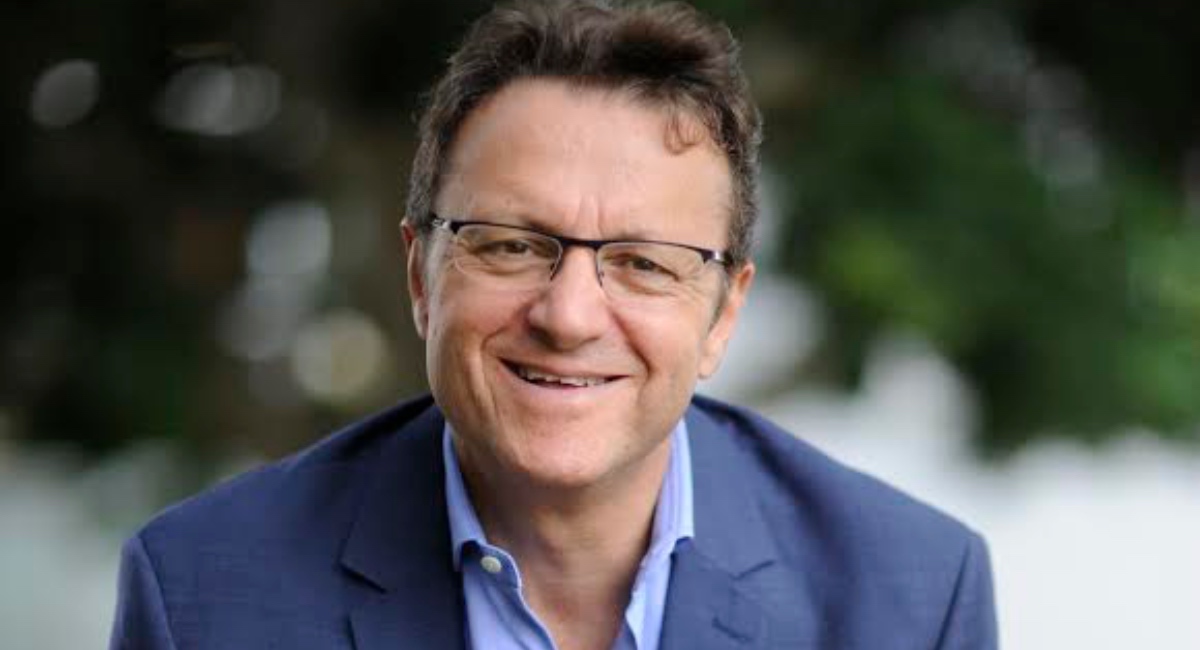
This week on Founder Friday, we sat down with James Stevens, founder of Mr Roses and one of Australia’s quiet e-commerce success stories.
“Know exactly what your real expertise is, not just what product you sell. For us, it was never just about flowers. It was about mastering perishable logistics and delivering a premium experience straight to people’s doorsteps.”
James Stevens, Founder and CEO, Mr Roses
Some founders build a business once. James Stevens has done it twice, in the same industry, with the same product, and come out the other side with something bigger, sharper and arguably more successful than what came before.
He grew up in his parents’ flower stall at Town Hall Station in Sydney, founded Roses Only in 1995, took it online in 1999 as one of Australia’s first e-commerce florists, sold it in 2013, and then in 2019 did it all over again. Mr Roses is now arguably Australia’s largest online florist, with distribution centres across every major city and a growing number of regional areas, a 35 to 40% return customer rate, and year-on-year growth above 21%. This week on Founder Friday, James shares what the flower business taught him across three decades, why the second time was different, and why the real expertise was never about roses at all.
From a flower stall to one of Australia’s first online businesses
“I’ve genuinely been in this business since I was five years old.”
James Stevens did not choose the flower industry. He was born into it. His parents opened a small flower stall at Town Hall Station in Sydney in 1964, twenty square metres, a family business in the most literal sense. James grew up around it, learned the trade from the inside, and eventually founded Roses Only in 1995, taking it online in 1999 as one of Australia’s very first e-commerce florists.
For most of the industry, the internet was still an experiment. For James, it was the future. Roses Only grew into a recognised brand, built around the same principles he would later apply to Mr Roses: quality at the source, logistics as the core competency, and customer experience as the only real differentiator.
In 2013, James sold Roses Only. He stepped back from the industry he had spent his entire career building. Six years later, he came back.
The gap James spotted in 2019 sounds simple in retrospect. Every major florist in Australia offered roses as part of a broader range. Nobody had built an entire business around doing only roses, and doing them exceptionally well. That observation became Mr Roses.
The model is deliberately focused. No retail stores. No general floristry. No diversification into other flower categories. Just roses, sourced from a very specific band of growing regions five to ten degrees either side of the equator at elevation, in Kenya, Ecuador and Colombia, where the combination of soil quality, consistent daylight and temperature stability produces what James describes as a genuinely superior product.
The roses Mr Roses sells take up to 90 days to grow properly. Two to three heads of a cheaper rose would fit inside the volume of a single one of theirs. That is not a marketing claim. It is the result of sourcing from farms that grow at the right altitude, in the right climate, for the right amount of time, and of building direct, long-term relationships with those growers rather than buying through intermediaries.
Going all-in on online and distribution rather than retail was a deliberate structural decision. “That decision forces a certain discipline,” James says. “Understanding logistics properly, knowing that a premium product has to look good on arrival, and that it can’t be treated like a rugby ball by a courier.” Without retail stores splitting the business’s attention, the entire operation can focus on getting the delivery experience right, every single time.
Mr Roses now has distribution centres across all of Australia’s major cities and a growing number of regional areas, offering same-day delivery across metro areas. The business that started as a gap observation in 2019 is now arguably Australia’s largest online florist.
The metrics that tell the real story
In e-commerce, the numbers that matter most are often the ones that do not appear in the headline. Revenue is easy to talk about. Return customer rates and conversion rates tell you whether the business is actually working.
Mr Roses’ return customer rate of 35 to 40% is significantly above the e-commerce norm, and James is clear that it has not been bought through discounting or promotional spend. It has been earned through consistency: the same quality product, the same delivery experience, the same attention to what arrives at the door. The conversion rate runs four to five times higher than the average e-commerce business.
James credits much of that to taking customer feedback seriously as an operational tool rather than a reputation management exercise. “We take reviews and feedback seriously, not as a box-ticking exercise but because that’s genuinely how we improve, whether it’s fixing a delivery issue or helping someone get more out of their bouquet,” he says.
There is also a psychological dimension to the gifting business that shapes how James thinks about quality signals. In a gifting context, the person receiving the product rarely tells the giver if it was disappointing. The real indicator of quality is whether the recipient becomes a customer themselves. “That word-of-mouth loop, more than any ad campaign, is what actually compounds a business like ours over time,” he says.
The lessons from three decades in perishable logistics
“Don’t get complacent operationally. Every day I try to find something we can improve.”
Supply chain and logistics have been the defining operational challenge across James’s entire career in the flower business. Australia is not geographically suited to growing premium roses at scale, which means relying on imports and navigating the occasional quarantine hold-up. Freight, not the product itself, has consistently been the largest cost pressure.
The lesson James draws from decades of navigating that complexity is not to outsmart it but to stay vigilant within it. “Every day I try to find something we can improve, whether that’s logistics, sourcing, or how we pack, particularly during peaks like Valentine’s Day and Mother’s Day.” He says he genuinely enjoys solving operational complexity, which is perhaps the most honest thing a founder in a logistics-heavy business can admit.
The advice he gives other founders follows from the same clarity. Understand what your real expertise is, not what product you sell. “For us, it was never just about flowers,” James says. “It was about mastering perishable logistics and delivering a premium experience straight to people’s doorsteps. Once you understand that, you make much better decisions about where to invest.”
The second piece of advice is to understand the psychology of your industry before you build your strategy around it. In a gifting business built on word of mouth and return customers, the most valuable marketing is not an ad campaign. It is the experience of opening a box and finding exactly what was hoped for.
James Stevens has been in the flower business since he was five years old. He sold one business, started another, and is still finding things to improve every single day. That is not a story about roses. It is a story about what it actually takes to build something that lasts.
Keep up to date with our stories on LinkedIn, Twitter, Facebook and Instagram.