Dynamic Business Logo
Home Button
Bookmark Button

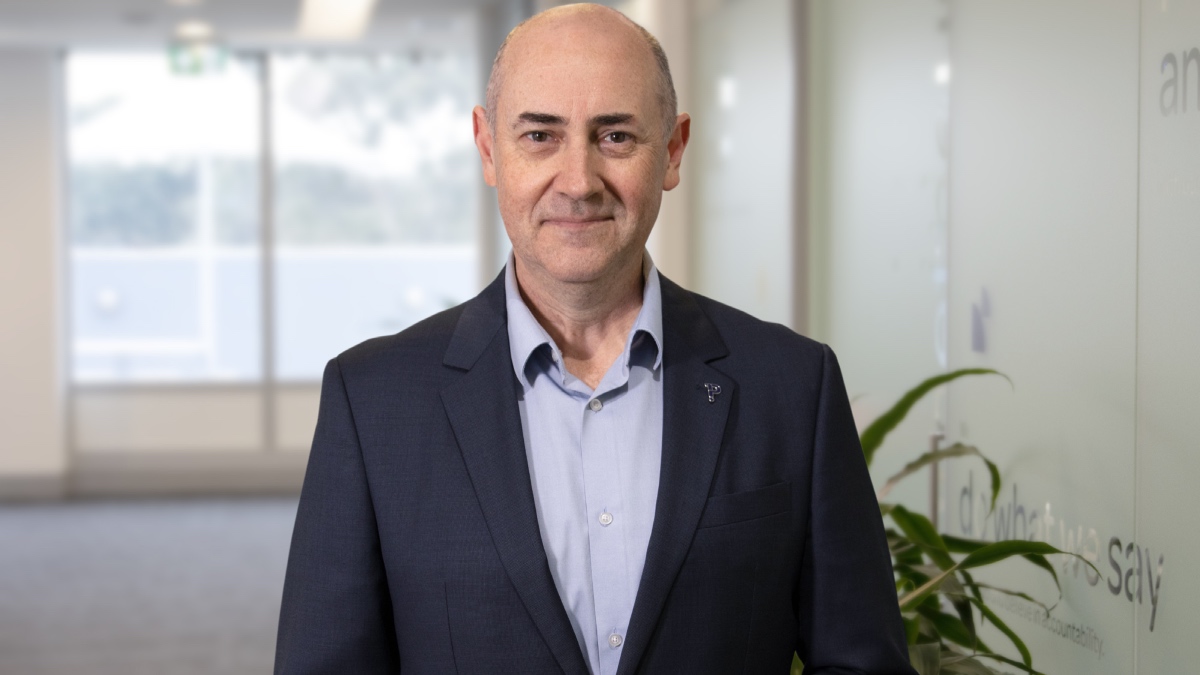
Chad Gates, Managing Director of Pronto Software,

Why most Australian CEOs aren’t restructuring despite recognising geopolitical threats

Nearly 60% of business leaders worry about trade disruptions, yet only 7% have made structural changes. The CEO Institute Survey reveals the gap

What’s happening: The 2026 CEO Institute Survey reveals leaders are recalibrating strategy, reassessing risk and investing selectively to build resilience in an era where volatility has become structural.

Why this matters: CEOs are responding to a complex mix of economic, technological and geopolitical pressures rather than a single dominant threat. US trade policy shifts have emerged as the single biggest geopolitical risk, with almost six in 10 survey respondents more concerned about geopolitically driven trade disruptions than 12 months ago.

The survey shows leaders are responding to a complex mix of economic, technological and geopolitical pressures, rather than a single dominant threat. Inflationary pressures remain the most pressing issue overall and are being felt most acutely in New Zealand.

Consumer demand slowdown is also weighing heavily, with around one in five respondents expecting it to have the greatest impact on business performance in 2026. Technology disruption ranked as the third most cited challenge, selected by 16 per cent of Australian and 18 per cent of New Zealand respondents, reflecting growing unease about the pace and consequences of AI, automation and cyber risk.

Labour supply and skills shortages continue to feature prominently, particularly in Australia, where 15 per cent of businesses nominated them as the external issue most likely to affect performance over the next 12 months, compared with eight per cent in New Zealand. Regulatory reform and policy change are also expected to have a material impact, cited by 13 per cent of Australian and 10 per cent of New Zealand businesses.

Layered over these domestic pressures is global instability, which is now top of mind for around one in 10 businesses across the region.

Trade policy shift

Geopolitics has shifted decisively from background concern to operational reality, with US trade policy shifts emerging as the single biggest geopolitical risk for Australian business leaders. Almost six in 10 survey respondents said they are more concerned about geopolitically driven trade disruptions than they were 12 months ago.

Nearly one in five identified trade disruptions as one of the top three geopolitical threats facing their business in 2026, whilst 47 per cent expect them to have a moderate to very significant impact on operations. Other geopolitical risks cited include global commodity price volatility driven by conflict, at 12 per cent, and Australia–China tensions, at 10 per cent.

This finding aligns with broader industry trends. A McGrathNicol survey of over 300 Australian executives reveals 80% expect geopolitical issues to challenge operations within 12 months, up from 66% in 2024, according to research published by Dynamic Business in September 2025.

At the same time, leaders are identifying new opportunities emerging from a changing global landscape. Almost one in five respondents see demand for critical minerals driven by the energy transition as an opportunity. ASEAN was nominated as a priority growth market by 15 per cent of respondents, followed by India at 13 per cent and Pacific markets at 10 per cent, suggesting a push to diversify revenue whilst remaining within strategically closer regions.

A further nine per cent anticipate increased global demand for Australian agricultural exports, whilst six per cent see opportunities in friendshoring or nearshoring supply chains.

According to Chad Gates, Managing Director of Pronto Software, these forces are creating a sense of constant acceleration. “There are a lot of factors that CEOs feel they can’t control as well as they would like to. Some of those are geopolitical and environmental, but when you add rapid technological change, the world can start to feel like it’s spinning out of control.”

Despite these increasing pressures, the prevailing mood among ANZ CEOs is not one of despair, but cautious growth under pressure. According to this year’s CEO Institute Survey report, 41 per cent of Australian and 57 per cent of New Zealand respondents are planning to grow and expand in 2026.

Richard Wynn, Chief Executive Officer of The CEO Institute, describes the leadership mindset as a blend of vigilant optimism and measured realism.

“CEOs can see opportunities on the horizon, but they are very conscious of the constraints and shocks that could hit them from both the domestic economy and the geopolitical environment. Geopolitics now sits in both the risk column and the opportunity column.”

However, Mr Wynn notes most survey respondents do not feel confident that Australia will glide smoothly through great power competition. “Alarmingly, only a small minority report making significant structural changes to their supply chains, market mix, capital plans or operating models in response. This suggests that we are in a transition phase, where leaders recognise that the rules have changed but are still working through how to translate that into practical decisions.”

He adds a more positive note about the direction of travel. “But overall, the direction of travel is positive. More Boards are asking the right questions about exposure, alliances, supply chains and regional strategy. The next step is to turn those questions into standing agenda items, clear risk appetite statements and concrete structural decisions, rather than occasional conversations when a crisis flares.”

Limited action taken

Supply chain disruption is no longer viewed as a legacy issue from the COVID-19 pandemic. As geopolitical volatility becomes structural, supply chains have moved from the back office to the boardroom.

Whilst awareness has risen sharply, action remains limited. Only around seven per cent of respondents said their organisation has made a structural change in response to geopolitical risk in the past year. Among that group, supply chain diversification was the most common move, whilst roughly 93 per cent have not yet altered their structural footprint.

Mr Wynn believes this reflects complexity rather than complacency. “CEOs are asking harder questions about concentration, alternative suppliers and regional exposure. They are more willing to trade some efficiency for resilience, for example, through dual sourcing or modest inventory buffers, but many are still constrained by legacy contracts, market structure and the cost of change.”

AI opportunity and fear

Technology disruption is compounding geopolitical risk, with 13 per cent of respondents identifying cyberattacks linked to state actors or geopolitical tensions as a top threat in 2026, a figure Mr Gates believes may understate the true level of exposure.

“That number feels lower than it should be. CEOs probably should be more concerned about state-sponsored cyber hacking, particularly around things like denial of service and knocking people off air.”

As volatility intensifies, many leaders are turning to AI to regain speed, visibility and control. The survey found 22 per cent of Australian and 16 per cent of New Zealand businesses plan to prioritise digital transformation and innovation in 2026.

However, Mr Gates cautions that many organisations are still unclear on what meaningful AI adoption looks like.

“Everybody thinks they need AI in their business, but they don’t always know what that really means or how to get the best out of it. AI represents endless possibility, endless opportunity, and endless fear of missing out. But there is also growing concern around security and AI deepfakes, because as technology accelerates, so does the cyber security arms race.”

The survey reveals a business landscape where leaders are alert to risks but still navigating the practical challenges of restructuring operations for a more volatile world. Whilst optimism remains, the transition from awareness to action represents the next critical phase for Australian and New Zealand business strategy.

Keep up to date with our stories on LinkedInTwitterFacebook and Instagram.

What do you think?

    Be the first to comment

Add a new comment

Yajush Gupta

Yajush Gupta

Yajush writes for Dynamic Business and previously covered business news at Reuters.

View all posts