




When AI can handle data entry, why are your people still doing it? The answer reveals a lot about your competitive position in 2026 and beyond.
What’s happening: Industry leaders and automation experts are increasingly arguing that manual data entry, payroll processing, and routine administrative tasks represent a fundamental misallocation of human resources. Companies that continue relying on manual data entry and routine processing face mounting competitive pressure.
In most organisations, data entry is invisible work. A clerk sits at a desk, transferring information from one system to another. Hours dissolve into routine keystrokes. The work is tedious, error-prone, and requires no creative thinking whatsoever.
Yet this invisible work remains pervasive across industries. Finance teams spend hours manually extracting invoice data. Human resources departments manually input employee records. Payroll teams re-enter data across multiple systems. And organisations continue to accept this as normal, necessary work.
But leading business thinkers and technology experts are pushing back. They argue that this is not just inefficient. It is a fundamental misuse of human capital.
“Within offices, administrative chores like data entry and routine human resources functions, such as payroll and initial recruitment screenings, are ripe for automation,” said world-renowned futurologist Professor Rocky Scopelliti. “By automating repetitive tasks, we free individuals to focus on higher-value, strategic activities, fostering innovation, creativity, and personal growth.”
The argument is economically sound. Every hour spent on manual data entry is an hour not spent on problem-solving, client relationships, process improvement, or innovation. It is an hour your best people cannot use their judgment, creativity, or strategic thinking.
The Real Cost of Manual Work
Data entry carries hidden costs that organisations rarely calculate. There is the obvious cost of labour hours. But there are also compliance risks, error rates, and the intangible but measurable damage to employee morale and retention.
Manual processes introduce human error at scale. A data entry clerk transcribing invoices will inevitably make mistakes. Duplicate payments happen. Incorrect amounts are recorded. These errors compound across financial systems and eventually surface as reconciliation problems, fraud risks, or compliance violations.
Shaun McLagan, VP and General Manager for APJ at DocuSign, points to hiring and onboarding as a case in point. “Using e-signatures can expedite both the hiring and onboarding process by eliminating the need for printing, scanning, and mailing paper documents,” McLagan said. “Creating a digital, efficient, and seamless onboarding process also removes any friction and improves the employee experience.”
But the real problem is deeper. When organisations force talented people to spend time on manual, repetitive work, they send a clear message: your capability is not valued. The work itself offers no learning, no challenge, no sense of accomplishment. It is purely transactional.
The result is predictable. Talented employees leave for organisations that use their skills meaningfully. Organisations that retain staff in data entry roles often find themselves with lower engagement, higher turnover, and difficulty attracting better talent.
What Humans Should Actually Be Doing
The shift toward automation reflects a fundamental rethinking of what human work should be.
“This shift isn’t about replacing humans but elevating them,” Scopelliti said. “By automating repetitive tasks, we free individuals to focus on higher-value, strategic activities, fostering innovation, creativity, and personal growth. However, it’s essential to approach automation with foresight, ensuring we invest in reskilling our workforce, promoting diversity, equity, and inclusion.”
For small business owners, the inefficiency is even more acute. SMBs cannot afford to hire marketing specialists. Instead, owners often take on the role themselves, spending time on campaign creation when they should be focused on strategy, sales, and business development.
“To the average small business owner, a marketing function is just not feasible. Owners or managers often take on the burden of becoming the CEO and CMO in one, trying to create campaigns from scratch despite having no real expertise in what or how to do it,” said Renée Chaplin, Vice President Asia Pacific at Constant Contact.
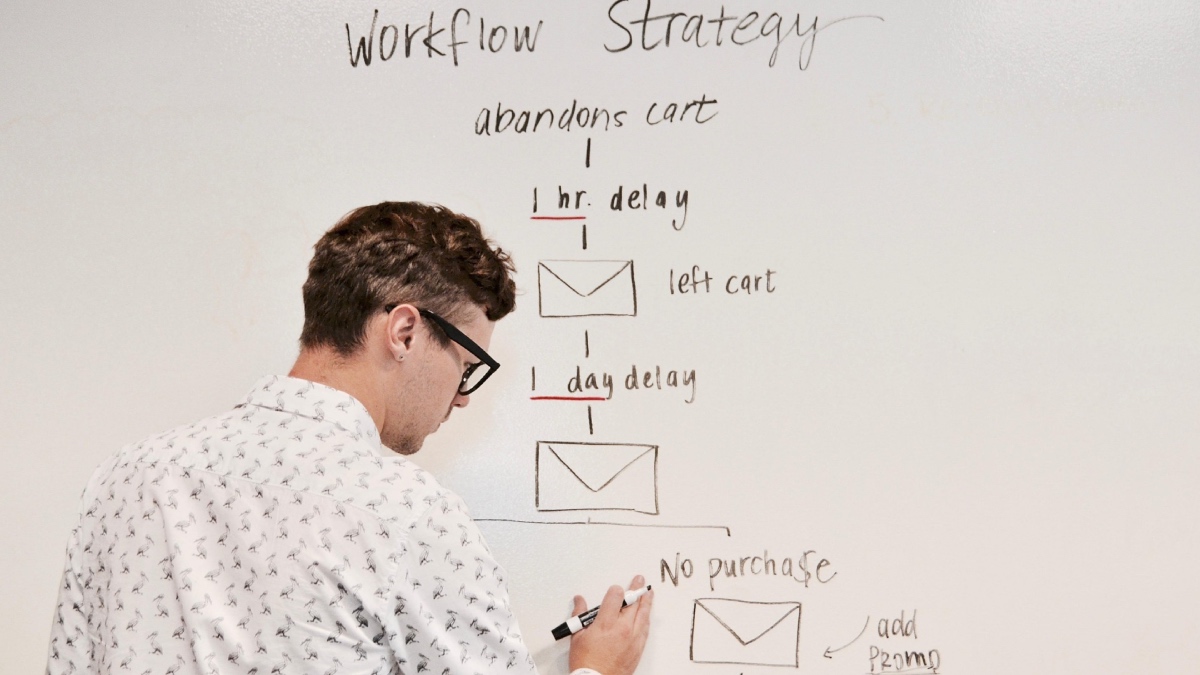
Generative AI is changing this equation. “Creating marketing campaigns can be semi-automated now, freeing up the owner or manager to do what they do best: running the business,” Chaplin said. “Generative AI toolsets can do much of the heavy lifting when it comes to the creative process, requiring not much more than minor prompts which can be as simple as ‘draft an email campaign about our 25% off for Cyber Monday deal’.”
This is not a minor convenience. This is liberation from work that should never have consumed a business owner’s time in the first place.
The Competitive Disadvantage of Manual Work
Organisations that continue relying on manual data entry are now at a measurable competitive disadvantage. They are slower. They make more mistakes. They retain less talent. And they fail to leverage the strategic capability of their workforce.
In finance and accounting, the impact is stark. Manual invoice processing takes hours or days. Digital automation reduces it to minutes. Manual VAT and GST compliance work consumes weeks of labour. Intelligent automation reduces it to days with higher accuracy.
The organisations that have moved to automation report measurable gains in speed, accuracy, and employee satisfaction. The organisations still doing manual work report the opposite. Obviously, the question is no longer whether organisations will automate data entry and routine processing. Automation technology is now mature enough, accessible enough, and affordable enough that the question is timing.
Companies that automate early gain competitive advantage. They attract better talent by offering meaningful work. They reduce costs. They improve accuracy and compliance. They move faster.
Companies that continue relying on manual work lose all of these advantages. And as talent shortages persist across industries, the cost of keeping people trapped in data entry work becomes increasingly unsustainable.
“Work smarter, not harder,” as the saying goes. In 2026, that is no longer motivational speak. It is competitive necessity. And organisations that have not yet automated their data entry and routine administrative work are falling behind those that have.
The only question now is how quickly your organisation will catch up.
Keep up to date with our stories on LinkedIn, Twitter, Facebook and Instagram.
