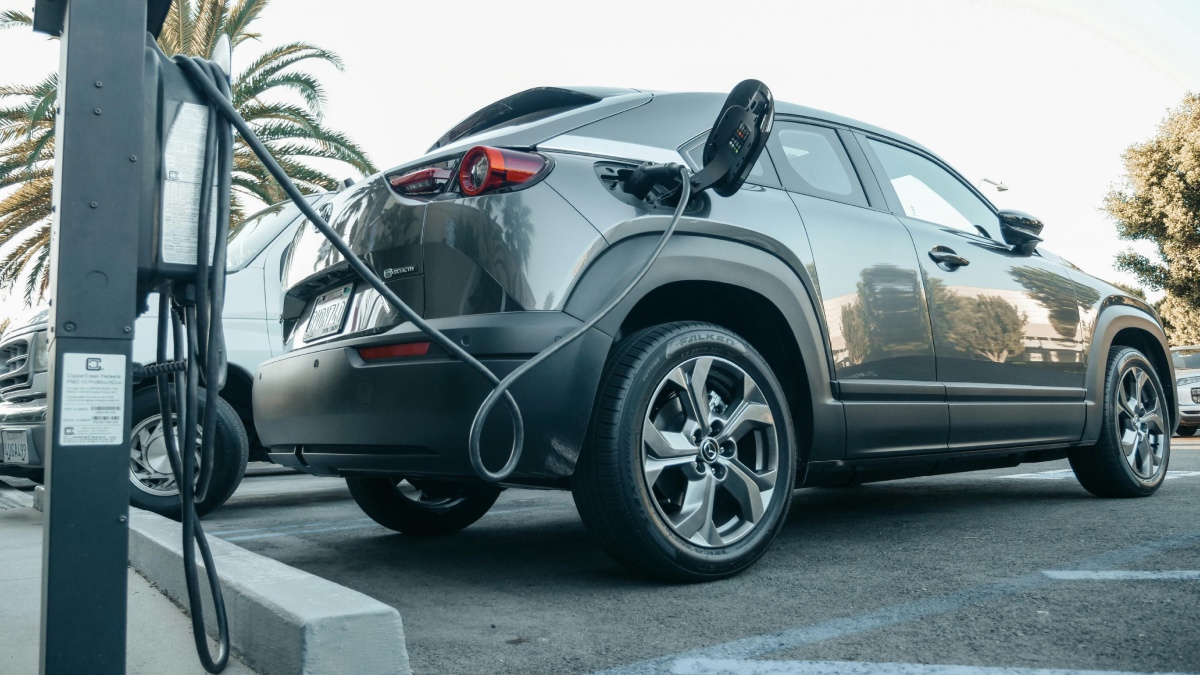
Electric vehicle sales surged 38 per cent in Australia during 2025, driven by Medium SUVs and emerging ute segment. JET Charge’s Kristian Handberg unpacks the data shaping 2026.
Australia’s electric vehicle market is entering a new phase, with 2025 sales data revealing that consumer preferences have shifted decisively towards larger electric vehicles, particularly Medium SUVs and utes, according to analysis from charging infrastructure provider JET Charge.
The EV market exceeded industry forecasting and expectations in 2025, growing 38 per cent from 2024 figures and totalling 156,958 EV sales, according to data from the Federal Chamber of Automotive Industries and the Electric Vehicle Council. Increased buyer choice and cost reductions were the main drivers of market growth, with the Medium SUV and ute segments leading the way.
Medium SUVs lead growth
Medium SUVs are now the majority of EV sales and a crystal ball for Australia’s EV future, according to JET Charge’s analysis. EV segment share increased from 16 per cent in 2024 to 27 per cent in 2025, thanks to more buyer choice, with 45 models available in 2025 compared to 30 in 2024, and the relatively narrow EV price premium of 18 to 22 per cent.
“Medium SUVs will continue to drive the majority of EV sales due to both model choice and near price parity, both largely attributable to the NVES,” says Kristian Handberg, Head of Future Business at JET Charge, referring to the New Vehicle Efficiency Standard. “This is both the biggest story of the EV market right now and where the rest of the EV market needs to get to: a highly competitive market of EV options with an increasingly narrow price gap to non-EV alternatives.”
The Medium SUV segment’s growth coincides with rising EV adoption across Australia, with battery electric vehicles now accounting for 13.1 per cent of all new car sales, up from 9.6 per cent in 2024.
Small SUVs, by contrast, grew at the same rate and retained their market share from 2024 to 2025. This is likely because the EV price premium at 40 to 45 per cent remains an obstacle in a segment that is highly price sensitive, according to JET Charge’s analysis. Small SUVs are also less popular with novated leasing customers who would otherwise benefit from the Fringe Benefits Tax exemption.
Small Passenger vehicles surprisingly went backwards. This is likely due to increased price sensitivity in a more challenging economic environment, with buyer sentiment turning toward understanding long term costs. Medium Passenger also declined, mostly due to the decreased appeal of the most dominant vehicle, the Tesla Model 3, which benefited from a model refresh in 2024 and then suffered in 2025 due to a shift in buyer preference.
Electric utes emerge
Utes emerged and quickly became the second largest segment in 2025, with sales increasing from just 362 in 2024 to 20,622 in 2025, according to JET Charge’s analysis. Electric utes captured around 8 per cent of the share of the overall segment, primarily due to the BYD Shark, the fourth highest selling ute overall with 7 per cent market share.
The New Vehicle Efficiency Standard and FBT exemptions appear to be contributing to the massive growth in the Medium SUV segment, according to Handberg’s analysis. This is because it’s more beneficial for manufacturers to electrify and reduce their NVES liability with larger vehicles, and more novated leasing customers are buying into this segment.
Utes are much less influenced by these measures due to the more lenient NVES target and dominance of plug in hybrid EVs, for which the FBT exemption was withdrawn in April 2025. Small Passenger and SUVs are highly price sensitive and therefore more attractive as hybrids for some buyers and also for original equipment manufacturers seeking to reduce their NVES liability.
Price parity arriving
Many Passenger vehicles, SUVs and light commercial utes and vans have now reached cost parity with internal combustion engine vehicles when assessed on a whole of life basis, according to JET Charge. Several high volume EV models have reduced in cost by 20 to 40 per cent since 2022 and in some cases dropped below $30,000 drive away.
For example, the BYD Atto 1 sells for $23,990 plus on roads or around $27,000 driveaway, comparable to the Toyota Yaris, Mazda 2 or Suzuki Swift, according to JET Charge’s analysis. Whilst purchase prices still vary, savings in fuel, maintenance and servicing due to fewer moving parts quickly offset higher upfront costs.
“The EV economics have never been better,” Handberg says. “It’s time for the EV market to go mainstream and the next twelve months will set the pace for the transition. With electric options for everyone and the purchase price gap decreasing, the whole of life cost argument should make the choice easy for any driver, and most importantly, for fleet managers.”
JET Charge is predicting this to drive a large scale adoption of EV fleets, as companies begin to understand the economic and environmental benefits of transitioning. However, under the Australian Energy Market Operator’s most conservative Slower Growth scenario, EV sales should sit around 240,000 vehicles in 2026, a significant jump from 2025’s 157,000 sales.
The Federal Government’s direction on the FBT exemption is incredibly important if Australia wants to hit this target and stay on track with the country’s 2035 emissions target, according to JET Charge’s analysis. With the FBT exemption, JET Charge’s forecasting shows that Australia will sell around 195,000 new EVs in 2026 and reach 15 per cent overall market share. But without it, sales will only slightly increase to around 167,000 and 13 per cent market share.
JET Charge predicts two moves in the industry that should help increase these numbers. There will be a rapid surge in public charging installations across metro and highway locations as property players realise their profitability, making EV charging easier and ultimately reducing range anxiety misconceptions. Additionally, there will be a large scale fleet electrification as the total cost of ownership becomes better understood by fleet managers and business owners.
Looking ahead to 2026, BYD will remain the overall EV sales leader and for the first time will have the highest selling EV model, either the Sealion 7 if the FBT exemption is retained or the Shark 6 without it, according to JET Charge’s predictions. As the new year brings a fresh catalogue of EVs, JET Charge pulled together its top 10 electric vehicles ready to charge Australia in 2026.
The Toyota Hilux BEV will be Toyota’s first electric HiLux and a big deal for one of the most popular vehicles on the market. Toyota’s customer support and strong re sale value should make it a compelling choice for fleet buyers and organisations seeking to address their emissions targets, according to Handberg.
The Kia EV4 will also be of interest to fleet buyers, albeit those who buck the trend away from Medium Passenger vehicles. The Hyundai Elexio, designed for everyday practicality with enough battery for longer drives, is perfect for families and commuters as a Medium SUV. Pricing will be a key consideration and this may benefit from its build origins in China.
The Xpeng G6 Medium SUV, Kia PV5 van or people mover, and Geely EX2 small hatchback are also big contenders to shake up the market, according to JET Charge’s analysis.
Investor implications
The shift in Australia’s EV market mirrors global trends, with China’s BYD having overtaken Tesla as the world’s largest seller of battery electric vehicles in 2025. BYD sold approximately 2.26 million battery EVs last year, up 28 per cent year on year, whilst Tesla’s sales declined 8.6 per cent to 1.64 million vehicles, according to data released by both companies in early January 2026.
For investors monitoring the Australian EV market, several trends merit attention. The dominance of Medium SUVs in Australia’s sales mix suggests manufacturers with strong offerings in this segment, particularly those benefiting from the NVES, may see continued growth. BYD’s expanding presence in Australia, where it delivered 25,287 vehicles nationally across 2025, representing a 77.3 per cent increase year on year, demonstrates the company’s growing market penetration beyond China.
According to investment research firm Khaveen Investments, BYD’s strong cash to debt ratio, efficient cash conversion cycle and government support enable aggressive research and development and global manufacturing expansion. The company maintains industry leading gross margins and cost leadership, allowing pricing flexibility amid price wars and supporting resilience against margin pressures.
Tesla, whilst facing sales headwinds, maintains a significantly larger market capitalisation and higher earnings per share than BYD. As of January 2026, Tesla commands a price to earnings ratio of 288.28, according to market data, reflecting investor confidence in its long term potential beyond automotive sales, including artificial intelligence, robotics and energy storage.
Investment analysts remain divided on Tesla’s prospects. HSBC’s Michael Tyndall maintains a Reduce rating with a price target of $131, implying potential downside of approximately 70 per cent from recent trading levels, whilst Wedbush’s Dan Ives maintains an Outperform rating with a $600 target.
For investors considering exposure to the growing EV market, traditional automotive manufacturers with strong EV programmes also warrant consideration. Companies like Kia and Hyundai, which showed strong sales growth in Australia’s 2025 data, have been expanding their electric offerings whilst maintaining established dealer networks and service infrastructure.
Fleet electrification represents another investment angle, with JET Charge predicting large scale adoption as total cost of ownership advantages become better understood. Companies providing charging infrastructure, fleet management software and related services may benefit from this transition.
However, investors should note that the Australian EV market’s trajectory remains heavily dependent on government policy settings, particularly the continuation of the FBT exemption for electric vehicles, which is currently under review. The outcome of this review, expected by mid 2027, could significantly impact sales volumes and market dynamics.
The broader energy transition in Australia, including investments in renewable energy generation and grid infrastructure, also intersects with EV adoption trends, creating potential opportunities across multiple sectors within the clean energy ecosystem.
Investment Disclaimer
This article contains general information only and does not constitute personalised financial advice or a recommendation to buy, hold or sell any particular investment. Investors should conduct their own research and consider seeking advice from a licensed financial adviser before making investment decisions.
Find JET Charge’s market data and 2026 forecast here
Keep up to date with our stories on LinkedIn, Twitter, Facebook and Instagram.