
New research from Klaviyo and marketing effectiveness expert James Hurman shows brands that discount the most grow at half the rate of low discounters.
Australian retailers preparing for end-of-financial-year sales have new research to reckon with. A study released today by marketing effectiveness expert James Hurman and CRM platform Klaviyo finds that the brands discounting most heavily are also the ones growing the slowest, and the pattern holds across every price point.
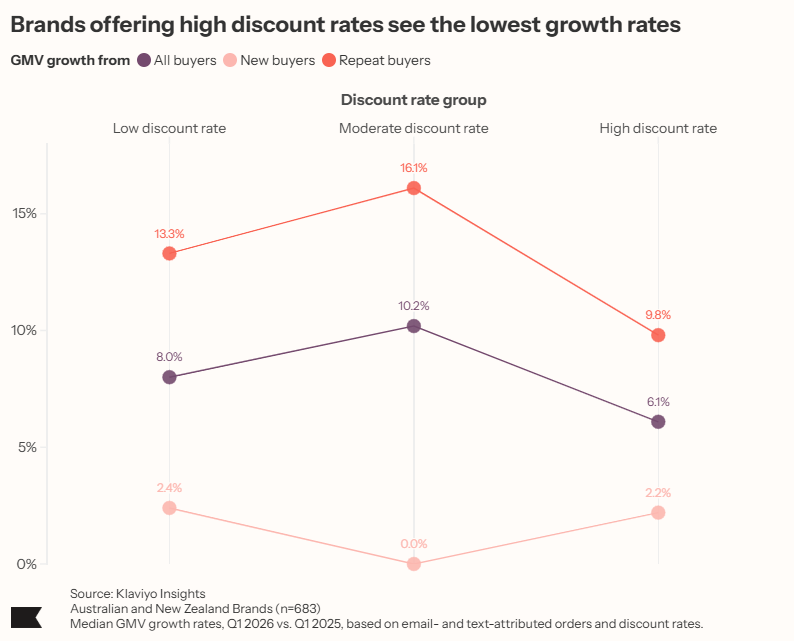
The report, titled Sugar High: The Sour Truth About the Real Cost of Discounting, analysed global growth rates from Klaviyo’s retail customers segmented by discount intensity, alongside Profit Peak’s deep dive into the revenue, margin, and customer behaviour of Australian brands. The findings are consistent across both datasets. Brands with the lowest discount rates post annual growth rates 50% higher than deep discounters. The more a brand discounts, the slower it grows.
Who actually buys during a sale
The report digs into what actually happens when a brand runs a discount event, and the picture is not what most retailers assume. When brands discount, they disproportionately drive existing loyal customers to buy rather than attracting new ones. The inventory that moves is overwhelmingly best sellers and core range. In the two to four weeks after a discount period ends, topline revenue falls by an average of 27%.
James Hurman, founding partner of Previously Unavailable and co-founder of Tracksuit, describes the mechanism bluntly. “When you discount, brands end up selling their best products to their existing customers for less than they would have paid, pulling forward future revenue they’d otherwise have earned at full price,” he says. “In other words, they’re not attracting new customers, they’re bribing existing ones.”
The withdrawal problem
The report also examines what happens when brands try to reduce their reliance on discounting, and the findings here are equally uncomfortable. Brands that decrease their discount rates only grow at 4.8%, compared to 10.1% growth for brands that maintain the same level of discounting. The data suggests brands can become trapped: discounting trains customers to wait for sales, and pulling back on discounts depresses short-term revenue even as it is the right long-term move.
Nicole Birbas, Senior APAC Director of Customer Success at Klaviyo, says the core problem is a measurement one. “Discounting is a measurement problem,” she says. “It produces immediate results on a nice dashboard in terms of conversion and revenue. But the damage, meanwhile, accrues slowly and quietly in brand equity, margin compression, and in the steady recruitment of deal-seeking customers who will never pay full price again.”
Her advice for brands already dependent on discounting is to taper rather than stop abruptly. “Slowly reduce discounting and gradually retrain customers to buy from you at full price or at lower levels of discounting, as opposed to waiting for big sale events to purchase,” she says.
What it means for EOFY
The timing of the report is deliberate. Australian retailers are in the early stages of planning their end-of-financial-year campaigns, which typically involve significant discounting across June. For SME owners in retail and e-commerce, the research raises a direct question about whether the short-term revenue spike from an EOFY sale is worth the post-sale revenue dip, the margin compression on best-selling products, and the longer-term pattern of training customers to wait for discounts rather than buying at full price.
Keep up to date with our stories on LinkedIn, Twitter, Facebook and Instagram.