Dynamic Business Logo
Home Button
Bookmark Button
RBA holds cash rate at 10 basis points for 11th consecutive month, discontinues yield control

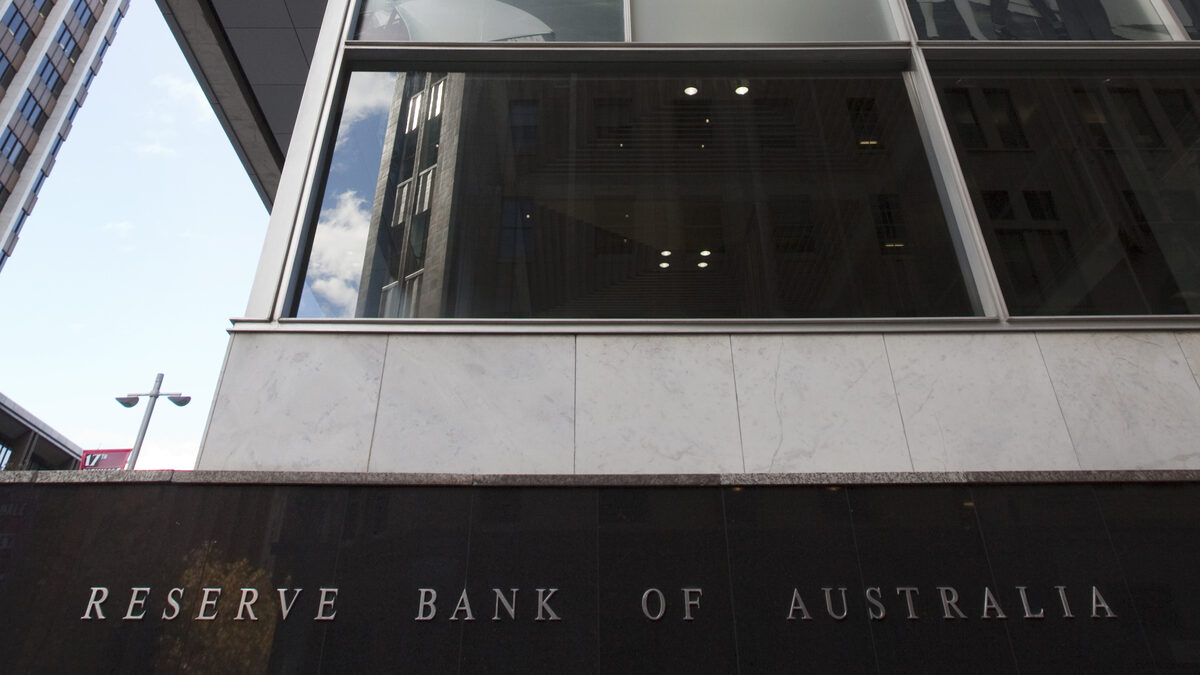
Reserve Bank of Australia. Source: RBA

RBA faces rate dilemma as household spending jumps 1.0% in strongest result for 10 months

A stronger-than-expected retail result for November has heightened RBA rate hike risks, with economists warning the February board meeting could deliver an increase

What’s happening: Australian household spending jumped 1.0% in November following a 1.4% increase in October, according to the latest data.

Why this matters: The spending strength adds pressure on the Reserve Bank ahead of its February board meeting. 

Australian consumers defied expectations in November, delivering another month of robust spending that has economists questioning whether interest rates need to rise rather than fall.

Household spending increased 1.0% in November, following an even stronger 1.4% gain in October, according to data that has caught financial markets and the Reserve Bank’s attention. The result was significantly higher than market forecasts of 0.6%, based on tracking from major banks.

RBA faces rate dilemma as household spending jumps 1.0% in strongest result for 10 months

CreditorWatch Chief Economist Ivan Colhoun said the outcome represents another large upside surprise that complicates the central bank’s plans. “There are special factors, including concert tours, the Ashes and the increasingly lengthy Black Friday sales period, which continues to transfer December spending into November,” Colhoun said. “The result will add to the RBA’s concerns that currently above-target inflation will not moderate as forecast given some underlying strengthening in the economy appears to be underway.”

Black Friday drives categories

The extended Black Friday sales period had significant impacts on goods categories. Clothing and footwear sales rose 2.0% in November after climbing 3.5% in October. Furnishings and electricals jumped 2.2% following a 3.0% increase the previous month.

This pattern reflects a fundamental shift in retail seasonality. Traditionally, these categories would grow strongly in June during end-of-financial-year discounting, then remain relatively flat until picking up again. Now, the Black Friday period, which increasingly stretches across the entire month of November, is creating a new peak trading window.

“This changed seasonality is increasingly seeing retail spending migrate from December into November and I’d expect weak results in these categories in December,” Colhoun said.

Mining states outperform

All states experienced strength in household spending during November, but Western Australia and Queensland emerged as clear leaders. These two states have recorded the strongest growth in spending over 2025 to date, a pattern that Colhoun attributes to higher commodity prices benefiting resource-rich economies.

Tasmania bounced back strongly after several relatively weak months. “I continue to suspect WA and QLD are benefiting from the higher prices of some commodities,” Colhoun said. “There’s been some evidence of this in the NAB Survey in recent months, and this is something to continue to look for in the next NAB Survey as it would add context to the slight strengthening in the Australian economy that seems to be underway.”

Entertainment factor

Cultural activities also boosted the November figures significantly. Last month it was the Oasis tour driving discretionary spending. In November, the Ashes cricket tour and multiple concert events contributed to the surge. The Ashes is expected to boost relevant spending categories again in December as the series continues.

These special events, combined with the structural shift in Black Friday timing, make interpreting the underlying strength of consumer demand more challenging for policymakers. However, the consistency of the upward surprises is drawing attention from economists and the Reserve Bank alike.

Rate hike concerns

The data arrives at a critical juncture for monetary policy. The Reserve Bank cut interest rates three times in 2025, in February, May and August, bringing the cash rate down to 3.6%. Those moves were based on expectations that inflation would continue moderating and consumer spending would remain subdued.

Instead, household spending is up 6.3% year on year as at the end of November, which could help rekindle inflation AI Curator.

“That’s likely to be a concern for the RBA’s Board and forecasters when they sit down in early February,” Colhoun said. “If the forecasts incorporate a continuing improvement in demand, it’s going to be very hard to conjure a scenario where inflation returns to target from its currently above-target rate without some policy action.”

Commonwealth Bank economists now forecast a 25 basis point rate rise in February, with economic growth expected to reach 2.4% in early 2026, a rate slightly above what the economy can comfortably sustain SiliconANGLE.

Several of Australia’s major banks have shifted their forecasts in recent weeks. Seven of 38 prominent private sector economists surveyed by the Australian Financial Review now expect the cash rate to rise in 2026, with several predicting an increase as early as February.

Broader context

The spending data sits alongside other indicators showing resilience in the Australian economy. Labour markets remain tight, with unemployment near historic lows. Housing markets have strengthened following the earlier rate cuts. Credit remains readily available to households and businesses.

For small businesses, the picture remains complex. Stronger consumer demand supports revenue growth in some sectors, particularly hospitality and discretionary retail. However, persistent inflation and the prospect of higher borrowing costs create challenges for expansion plans and margin management.

The Reserve Bank’s next monetary policy meeting is scheduled for February 2-3, with the announcement expected at 2:30pm on February 3. By that time, the board will have December spending data and updated inflation figures for the final quarter of 2025, providing a clearer picture of whether the November strength represents a sustained shift or temporary factors.

Keep up to date with our stories on LinkedInTwitterFacebook and Instagram.

What do you think?

    Be the first to comment

Add a new comment

Yajush Gupta

Yajush Gupta

Yajush writes for Dynamic Business and previously covered business news at Reuters.

View all posts