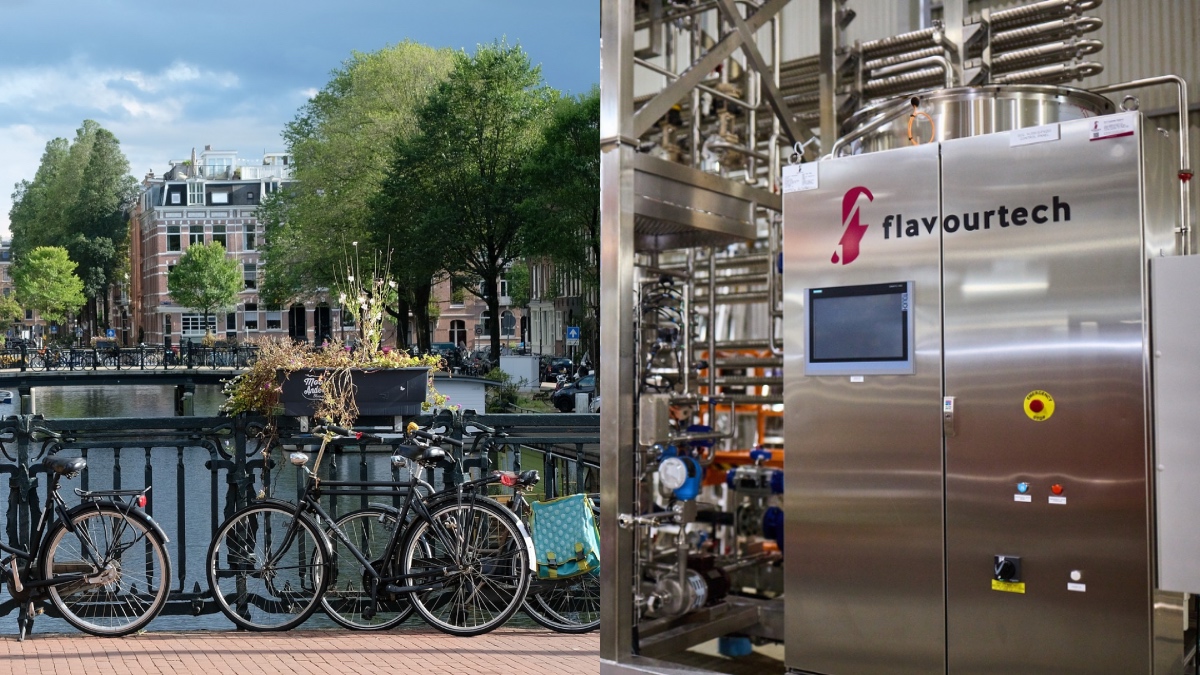
How do you sell aroma technology globally from Griffith, NSW? Flavourtech’s Leon Skaliotis explains the pilot plant approach that won European customers.
What’s happening: Griffith-based foodtech company Flavourtech has opened a pilot plant at Wageningen University in the Netherlands’ Foodvalley region. The facility allows European customers to conduct trials with the company’s aroma recovery and extraction technology directly, according to Austrade.
Why this matters: The move demonstrates how Australian exporters can use strategic positioning to access international markets. Flavourtech’s approach offers practical insights for regional businesses considering global expansion, particularly around demonstration facilities and university partnerships as market entry tools.
Flavourtech ships aroma recovery, extraction and evaporation technology worldwide from Griffith in regional New South Wales. The company’s Spinning Cone Column technology, originally developed to remove sulphites during winemaking, evolved to capture natural aromas across food production.
In October 2022, Flavourtech established a temporary office at Wageningen University and Research Centre while a new building was constructed. The company is currently moving into its new pilot plant in Foodvalley NL, a region encompassing around 1,000 food-related businesses.
Proximity pays off
“Being just down the road is increasing opportunities with our European customers,” says Flavourtech General Manager Leon Skaliotis. ‘It’s so much simpler now for them to bring their product and conduct trials at our demonstration facility.”
The physical presence matters. Customers from Japan and India have offices in the same building, says Skaliotis. A chance meeting with contacts from the US, who were also setting up offices at the university, has led to talks about running trials on Flavourtech’s equipment in the Netherlands.
“There are not many places you could go and be central to so many food companies,'” he adds. For businesses considering similar expansion, the lesson is clear. Temporary facilities can bridge the gap while permanent infrastructure develops. Flavourtech undertook food and bio-based research with the university and their partners during this period, supported by interim pilot plant facilities.
The new premises also make it easier for customers to come and experience Flavourtech’s technology for themselves. Being in the pilot plant, smelling the aromas coming out of the condenser, is often what sells the technology’s capabilities to customers.
“Communications technology has come a long way, but there’s no smell-o-vision yet,” says Skaliotis.
Innovation meets collaboration
The company’s Spinning Cone Column was originally developed to remove sulphites during the winemaking process. However, it proved successful at solving another issue, removing alcohol from wine. Those initial tests also showed its potential for capturing natural aromas.
“Flavour companies around the world now consider the SCC to be the gold standard for natural aroma recovery,” explains Skaliotis. “Other technologies can capture flavours and aromas, but none can capture them at the very light, volatile end the way our system does.”
Other innovations may come in response to a customer request for help, or when Flavourtech sees a way to improve a customer’s processing operations. For example, in the late 1990s Flavourtech developed a fully integrated processing line to help a client reduce health and safety risks from boiling products and moving forklifts. More than 25 years later, that client is efficiently producing high-quality RTD beverages, leads its market and says Flavourtech has been integral to its success.
Flavourtech is keen to collaborate with others to solve the world’s food challenges. “We hope to add value and learn from other companies on the Wageningen campus,” says Skaliotis. Flavourtech’s SCC technology could be used in plant-based food production to remove undesirable flavours and aromas or to capture natural flavours making food products more natural and palatable. The SCC can also extract the desirable natural aromas from over-ripe or non-marketable fruit that is otherwise sent to waste, thus creating new revenue streams.
University partnerships offer exporters more than facilities. They provide research collaboration, access to industry networks and credibility with potential customers.
Strategic entry point
Flavourtech’s approach to European market entry reflects broader strategic considerations for Australian businesses. Catherine Hill, Austrade’s Trade and Investment Commissioner for the Netherlands, Nordics and Baltics, notes exporters sometimes assume they need presence across multiple European countries.
“Australian exporters sometimes think they need to be everywhere in Europe,” notes Catherine Hill, Austrade’s Trade and Investment Commissioner for the Netherlands, Nordics and Baltics.
“However, it may be more strategic to find a single-entry point, such as the Netherlands. As well as a densely populated domestic market, it has 4 deep seaports, international air access and road and rail links to much of Europe within a couple of hours.”
The advice counters a common mistake. Rather than spreading resources across multiple European locations, identifying one strategic hub can reduce costs while maintaining market access. The Netherlands offers transport links reaching most of Europe within hours.
The company found administrative processes straightforward compared to other markets. ‘We found the Netherlands very transparent in how they do business,’ adds Skaliotis. ‘Austrade has been extremely helpful, pointing us in the right direction on things like setting up a virtual office until we had finalised our physical location.’
Virtual offices provide another practical tool for market entry. They establish legal presence and administrative capability without immediate capital investment in permanent facilities. Austrade supported the expansion through its network and practical guidance. The trade commission regularly refers potential clients to Flavourtech. ‘Austrade is also great at referring us to connections,’ says Skaliotis. ‘I often get an email introduction asking for help from someone who’s been referred to us by Austrade.’
Regional roots, global reach
Flavourtech never saw the need to move its head office from Griffith, a regional Australian town of only 20,000 residents, even as it became a global business. ‘Being regional probably makes us more focused on our people,’ says Skaliotis. ‘We know a lot of families rely on us. And if someone leaves it can take a long time to replace them.’
The company works hard to look after staff, he says, and people tend to stay and grow with the business. The regional location creates retention advantages, though replacing staff can take longer when positions open.
“We have almost 20 different nationalities working for us in Griffith right now,’ he adds. ‘It makes international business so much simpler. We can easily clarify contract terms in Portuguese with a Brazilian client, for example, or help Chinese-speaking customers with remote installations during lockdowns.”
Multilingual capability matters for global business. Having staff who speak customer languages reduces miscommunication and builds trust during technical implementations. The company continues developing new applications for its technology. “Success has not made us sit still,” notes Skaliotis. “There’s always something to develop, or a new challenge to solve.”
Consider temporary or virtual offices before committing to permanent facilities. Leverage university partnerships for research collaboration and industry access. Choose a single strategic European entry point rather than spreading resources. Build diverse workforces to support international client communications. Use government trade services for market intelligence and client referrals.
Source: austrade.gov
Keep up to date with our stories on LinkedIn, Twitter, Facebook and Instagram.