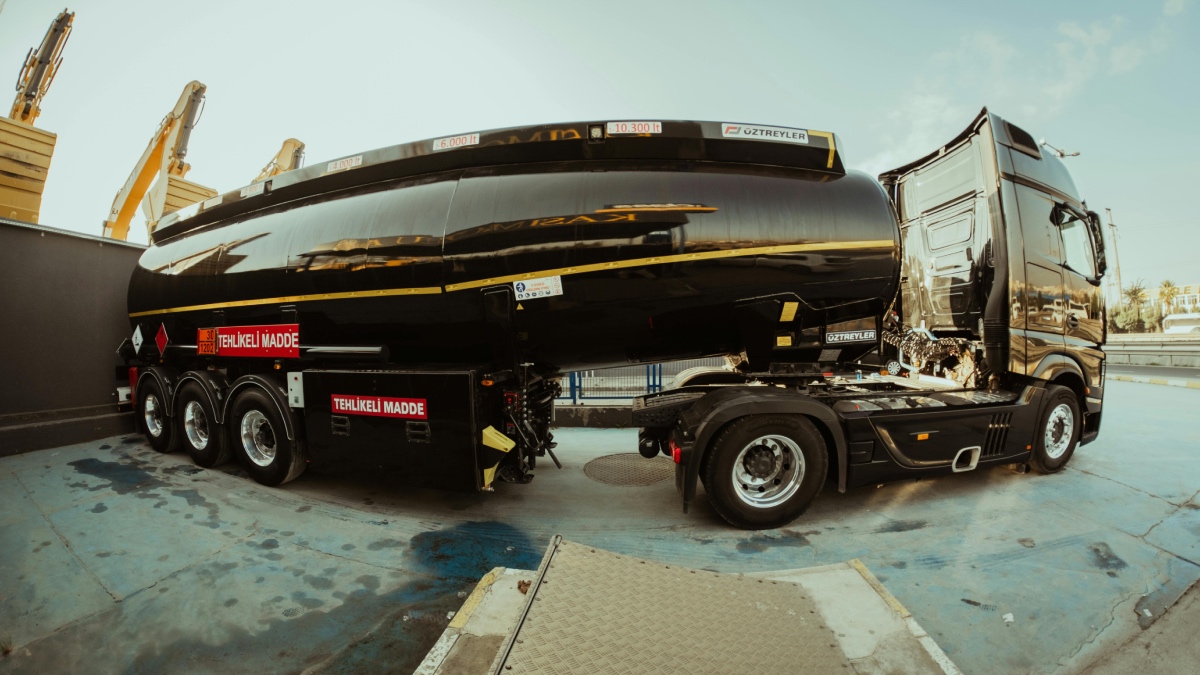
The Fair Work Commission’s fuel cost recovery order is now in effect and applies to more businesses than many owners realise. Gazelle Kalk of Peninsula Australia explains who’s affected and what to do in four steps.
What’s happening: The Fair Work Commission’s Road Transport Contractual Chain Order, Fuel Cost Recovery, 2026 commenced on 21 April and is now enforceable law. It requires businesses at the top of road transport contractual chains to adjust rates fortnightly to ensure transport operators can recover the increased cost of fuel.
Why this matters: Any business that relies on goods being delivered by road, including retailers, manufacturers, and wholesalers, may have direct compliance obligations under the order.
When the Fair Work Commission issued its Road Transport Contractual Chain Order on 20 April, most of the coverage focused on what it meant for truck drivers and transport operators. That framing, while understandable, misses a significant part of the story. The order applies up the supply chain, not just within it, and businesses that have never thought of themselves as participants in the transport industry may now have legal obligations they are not aware of.
Gazelle Kalk, Associate Director of Content and Training at Peninsula Australia, has been tracking the order closely. “This is a historic decision,” she says. “The first order of its kind issued by the FWC. It represents a significant intervention by the Commission to address rising business costs as the conflict in the Middle East continues. The reallocation and distribution of increased costs is a practical mechanism to ensure owner drivers and transport contractors are not left out of pocket, particularly in the face of escalating fuel prices.”
Why this order matters
The order was made possible by the Fair Work Amendment, Fairer Fuel, Act 2026, which received royal assent on 1 April and gave the Minister for Employment and Workplace Relations the power to classify an application as an emergency where a disruption is having a significant national negative impact on the road transport industry. That classification was made, and the commission fast-tracked the process from application to enforceable order in under three weeks.
The speed of that process reflects the urgency of the situation on the ground. Fuel prices have surged following the Middle East conflict, and transport operators, particularly owner drivers and small contractors, have been absorbing costs that their contracts were not designed to accommodate. The order is designed to ensure those increased costs flow back up the chain to those best placed to absorb or pass them on, rather than sitting entirely with the operators doing the actual work.
Who it applies to
This is where many SME owners need to recalibrate their understanding of the order. Kalk is direct about the scope. “Businesses that rely on goods being delivered by road should take notice,” she says. “This includes retailers, manufacturers and wholesalers. The order requires these primary businesses, that is businesses at the top of the contractual chain, to review fuel prices twice per month, and increase what they pay for transport services where required.”
The position a business occupies within the supply chain determines the nature of its obligations. “Crucially, the impact of these changes will depend on where a business sits within the transport supply chain and there may be multiple parties affected at different levels,” Kalk says. “Some businesses may have direct responsibility for rate adjustments as contracting or principal parties, while others may be impacted indirectly or downstream through subcontracting, pricing mechanisms, or flow-through contractual arrangements.”
The practical implication of that is significant. A manufacturing business that contracts a logistics company to move its products is likely a primary party with direct obligations under the order. A retailer that receives deliveries from a wholesaler who in turn uses transport contractors may be affected indirectly through pricing changes flowing up the chain. Neither can assume the order does not touch them.
“Employers should not assume this is solely a transport industry issue,” Kalk says. “Any business that relies on, benefits from, or influences road freight services may face new, temporary obligations that warrant careful review.”
What to do now, step by step
Kalk has outlined a four-step approach for business owners trying to work out where they stand and what they need to do.
The first step is to determine where your business sits in any road transport contractual chain. That means identifying whether you are a primary party with direct responsibility for rate adjustments, a secondary party affected through contractual flow-on, or another participant whose obligations or costs may be influenced indirectly. This is not always straightforward, and Kalk recommends seeking advice if the position is unclear.
The second step is to ensure that relevant payment rates are reviewed and adjusted fortnightly, or twice in each calendar month, so that increased fuel costs are recovered. The adjustment must be sufficient to allow the transport operator to recover the cost of fuel increases since 6 March 2026, which is the reference date set in the order.
The third step is to review existing contractual arrangements. “Review existing contractual arrangements, including any rise-and-fall fuel adjustment clauses already in place, even where contracts commenced before the Order took effect, to assess whether they adequately address fuel price increases and can be relied upon for compliance,” Kalk says. Existing clauses may satisfy the obligation, but only if they genuinely capture the increases since the reference date.
The fourth step applies when things go wrong. “Where disputes arise about how the Order applies and cannot be resolved between the parties, those matters may be referred to the Commission for determination,” Kalk says. That referral mechanism is available to both parties in a dispute, which means transport operators can escalate if they believe rate adjustments are insufficient.
Key dates and exclusions
There are several important parameters to the order that every business owner should have on hand. The order commenced on 21 April 2026 and will remain in effect until the national average terminal gate price of diesel falls below $2.00 per litre. It is reviewed monthly for the first month, then every three months thereafter, which means its terms could change as fuel prices and the broader situation evolve.
Two categories of workers are explicitly excluded. The order does not apply to drivers who are directly employed by road transport companies, as employed workers are covered by standard employment arrangements rather than contractual chain obligations. It also does not cover cash-in-transit work, which sits outside the scope of the road transport contractual chain framework entirely.
“Businesses should monitor developments closely and seek advice where needed to ensure compliance,” Kalk says. Given that the order is reviewed regularly and could be varied as conditions change, staying across updates from the Fair Work Commission and the Fair Work Ombudsman, which has enforcement authority over the order, is not a one-time task but an ongoing one.
For SME owners who have been following the government’s broader fuel crisis response, this order sits alongside the $1 billion Economic Resilience Program loans, the fuel excise cut, and the government’s emergency diesel supply agreements as part of a coordinated set of measures aimed at keeping Australian businesses moving through a period of genuine disruption. The order is the one with the most direct compliance obligations for businesses outside the transport sector, and it is already in force.
Keep up to date with our stories on LinkedIn, Twitter, Facebook and Instagram.