Dynamic Business Logo
Home Button
Bookmark Button

AI is devouring electricity at the scale of entire nations. This Brisbane startup has a solution

Brisbane’s Cortisonic uses sound waves instead of electrons for AI computation, backed by $3.2m defence contract as edge computing market approaches $270bn.

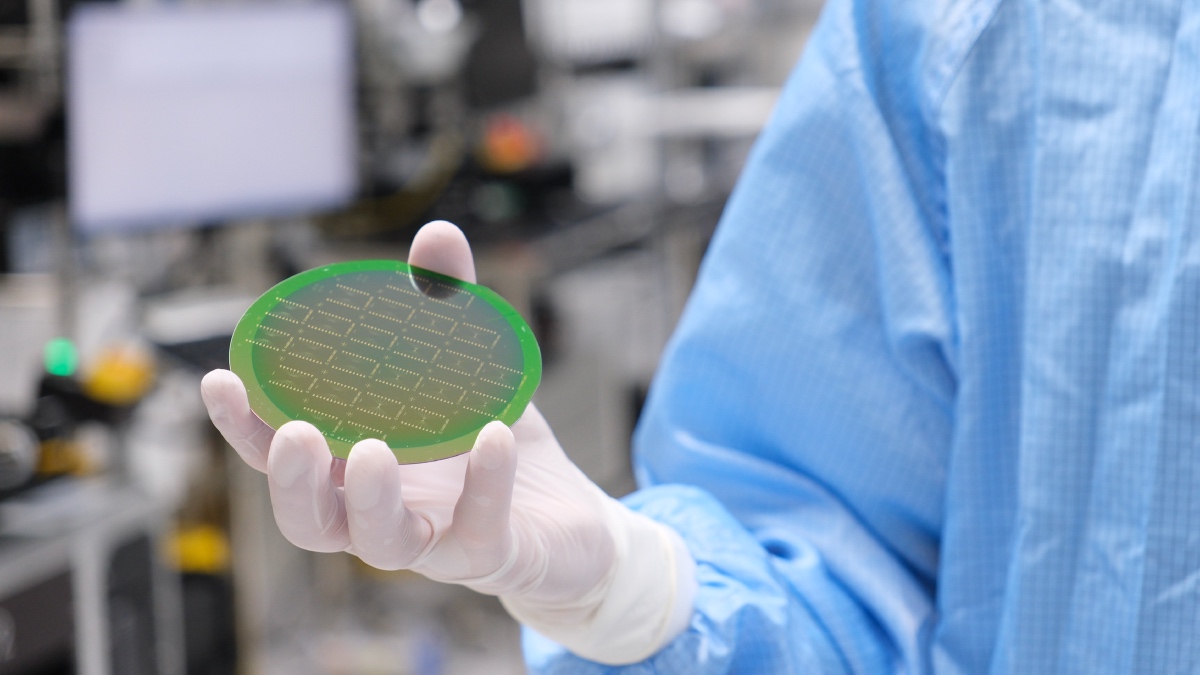
Academic researchers have studied phononic computing in laboratory settings for years. Cortisonic says it has developed a commercially scalable version using standard semiconductor fabrication processes.

“AI’s energy consumption is rising sharply, creating a major bottlenome for deployment,” said Dr Glen Harris, CEO of Cortisonic. “Data centres are consuming power at the scale of entire nations. We’re not pursuing incremental improvements to existing chips. We’re introducing an entirely new computational element to the mix.”

The technology uses guided sound waves in silicon for computation. The company states this approach offers lower energy consumption than electronic or photonic chips for specific computations, whilst working with existing semiconductor manufacturing.

Crowded competitive field

The low-power AI chip sector has attracted significant investment across multiple technology approaches. AI chip startups secured $7.6 billion in venture capital funding globally during the second, third and last quarter of 2024, with 2025 maintaining this momentum.

Neuromorphic computing, which mimics brain architecture, has emerged as a prominent alternative. BrainChip raised $25 million in December 2025 to advance its Akida chips, whilst neuromorphic chip sales are projected to reach $0.5 billion by 2025. Other neuromorphic players include Intel, IBM and startups SynSense and Innatera.

Photonic computing represents another competing technology. Q.ANT announced its NPU 2 photonic processor in November 2025, with shipments beginning in early 2026. Companies including Lightmatter, Ayar Labs and nEye Systems are developing photonic interconnects and processors for AI workloads.

nEye Systems raised $58 million in Series B funding in April 2025 for optical circuit switches targeting data centres. Traditional chip makers including AMD and Nvidia have invested in photonic technologies through acquisitions and partnerships.

Harris positioned Cortisonic’s acoustic approach as complementary rather than competitive. “We’re introducing phonons into the mix of computational elements,” he said. “It’s about using all the particles at your disposal, electrons, photons, and now phonons to do computing more efficiently.”

Defence validation

The technology developed from eight years of research with the University of Queensland School of Mathematics and Physics and Lockheed Martin. Cortisonic was established through Main Sequence’s Venture Science model, with IP licensed through UQ’s UniQuest.

Main Sequence, founded by CSIRO in 2017, invests venture capital in spinouts, startups and SMEs connected to Australia’s publicly funded R&D sector.

Lockheed Martin is both investor and partner, focusing on space and defence applications. Cortisonic received a $3.2 million contract under the Australian Department of Defence’s Advanced Strategic Capabilities Accelerator programme, in collaboration with Lockheed Martin Australia. The company will demonstrate its Minimum Viable Capability within 24 months.

“Our ongoing relationship with the Cortisonic team reflects the critical importance of secure and resilient computing in resource-constrained environments,” said Dr Tony Lindsay, Director of Advanced Systems & Technologies, Lockheed Martin Australia.

Edge device focus

Cortisonic is targeting the Edge AI market, projected to reach $269.82 billion by 2032. Edge devices including autonomous drones, wearables and sensors need AI computation but have limited power access.

“You can’t put a data centre on a drone or into a wearable device,” Harris said. “Our nearest market is computation on edge devices where access to power is limited, like autonomous drones.”

The company positions its Sonic Processing Unit as distinct from GPUs, CPUs and TPUs, describing the platform as complementary to existing chips rather than a replacement.

The leadership includes Dr Glen Harris as CEO, Dr Chris Baker as Chief Scientist, and Dr Michael Harvey as CTO.

Alex Romero, Investment Manager at Main Sequence, said the company combines foundational IP, commercially scalable manufacturing, validation from Lockheed Martin, and government funding.

The announcement comes as Australia’s deep tech sector continues to attract funding, with multiple approaches to low-power AI computation pursuing different technical pathways and market segments.

Keep up to date with Dynamic Business on LinkedInTwitterFacebook and Instagram.

What do you think?

    Be the first to comment

Add a new comment

Yajush Gupta

Yajush Gupta

Yajush writes for Dynamic Business and previously covered business news at Reuters.

View all posts