


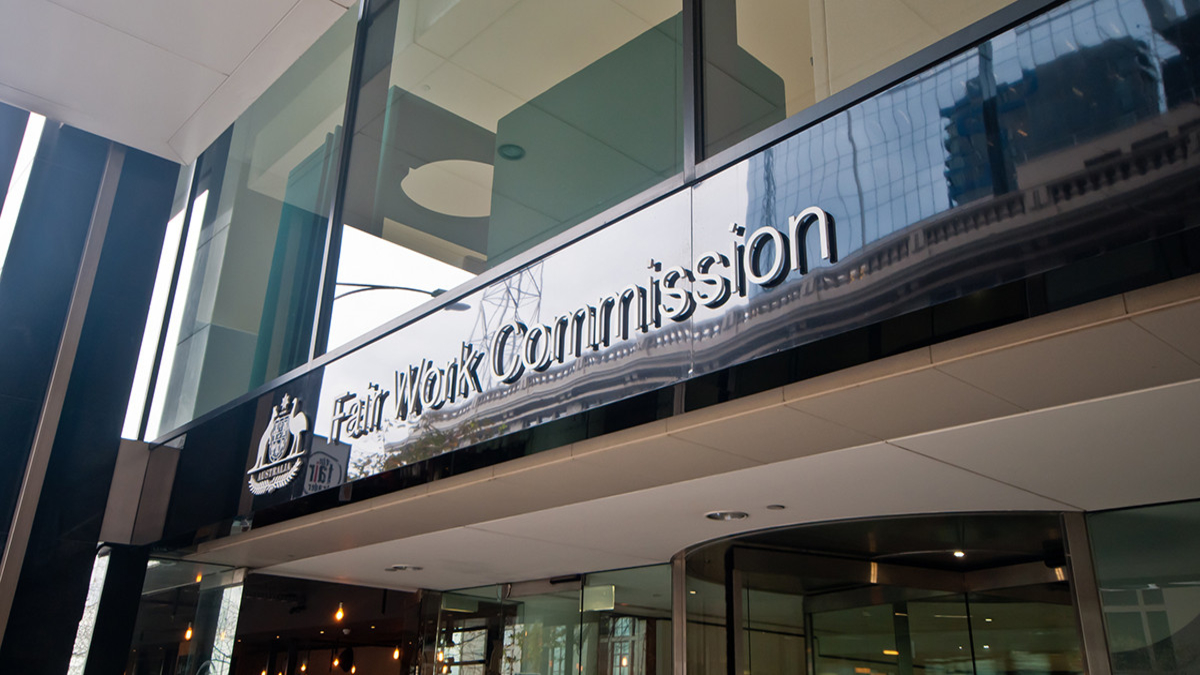


The Fair Work Commission has abolished junior pay rates for workers aged 18 and over in retail, fast food and pharmacy.
What’s happening: The Fair Work Commission’s full bench has ruled to abolish junior pay rates for workers aged 18 and over in the general retail, fast food and pharmacy sectors.
Why this matters: The phased implementation gives businesses time to adjust, but the planning needs to start now. Combined with the proposed above-inflation minimum wage increase and rising costs across fuel, energy and insurance, this is another significant financial variable for small employers to factor into their workforce and pricing strategies.
The Fair Work Commission has made a landmark ruling that will see junior pay rates abolished for adult workers aged 18 and over across the general retail, fast food and pharmacy sectors.
The decision by the commission’s full bench will affect around 500,000 workers employed at major retailers and fast food operators, as well as the thousands of independent small businesses operating under the relevant industry awards.
Under the current award structure, workers aged 20 are paid 90% of the adult rate, 19-year-olds receive 80% and 18-year-olds receive 70%. Those rates will be phased out over four years, moving affected workers to the full adult rate. Workers aged 18 to 20 will need to have been with an employer for at least six months before becoming eligible for the adult rate under the new arrangements. Junior rates will remain in place for workers under 18.
The commission said the decision strikes a balance between competing considerations, maintaining junior rates for minors while recognising that workers aged 18 and over face the same cost-of-living pressures as other adult Australians.
The ruling was welcomed by the federal government, with Treasurer Jim Chalmers describing it as a positive outcome for young workers and consistent with the government’s broader focus on ensuring fair wages across the economy.
Who it affects and when
The ruling applies specifically to awards covering general retail, fast food and pharmacies, sectors that collectively employ large numbers of young Australians and are among the most common industries for SME operators.
The phased four-year implementation is designed to give employers time to adjust their wage structures and pricing models. However, for small business owners who rely heavily on 18 to 20-year-old staff, the cumulative cost impact over that period is significant and warrants immediate attention.
A small retailer currently employing several 18 to 20-year-old workers at junior rates, for example, will need to factor in the staged movement toward full adult rates when forecasting labour costs, setting prices and making decisions about staffing levels and rostering.
What it means for small business costs
The timing of the ruling adds to an already difficult cost environment for small business owners in the affected sectors.
As reported by Dynamic Business earlier this month, COSBOA’s own research found that 72% of small businesses say rising costs are the biggest barrier to growth, with wages already identified alongside fuel, insurance and energy as the primary cost pressures. The organisation has also warned that a proposed above-inflation minimum wage increase risks compounding an already fragile situation for businesses operating on tight margins.
The Fair Work ruling does not replace the minimum wage decision, which remains before the commission. It sits on top of it, adding another layer of wage cost movement that small business owners in retail, fast food and pharmacy will need to absorb or recover through pricing over the coming years.
For businesses in sectors where young workers make up a significant proportion of the workforce, the practical impact will depend on the current age profile of staff, hours worked and the specific award structure in place. Employers should review their current wage arrangements against the relevant awards and begin modelling the staged cost impact over the four-year transition period.
What small business owners should do now
The four-year phase-in gives small business owners time, but not indefinite time. The businesses best positioned to manage the change will be the ones that start planning early rather than reacting when each new stage takes effect.
The immediate steps are straightforward. Review your current workforce age profile and identify how many staff are currently paid at junior rates under the relevant awards. Model the staged cost increase over the four-year transition and factor that into your pricing, staffing and budget planning for the years ahead.
If your business operates under the general retail, fast food or pharmacy awards and you are unsure how the ruling applies to your specific arrangements, the Fair Work Commission website and your bookkeeper, accountant or employment lawyer are the right starting points.
The ruling is a significant change. But with four years to adjust and clear implementation stages, small business owners who engage with it now will be far better placed than those who leave the planning to later.
Keep up to date with our stories on LinkedIn, Twitter, Facebook and Instagram.
