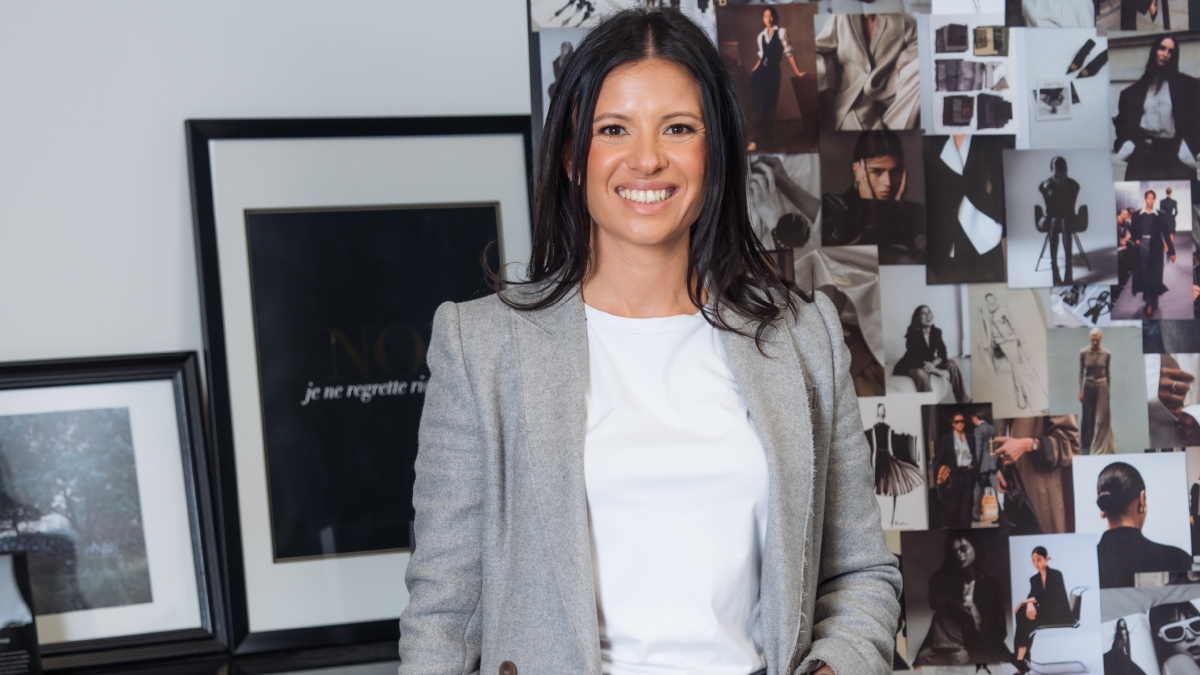
This week’s Founder Friday features Pamela Jabbour, CEO and Founder of Total Image Group, who launched her business at 20 years old with a conviction that corporate uniforms could be fashion-forward and empowering.
“Being willing to walk away from misaligned opportunities has strengthened our brand, deepened client relationships and protected the long-term future of the business.”
This week’s Founder Friday, Dynamic Business sat down with Pamela Jabbour, CEO and Founder of Total Image Group, who has spent two decades transforming an overlooked industry through design-led thinking and unwavering commitment to values.
At just 20 years old, Jabbour launched Total Image Group immediately after completing her degree in Business and Marketing. Growing up with a father in the rag trade provided early exposure to the fashion industry’s creative potential and business challenges, leading her to look beyond traditional fashion toward the uniform sector.
Starting with purpose
“At the time, uniforms were largely outdated and uninspiring. Designs were boxy, cuts were unflattering, options were limited, and very little thought was given to the people wearing them or the brands they represented. Uniforms were treated as a functional necessity rather than a meaningful part of a company’s identity or culture. I saw a clear gap and a chance to do things differently,” Jabbour said.
“I believed uniforms could be elevated through fashion thinking, better fit, stronger branding and greater attention to quality and detail. I was inspired by the idea that what people wear to work has a direct impact on how they feel, how confident they are, and how they connect to their role and their organisation.”
Starting the business required both ambition and humility. “I didn’t have all the answers, but I had a strong sense of purpose and a belief that if I focused on quality, relationships and doing things properly, there was an opportunity to build something meaningful. That belief has stayed with me from day one and continues to guide every decision I make as the business grows,” she explained.
Learning every role
One of Jabbour’s most important early decisions shaped how she understands the business today. “Early on, clients weren’t aware I was the founder. Instead, I worked across sales, account management, operations and product development. That hands-on experience gave me a deep understanding of customer needs, manufacturing realities and operational efficiency, and it continues to shape how I lead today,” she said.
The approach built more than operational knowledge. “Another key strategy was prioritising long-term relationships over short-term wins. We invested heavily in understanding our clients’ brands, cultures and operational requirements, then designed uniform solutions that truly fit their needs.”
Whether sourcing from their diverse supplier network of off-the-shelf products or developing fully custom ranges manufactured through their factories in China, the focus remained consistent. “We focused on delivering the right solution for each client’s budget, function and brand identity. This approach built trust, loyalty and allowed us to grow alongside our clients over time.”
Walking away from misalignment
The journey included significant setbacks that forced strategic recalibration. “One of the biggest challenges I faced was losing a major client that represented a significant portion of our revenue. It was confronting and forced me to reassess our business model. Instead of retreating, we diversified, expanded into new industries and strengthened our sales strategy. The lesson was clear: resilience comes from diversity and adaptability,” Jabbour said.
“Diversification has also been critical to our growth. After losing a major client early on, and later navigating the COVID pandemic, we made a conscious decision to never rely too heavily on one customer or one industry. We expanded into resilient sectors such as healthcare, early learning, aged care and fitness, which has proven invaluable in strengthening the business and supporting sustained growth.”
More recently, strategic discipline defined the company’s trajectory. “A defining strategy has been refining our ideal customer profile. In a market increasingly driven by price wars, we chose not to compete at the expense of quality or values. Instead, we focus on partnering with organisations that align with our commitment to sustainability, ethical manufacturing and long-term thinking. Being willing to walk away from misaligned opportunities has strengthened our brand, deepened client relationships and protected the long-term future of the business,” she explained.
The corporate uniform industry is increasingly embracing sustainable and innovative materials, according to recent Australian government guidance published in May 2025. Materials like recycled polyester, organic cotton, and biodegradable fibres, combined with eco-friendly production methods, are gaining traction and building greener corporate wardrobes.
Building for impact
Today, Total Image Group dresses more than 350,000 people every day across Australia and New Zealand. The company works with recognised brands across multiple sectors, including Harvey Norman, Anytime Fitness, HCF and Respect Aged Care.
“That scale has been built steadily through focus, resilience and trust, rather than rapid or reactive growth, and it reflects my belief that strong leadership is not about chasing every opportunity, but about making deliberate, values-led decisions that build a business capable of lasting impact,” Jabbour said.
As a B Corp Certified business, Total Image Group holds itself accountable across environmental, social and governance standards. Between January 2022 and January 2024, the community of certified B Corps in Australia and New Zealand rose from 315 to 660, representing around 8.5% of the 8,000-strong global community.
“Sustainability is another key differentiator. As a B Corp Certified business, we hold ourselves accountable across environmental, social and governance standards. From sustainable fabrics and compostable packaging to our Garment Recycling Program, we design with the full lifecycle of each garment in mind. We don’t treat sustainability as a trend; it is a core business strategy.”
The personal journey included navigating leadership whilst raising two children. “A personal challenge has been balancing leadership with motherhood. Raising two children while running a growing business required me to rethink how I lead, prioritise and build teams. It taught me the importance of trust, flexibility and empathy, and reinforced my belief that strong cultures drive strong businesses.”
Looking ahead, Jabbour targets 30% expansion over the next two years for Total Image Group, following 17% growth achieved over 2024-2025. The growth strategy includes leveraging AI to streamline systems, advancing sustainable manufacturing, and holding firm against aggressive pricing strategies that dominate the sector.
Her reflections for aspiring founders focus on sustainable practices rather than prescriptive advice. “Being fortunate enough to work in an industry I genuinely love has made a real difference. Passion helps sustain energy through demanding times, but it has always needed to be paired with purpose. Loving what you do can make the harder moments easier, while a clear sense of why the business exists provides focus and direction when difficult decisions need to be made.”
“Over time, rejection has become less about failure and more about redirection. Not every opportunity moves forward, and often those moments create space for something better aligned. Reflecting, adapting and continuing forward has been an important part of building resilience.”
She emphasises the value of peer support. “Another important learning has been recognising how isolating running a business can be and the value of not navigating that journey alone. Connecting with other business owners who understand the realities of leadership has provided perspective, reassurance and support. Having a trusted group of peers to openly share challenges, doubts and wins with has often helped clarify thinking and made difficult periods feel far more manageable.”
“Perhaps the most significant shift has been in understanding that leadership is not about having all the answers. It is about listening, learning and creating an environment where others feel supported to contribute their strengths. As the business has grown, empowering the team and trusting others has become just as important as being hands-on.”
“Building a business is rarely linear. There are periods of momentum and moments of doubt, and both are part of the process. What has mattered most throughout the journey is remaining open to learning, staying aligned with values and recognising that meaningful, sustainable growth takes time.”
Keep up to date with our stories on LinkedIn, Twitter, Facebook and Instagram.