Dynamic Business Logo

Image via nvidia.com/gtc/

AI agents on your desktop and robots on your factory floor: GTC 2026 explained for SMEs

NVIDIA’s GTC 2026 conference this week included announcements that go beyond big tech. Here is what small and medium businesses should know about local AI agents and accessible robotics.

What’s happening: NVIDIA’s annual GTC conference, running this week in San Jose, has featured a series of major announcements across AI software, hardware and robotics.

Why this matters: For SME owners watching the AI landscape, GTC 2026 signals two practical shifts. First, running AI tools privately and without ongoing token costs is becoming accessible at the small business level. Second, robotics and automation, long the domain of large industrial operators, are being deliberately extended to smaller manufacturers through new platforms and partnerships.

NVIDIA’s GTC 2026 conference this week in San Jose has been dominated by announcements aimed at the largest companies in the world. But buried within the technical detail are two developments that small and medium business owners should understand, because both point to meaningful shifts in what will be accessible and affordable for smaller operators in the near term.

The first development concerns where AI runs. For most businesses using AI tools today, processing happens in the cloud, meaning data is sent to external servers, costs accumulate through token usage and privacy depends on third party terms of service.

At GTC 2026, NVIDIA announced a new category of hardware and software designed to run AI agents locally, on a business’s own computer or workstation, rather than through cloud services, according to NVIDIA’s official announcements. The company introduced new open models including Nemotron 3 Nano 4B and Nemotron 3 Super 120B, designed specifically to run on local devices, as well as NemoClaw, an open source software stack that enables OpenClaw AI agents to run on NVIDIA hardware with local models rather than cloud inference.

NVIDIA also announced that OpenClaw, the AI agent platform that has reportedly generated 1.5 million agents in just over three months, can now be run locally on NVIDIA devices using these new models. The practical implication, according to NVIDIA, is better privacy and no token costs for users running inference on their own hardware.

For small businesses, the significance is straightforward. AI tools that currently require ongoing cloud subscriptions and involve sending business data to external platforms could, as this technology matures, be run privately on hardware a business already owns or purchases once. That changes both the cost structure and the data privacy calculus for SME AI adoption.

NVIDIA also announced Unsloth Studio, a web-based tool that simplifies the process of fine-tuning AI models for specific business use cases. According to NVIDIA, the tool supports more than 500 AI models and removes the need for coding knowledge or deep technical expertise to customise a model for a business’s own data.

What local AI means for small business

The shift toward local AI is still early. The hardware required to run the largest models, such as the NVIDIA DGX Spark desktop AI supercomputer, is not yet priced for the average small business. However the announcement of smaller, more efficient models designed for standard NVIDIA RTX graphics cards suggests the capability is moving down the hardware stack toward devices that are already common in business environments.

For SME owners, the most practical near-term implication is awareness. The AI tools available through cloud subscriptions today are likely to have local alternatives within the next one to two years, with meaningfully different cost and privacy profiles. Understanding that shift now allows businesses to make more informed decisions about which AI investments to make and when.

The second development from GTC 2026 with direct SME relevance concerns physical AI and robotics. NVIDIA announced a series of partnerships with major industrial robotics companies including ABB Robotics, FANUC, KUKA, Universal Robots and YASKAWA, focused on building AI-driven automation systems for manufacturing environments, according to NVIDIA’s official press release.

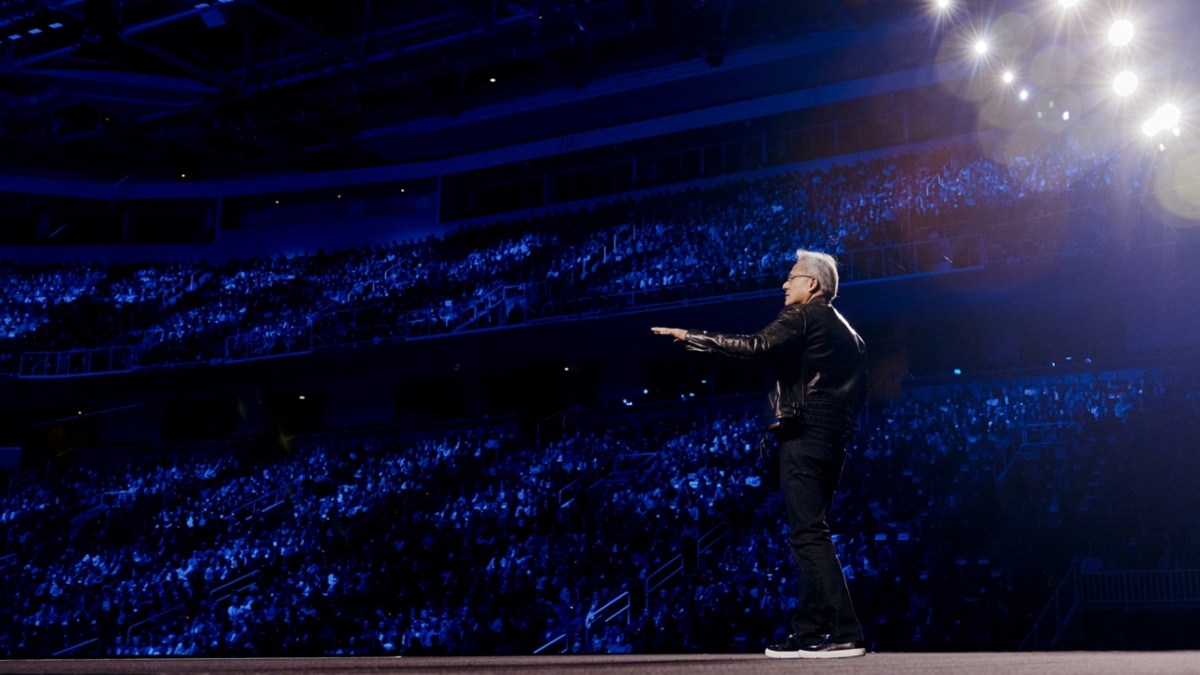
NVIDIA CEO Jensen Huang stated at the conference that every industrial company will become a robotics company, according to the official announcement. While that framing is aimed at large industrial operators, one specific partnership in the announcement is directly relevant to smaller manufacturers.

WORKR, one of the companies featured in NVIDIA’s robotics announcement, is integrating its AI platform with ABB Robotics industrial robots using NVIDIA technology, with the stated goal of enabling small and medium sized manufacturers to deploy a robotic workforce in minutes without programming knowledge, according to NVIDIA.

That claim has not been independently verified and the technology remains in development. However the direction is consistent with what the Unleashed Manufacturing Health Index data published earlier this week showed: Australian SME manufacturers are actively seeking automation solutions to manage labour shortages and tighter operating cycles, and the barriers to entry for robotics are a known constraint.

NVIDIA also announced new simulation tools, including updated Isaac simulation frameworks and Cosmos world models, that allow manufacturers to design, test and validate robotic systems in digital environments before physical deployment. According to NVIDIA, companies including FANUC, ABB Robotics and KUKA are already integrating these tools into their virtual commissioning workflows.

What to watch next

For small business owners, neither of these developments requires immediate action. Local AI agents at SME scale and accessible robotics for smaller manufacturers are both directions the technology is heading rather than capabilities that are fully available today.

What GTC 2026 does confirm is the pace and direction of travel. AI is moving toward local, private and lower-cost deployment. Robotics and automation are being deliberately extended toward smaller operators. Both shifts have direct implications for how SMEs will compete, hire and invest over the next two to three years.

All announcements in this article are sourced directly from official press releases and blog posts published during GTC 2026, 16 to 17 March 2026.

Keep up to date with our stories on LinkedInTwitterFacebook and Instagram.

Yajush Gupta

Yajush Gupta

Yajush writes for Dynamic Business and previously covered business news at Reuters.

View all posts