
Launching somewhere you’re a stranger is in some ways easier, because you arrive without any preconceptions about how things should work.
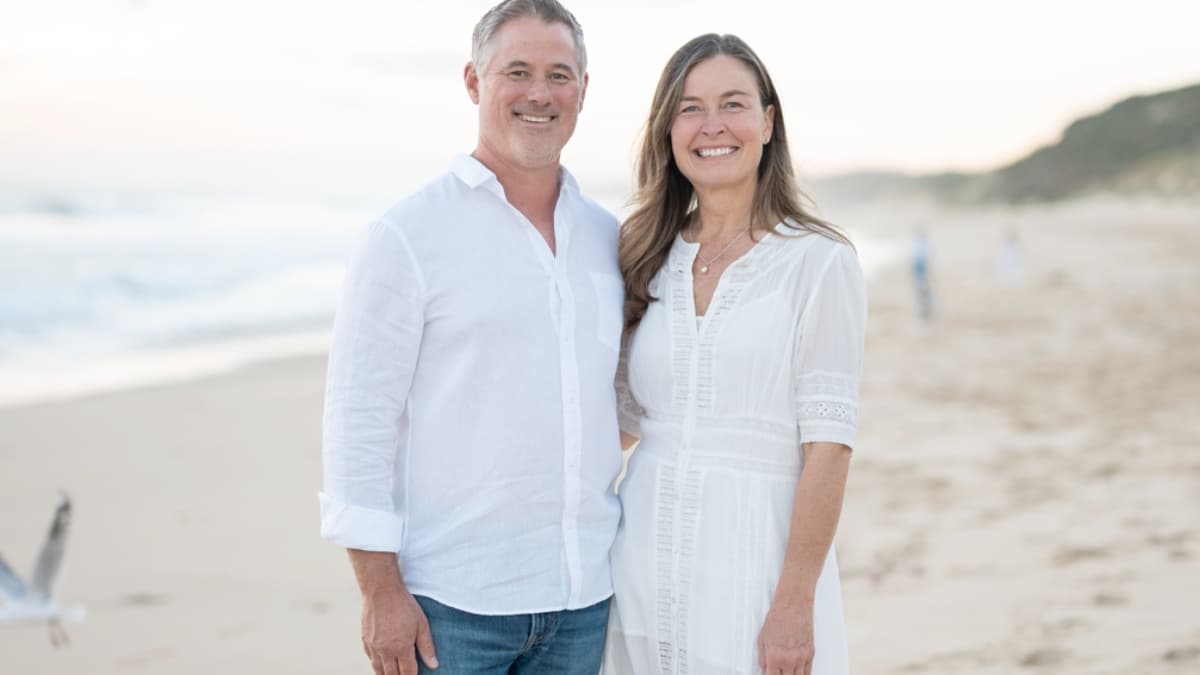
We recently caught up with Kim Gilliland, co-founder of Soapnut Republic, to chat about her journey from a childhood accident in a far-flung location to building a cleaning brand that now spans six countries - and why bringing her business home to Australia has been her toughest challenge yet.
The story starts long before Soapnut Republic existed, and long before Kim was even part of it. Her husband and co-founder, Bobby, swallowed household cleaner as a child growing up in New Zealand. It stayed with him. So when the couple found out they were expecting their first daughter while living in Shanghai, Bobby made himself a promise: there would never be another toxic bottle under their sink.
The trouble was finding anything that fit the bill. China's cleaning aisles didn't have what he wanted, so he built it himself. He landed on soapnut berry, Sapindus Mukorossi, a fruit that's been used for centuries as a natural surfactant, and started experimenting with formulas that were non-toxic, allergen-free and biodegradable, while still actually doing the job.
"That was fourteen years ago," Gilliland says. What began as one father trying to protect his daughter from harsh chemicals became Soapnut Republic, a home and personal care range that's since sold across China, Hong Kong, Singapore, Malaysia and Scandinavia.
A problem before a business
Gilliland doesn't credit the brand's growth to any grand strategy. "We weren't trying to build a business first and find a market second," she says. "We were solving our own problem, intensely and personally." It turned out thousands of other families living far from home were wrestling with the same thing, many of them expats who'd landed in Shanghai from the UK, Sweden and beyond, surprised to find safe, effective cleaning products so far from their own.
Running the company alongside her life partner added its own pressure. "Bobby and I were always in lockstep on the big picture, but building a company while raising three young daughters in a foreign country tested us in ways neither of us expected," Gilliland says. "There was no clocking off at 6pm when your co-founder is also the person doing bath time."
Manufacturing in China forced them to get fluent in sourcing, quality control and factory relationships fast, and the standard they held themselves to wasn't negotiable. As Gilliland puts it, "You can't cut a corner on a formulation when it's going on your own children's skin." That discipline, she says, is what let the brand expand into new markets without losing what it stood for in the first place.
Coming home was the hard part
Eventually, with a genuine multi-country footprint behind them, the question became obvious: why wasn't the brand available in Australia? Gilliland is Australian, Bobby is a New Zealander, and the market that felt most like home didn't carry a single bottle.
This year, Soapnut Republic began manufacturing locally in Melbourne and is launching five of its best-selling products into Australia for the first time, from Cape Paterson on Victoria's Bass Coast. Gilliland expected it to be the easiest launch of her career. It's been the opposite.
"The first thing we had to unlearn was the assumption that familiarity would help us," she says. "Launching somewhere you're a stranger is in some ways easier, because you arrive without any preconceptions about how things should work." Coming home meant dropping habits built overseas and rebuilding distributor, retailer and manufacturing relationships from scratch, in the country she grew up in.
Then there was the education gap. Australian shoppers are used to natural ingredients they already recognise, eucalyptus, tea tree, lemon myrtle. Soapnut isn't one of them yet. "Being first means you get to define the category," Gilliland says, though she's candid that explaining what a soapnut actually is has become "its own small marketing project."
The brand also made a deliberate call on distribution: independent retail first, rather than chasing major chains. Gilliland wanted Soapnut Republic in stores where "a shop owner can actually tell a customer the story behind the product," rather than getting lost on a supermarket shelf. That meant showing up in person, including exhibiting at the Reed Gift Fair in Melbourne, where the response gave the team confidence there's real appetite for the brand.
What surprised Gilliland most, though, was the scrutiny. "What's struck me most is how much more scrutiny Australian consumers apply to sustainability claims now compared to when we first started the business overseas," she says. "People ask harder questions. They want to know what's actually in the bottle, not just what's not." It's a standard she says the brand has held itself to since Bobby's first kitchen experiments, but it raised the bar on everything from labelling to how the company talks about itself.
The team behind the homecoming
What Gilliland realised was that this chapter couldn't be carried by two founders alone. The people who filled that gap, Andrew Kuiler and John Pabon, weren't new hires. They started as customers at a community market in Shanghai, where Gilliland used to sell the products herself, then became regulars, then friends. About twelve months ago, they joined formally as partners, Andrew as Managing Director and John as Marketing Director.
"They understood the brand before they ever worked for it, because they'd lived with it as customers," Gilliland says. Andrew brought consumer insight and brand strategy to sharpen the Australian proposition, right down to the visual direction. John pushed the team to tell a broader story than health alone.
"After fourteen years of being fanatical about who we let near this product, handing that over took real trust," Gilliland says, "and it's paid off."
Soapnut Republic's range is plant-based, biodegradable and hypoallergenic, made without sulphates, parabens or synthetic fragrances, and built around the naturally low-sudsing soapnut extract that's been used to clean textiles, hair and homes across Chinese, Indian and Native American cultures for 5,000 years. Every label lists exactly what's in the bottle, and what isn't.
Fourteen years, three daughters and six countries after a father's promise in a Shanghai apartment, Gilliland says the instinct behind the business hasn't changed. What's different now is that it no longer rests on two people. "There's a team here who believe in it as much as we do, and who know this market in a way we simply don't," she says. "That's the story we're bringing home."